
Blood Pressure Risk Calculator
How much caffeine are you consuming?
This calculator shows how energy drinks and stimulant medications can affect your blood pressure. Based on information from the National Institutes of Health and FDA studies.
Results
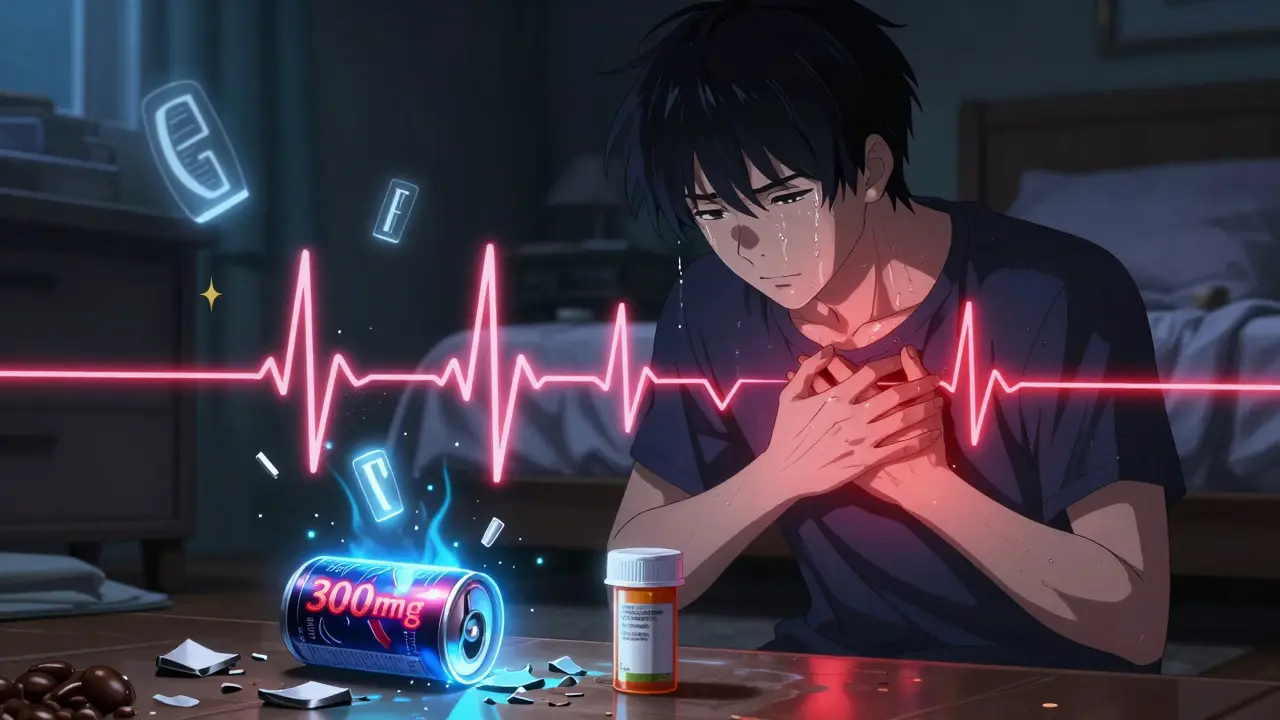
When you down an energy drink before a workout, pull an all-nighter, or mix it with your ADHD medication, you’re not just boosting alertness-you’re putting real stress on your heart. The combination of high-dose caffeine, stimulant drugs like Adderall or Ritalin, and hidden ingredients like bitter orange and guarana can push your blood pressure and heart rate into dangerous territory-even if you’re young and feel fine.
What’s Really in Energy Drinks?
Energy drinks aren’t just sugary soda with caffeine. A single 16-ounce can of Monster Energy contains 160 mg of caffeine. Bang Energy packs 300 mg-equivalent to nearly four cups of coffee. Red Bull, often seen as the mild option, still delivers 80 mg per 8.4-ounce can. But caffeine is only part of the story. Most energy drinks also include guarana, a plant seed that’s naturally 3.6% to 5.8% caffeine. That means if a label says "150 mg caffeine from guarana," you’re getting extra caffeine you didn’t count. Then there’s taurine, an amino acid often marketed as a "performance enhancer," and bitter orange, which contains synephrine-a compound chemically similar to adrenaline. These ingredients don’t just add flavor; they amplify the stimulant effect. The result? A cocktail that can spike your systolic blood pressure by 6 to 10 points within 30 minutes. In some cases, especially when multiple drinks are consumed, the rise jumps to 20-30 mmHg. That’s not a minor fluctuation-it’s the kind of pressure surge that can trigger arrhythmias, heart palpitations, or even a heart attack in vulnerable people.How Stimulant Medications Make Things Worse
If you’re taking prescription stimulants like Adderall (amphetamine salts) or Ritalin (methylphenidate) for ADHD, you’re already on a drug that increases heart rate and blood pressure. FDA labels for these medications note they can raise systolic blood pressure by 2-7 mmHg and heart rate by 3-13 beats per minute. Now add an energy drink. Suddenly, you’re stacking two powerful stimulants. A 2024 NIH-funded study tracking 5,000 people found that combining energy drinks with stimulant medications increased the risk of serious cardiovascular events-like abnormal heart rhythms or chest pain-by 3 to 5 times compared to using either alone. Real-world cases back this up. Emergency rooms have seen teens and young adults with no prior heart issues collapse after mixing their prescribed Adderall with two Monster Energy drinks. One 19-year-old in California suffered a heart attack after consuming three Monster cans in two hours. His lawsuit against Monster Beverage Corp. in 2022 highlighted how little warning consumers get about these risks.Who’s Most at Risk?
You might think, "I’m young and healthy, so I’m fine." But that’s exactly the myth that gets people hurt. While most studies on energy drinks focus on young adults (average age 22), the real danger lies in hidden vulnerabilities. People with undiagnosed heart conditions-like hypertrophic cardiomyopathy or long QT syndrome-are at high risk. So are those with high blood pressure, even if they’re not on medication. A 2023 Harvard Health report found that even mild hypertension can turn a temporary spike in blood pressure into a life-threatening event. Adolescents are especially vulnerable. The CDC reports that 30% to 50% of teens consume energy drinks regularly. Between 2022 and 2023, pediatric emergency visits for energy drink exposure rose 24.2%. In many cases, kids drank them unintentionally-thinking they were just sports drinks or vitamin waters. One 13-year-old was rushed to the ER after drinking two cans before soccer practice. He had no history of heart problems-but his blood pressure hit 180/110, and his heart rate soared to 160 bpm. Older adults aren’t immune either. As we age, our arteries stiffen, and our heart’s ability to handle sudden stress declines. A 65-year-old man with controlled hypertension took his morning Adderall and a 300 mg energy drink for "extra focus." Within an hour, he developed chest pain and was diagnosed with a small heart attack. His doctor later told him: "The energy drink didn’t cause the heart disease-but it was the trigger."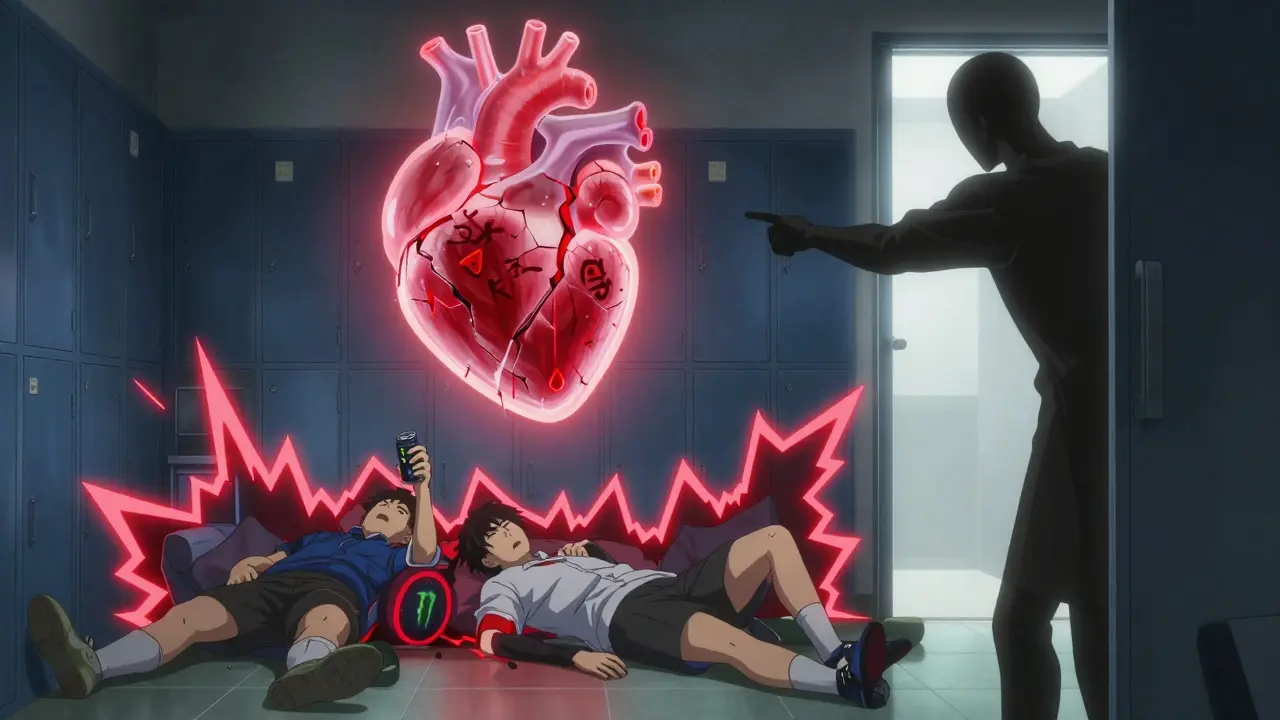
What the Numbers Don’t Tell You
The FDA says 400 mg of caffeine per day is safe for most adults. But that number doesn’t account for:- Individual sensitivity to caffeine
- Combining caffeine with other stimulants
- Timing-drinking multiple servings in quick succession
- Physical activity-exercise + energy drinks = higher risk
- Alcohol-mixing energy drinks with alcohol masks intoxication, leading to dangerous overconsumption
Warning Signs You Can’t Ignore
If you’ve consumed an energy drink or stimulant medication and start feeling any of these, stop. Don’t wait. Call for help:- Chest pain or tightness
- Heart palpitations that last more than a few minutes
- Dizziness or lightheadedness
- Shortness of breath
- Severe headache
- Blurred vision or seeing spots
What Should You Do?
If you’re taking stimulant medication:- Avoid energy drinks completely. There’s no safe combo.
- Don’t rely on them for focus-try better sleep, hydration, or structured breaks instead.
- Talk to your doctor about non-stimulant ADHD options if you’re struggling with side effects.
- Track how much caffeine you’re actually consuming-including from coffee, tea, and chocolate.
- Set a hard limit: no more than one drink per day, and never more than 200 mg caffeine in one sitting.
- Never drink them before exercise, driving, or bedtime.
- If you’re trying to cut back, do it slowly. Quitting cold turkey can cause headaches, fatigue, and irritability for up to 9 days.
The Bigger Picture
Energy drink sales hit $77.6 billion globally in 2023. The industry markets these drinks as tools for performance, productivity, and fun. But behind the flashy branding and "zero sugar" claims, the science is clear: they’re not harmless. A 2024 UC Davis Health study found that regular consumption may lead to endothelial dysfunction-a condition where blood vessels lose their flexibility, a known precursor to heart disease. That means daily energy drink use could be quietly damaging your arteries, even if you feel fine today. Regulators are slow to act. The FDA still classifies caffeine as "Generally Recognized As Safe," despite mounting evidence. Canada requires warning labels on drinks with more than 180 mg caffeine. The EU limits single doses to 200 mg. But in the U.S., you can walk into any convenience store and buy a 300 mg energy drink without a single warning. And the trend isn’t slowing. The Global Caffeine Institute predicts a 12.3% annual growth in sales through 2028. New products are being marketed as "focus enhancers" for students and "performance boosters" for athletes. But the risks haven’t changed. Your heart doesn’t care how much marketing money went into the can. It only responds to what’s inside.Can energy drinks cause a heart attack?
Yes, in rare cases, especially when combined with stimulant medications, physical exertion, or alcohol. While most people won’t have a heart attack from one energy drink, individuals with undiagnosed heart conditions, high blood pressure, or those mixing energy drinks with ADHD meds are at significantly higher risk. Cases of heart attacks, cardiac arrest, and heart rhythm disturbances have been documented in medical journals following energy drink consumption.
Is it safe to drink energy drinks with Adderall or Ritalin?
No. Combining energy drinks with stimulant medications like Adderall or Ritalin doubles the cardiovascular strain. Both increase heart rate and blood pressure, and together they can cause dangerous spikes that may lead to arrhythmias, chest pain, or even heart attack. The NIH is currently studying this interaction and has found the risk increases 3 to 5 times when both are used together.
How much caffeine is too much in one day?
The FDA considers up to 400 mg of caffeine per day safe for most healthy adults. But that’s not a free pass. If you’re taking stimulant medication, have high blood pressure, or are under 18, you should aim for much less-ideally under 100 mg. A single 300 mg energy drink already takes you 75% of the way there. Add coffee, tea, or chocolate, and you’re over the limit without realizing it.
Do energy drinks affect blood pressure long-term?
Emerging research suggests they might. A 2024 UC Davis Health study found that regular energy drink consumption can lead to endothelial dysfunction-a condition where the lining of your blood vessels stops working properly. This is an early sign of atherosclerosis, the hardening of arteries that leads to heart disease. Even if your blood pressure returns to normal after one drink, repeated exposure may be quietly damaging your cardiovascular system.
Are sugar-free energy drinks safer for your heart?
Not really. The main danger comes from caffeine and other stimulants-not sugar. Sugar-free energy drinks like Bang or Reign still contain 300 mg or more of caffeine, plus guarana, taurine, and synephrine. Removing sugar doesn’t reduce the cardiovascular risk. In fact, people often drink more of these because they think they’re "healthier," which can make the problem worse.

13 Comments
Diana Campos Ortiz
January 13, 2026 AT 23:59I used to chug Monster before my shifts thinking it was just caffeine. Turns out I was also getting guarana, taurine, and synephrine-none of which I even knew were in there. My BP spiked to 150/95 after one can. I stopped cold turkey. No regrets.
My doctor said I was lucky I didn’t have a panic attack or worse. Now I drink green tea. Still alert. No heart palpitations.
James Castner
January 14, 2026 AT 04:48It is not merely a matter of pharmacological synergy or even of regulatory negligence-it is a profound societal failure to commodify physiological stress as a lifestyle product. The energy drink industry, in its relentless pursuit of profit, has weaponized neurochemical arousal and repackaged it as empowerment, when in fact it is a form of low-grade, systemic self-harm disguised as productivity. The human body, a marvel of evolutionary adaptation, was never designed to sustain repeated, artificial catecholamine surges via ingested chemical cocktails. The fact that we have normalized this behavior among adolescents and young adults-populations whose cardiovascular systems are still maturing-is not just negligent; it is morally indefensible. We are engineering a generation of prehypertensive, arrhythmia-prone individuals under the banner of "focus," "energy," and "performance," and yet we have no public health campaign, no warning labels on par with tobacco, and no real consequences for manufacturers. This is not innovation. This is exploitation dressed in neon branding.
lucy cooke
January 14, 2026 AT 17:55Oh honey, I read this and immediately thought: "This is the new cigarette."
Same marketing. Same denial. Same "I’m young, I’m fine" delusion. I’ve seen it in my yoga class-22-year-olds chugging Bang before downward dog like it’s holy water. The irony? They think they’re healing their bodies while slowly turning their arteries into brittle glass.
And don’t even get me started on Adderall + energy drinks. That’s not productivity. That’s a slow-motion suicide pact with Big Pharma and Monster Beverage Corp. I’m not even mad. I’m just… disappointed in humanity.
Kimberly Mitchell
January 15, 2026 AT 03:33Regulatory capture is real. The FDA’s "Generally Recognized As Safe" designation for caffeine is a joke. It’s based on 1950s data, ignores synergistic effects, and refuses to classify energy drinks as drugs despite their pharmacological profile. The industry lobbies harder than pharmaceutical companies. Meanwhile, kids die and we call it "anecdotal."
Stop calling it a beverage. Call it what it is: a stimulant drug delivery system with no safety testing.
Angel Molano
January 15, 2026 AT 19:22You’re all overthinking it. One can won’t kill you. But if you’re on Adderall and chugging three? Yeah, you’re an idiot. Don’t blame the drink. Blame yourself.
Vinaypriy Wane
January 17, 2026 AT 16:45I’m from India, and here, energy drinks are still seen as "Western junk." But my cousin, 17, started drinking Reign because his friends said it "helps with studying." He had palpitations during his math exam. Took him to the hospital. ECG showed PVCs. No prior history. Now he drinks water. I told him: "Your brain doesn’t need a sledgehammer to wake up."
And yes, the labels lie. I checked three cans-each had 15–20% more caffeine than stated. That’s not a typo. That’s fraud.
Adam Rivera
January 17, 2026 AT 17:58Hey, I get it. We all need a boost sometimes. I used to mix coffee with my Adderall before big presentations. Then I started getting dizzy during meetings. My cardiologist said, "You’re not a machine. Your heart isn’t a battery."
Now I take walks. I hydrate. I nap. I still get things done. Just… slower. And alive.
Also, try dark chocolate instead of energy drinks. 40 mg caffeine. No synephrine. Just joy.
mike swinchoski
January 18, 2026 AT 23:44Everyone’s acting like this is new. It’s not. We’ve been doing this since the 90s with Red Bull and Ritalin. The only difference now is people are getting caught. And now they’re mad? Grow up. If you can’t handle your own choices, don’t blame the can.
Anny Kaettano
January 19, 2026 AT 06:36As someone who works with ADHD teens, I see this daily. Parents think "sugar-free" means safe. They buy Bang because it’s "healthy." Then their kid collapses after gym class. We need mandatory labeling: "Do not combine with stimulant medications." Simple. Clear. No jargon.
Also, schools should ban these from vending machines. It’s not about control-it’s about protecting kids who don’t know what they’re ingesting. We wouldn’t let them drink battery acid. Why are we letting them drink this?
John Tran
January 19, 2026 AT 23:52Okay so I just read this and I’m like… wow. I’ve been drinking 2 Reigns a day since college. 300mg each. I thought I was just being productive. But I’ve had this weird chest tightness for months. I thought it was anxiety. Turns out… maybe not.
Also, I didn’t know guarana was just caffeine in disguise. Like… why even list it separately? It’s a trick. Like when they say "natural flavors" but it’s just chemicals.
I’m cutting back. Slowly. Because I don’t want to be the guy who had a heart attack at 25. I’m not ready to die yet. Not today.
Robin Williams
January 20, 2026 AT 16:27It’s funny how we glorify burnout. We wear exhaustion like a badge. "I pulled an all-nighter with 3 energy drinks and 2 cups of coffee." Like that’s a win. Nah. That’s a slow burn. Your body’s not a smartphone. You can’t just plug it in and charge it up.
I used to think caffeine was my friend. Now I see it as a con artist. Smiles. Offers you energy. Then steals your heart rhythm. And you thank it for the ride.
Scottie Baker
January 22, 2026 AT 03:08I’m 28. Took Adderall for 6 years. Drank Monster every day. Last year I had a panic attack so bad I thought I was dying. Turned out it was just my heart trying to escape my chest.
Now I’m off Adderall. No energy drinks. Just sleep, protein, and walks.
Yeah, I’m slower. But I’m alive. And I don’t wake up with my heart pounding like a drum. That’s worth more than any "focus boost." Also-fuck the industry. They know. They know exactly what they’re doing.
Jesse Ibarra
January 23, 2026 AT 14:25Let’s be real: this is capitalism at its most predatory. They sell you a chemical rush as self-improvement. They target students. They target athletes. They target people who feel broken. And they make billions while your arteries harden.
And the worst part? The people who need help the most-the ones with undiagnosed heart conditions-are the ones who can’t afford to stop. They’re working two jobs. They’re studying. They’re trying to survive.
So we blame them? No. We blame the companies. We blame the regulators. We blame the system that lets this happen.
And if you’re still drinking it? You’re not the problem. You’re the product.