

Sleep Aid Safety Checker
This tool helps you understand your personal risk when using diphenhydramine as a sleep aid. Based on data from medical studies, it assesses your risk level and suggests safer alternatives.
Millions of people reach for diphenhydramine every night hoping to fall asleep faster. You’ve probably seen the bottles on pharmacy shelves - Benadryl, ZzzQuil, Unisom - marketed as quick fixes for trouble sleeping. It’s cheap, easy to get, and for some, it works. But here’s the truth most ads won’t tell you: diphenhydramine isn’t a sleep solution. It’s a sedative with serious, long-term risks - especially if you’re over 50.
How Diphenhydramine Really Works (And Why It’s Not Sleep)
Diphenhydramine is an antihistamine, originally designed to treat allergies. Its sleep-inducing effect? A side effect. It blocks histamine in your brain, which normally keeps you alert. That’s why you feel drowsy. But here’s the catch: it doesn’t improve sleep quality. It just knocks you out. Real sleep involves cycles - light, deep, and REM - that restore your body and mind. Diphenhydramine disrupts these cycles. You might fall asleep faster, but you’re not getting restorative rest.
Studies show that 68% of people who take diphenhydramine for sleep report feeling foggy the next day. That’s not just being tired. It’s impaired memory, slower reaction times, and trouble focusing. One 2021 study found users performed worse on cognitive tests than people who had a blood alcohol level of 0.10% - above the legal limit for driving in every U.S. state. And if you’re older? The effects last longer. In people over 65, diphenhydramine can stay in the system for up to 18 hours. That means you’re groggy all day, increasing your risk of falls, accidents, and even fractures.
The Hidden Dangers You’re Not Being Told About
Most people think OTC means safe. It doesn’t. The FDA warns diphenhydramine should only be used for “occasional” sleeplessness - no more than two weeks. But research shows 73% of users keep taking it beyond that. Why? Because tolerance builds fast. After just seven days, many report it doesn’t work as well. So they take more. Or they mix it with alcohol. Or they take it every night. That’s when things get dangerous.
One of the biggest risks? Anticholinergic effects. Diphenhydramine blocks acetylcholine, a brain chemical vital for memory, attention, and muscle control. Long-term use has been linked to a 54% higher risk of dementia in adults over 65, according to a 2024 Johns Hopkins study tracking over 3,000 people for seven years. That’s not a small increase. That’s a major red flag.
Other serious side effects include:
- Urinary retention - especially in men with enlarged prostates
- Glaucoma flare-ups - can cause sudden vision loss
- Confusion, hallucinations, or agitation - particularly in older adults
- Fast heartbeat or low blood pressure - risky if you have heart conditions
The FDA added stronger warnings in 2023: “May cause serious mental and mood changes.” The European Medicines Agency now says diphenhydramine should be avoided in adults over 65 entirely. And the American Academy of Sleep Medicine says it’s not recommended for chronic insomnia - period.
Why Older Adults Are at Highest Risk
Even though diphenhydramine is marketed to everyone, the people using it most are over 65. Nearly 19% of seniors in the U.S. use it regularly. That’s alarming. Why? Because aging changes how your body handles drugs. Your liver and kidneys slow down. Your brain becomes more sensitive. The same dose that works for a 30-year-old can leave a 70-year-old disoriented, dizzy, or even confused.
A 2023 Consumer Reports survey found that 43% of seniors using diphenhydramine had falls or accidents linked to drowsiness. Nearly 30% reported memory problems after regular use. And yet, many doctors still prescribe it - or don’t know better. If you’re over 65 and taking this for sleep, you’re not alone. But you’re also not safe.
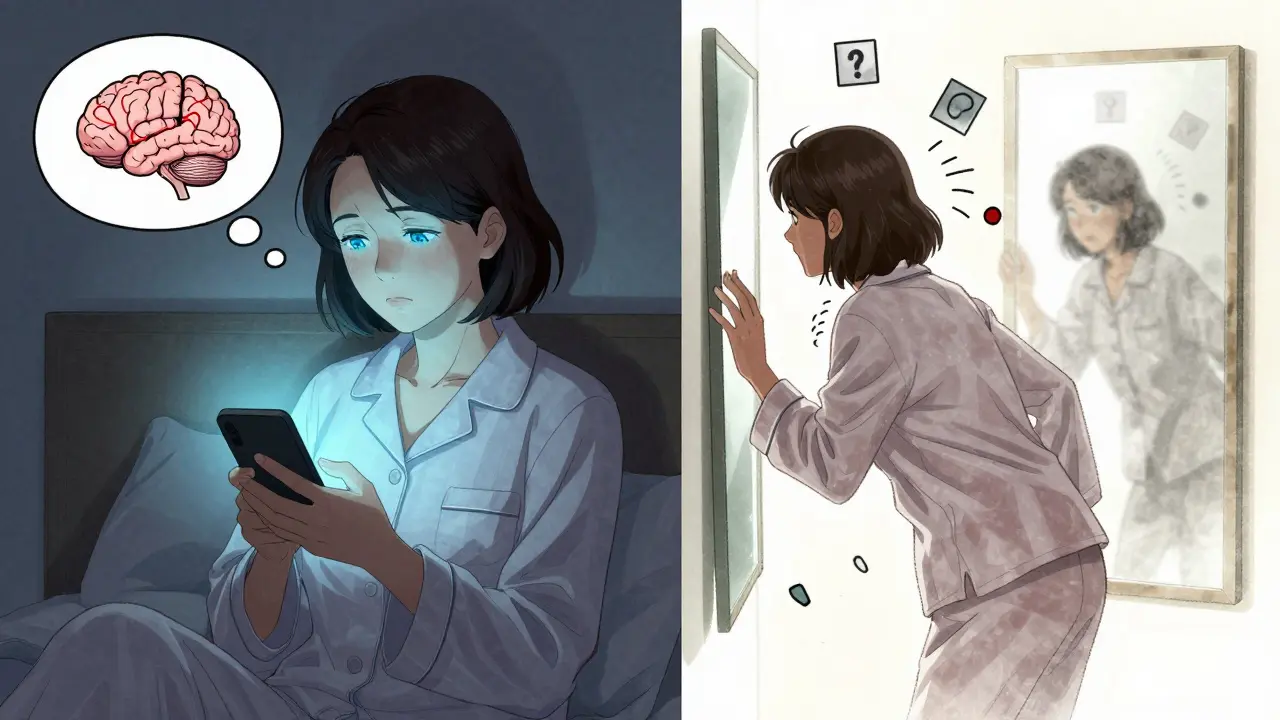
What About Melatonin? Is It Better?
Melatonin is the most common alternative. It’s a hormone your body naturally makes to signal bedtime. Taking a supplement doesn’t force sleep - it gently nudges your internal clock. Studies show 2-5 mg of melatonin helps about 62% of people fall asleep faster, with far fewer side effects. No next-day grogginess. No memory issues. No increased dementia risk.
It’s not perfect. It doesn’t work for everyone. And if you take too much (like 10 mg or more), you might feel groggy or have weird dreams. But compared to diphenhydramine? It’s a no-brainer. The FDA doesn’t restrict melatonin. No warnings. No age limits. Just use the lowest dose that works - usually 1-3 mg - about 30 minutes before bed.
Other Safer Options Beyond Pills
There’s more to sleep than pills. In fact, the most effective long-term fix isn’t a drug at all. It’s Cognitive Behavioral Therapy for Insomnia (CBT-I). This isn’t hypnosis or meditation. It’s a structured, evidence-based program that teaches you how to break the cycle of poor sleep habits. Studies show CBT-I works for 70-80% of people - and the results last for years. Unlike pills, it doesn’t wear off. It rewires your brain.
Many hospitals and sleep clinics offer CBT-I. Some online programs are even covered by insurance. If you’ve been struggling with sleep for more than a few weeks, this is the path you should take - not another bottle of Benadryl.
Other simple, low-risk options:
- Keep a consistent sleep schedule - even on weekends. Your body thrives on routine.
- Avoid screens 1 hour before bed - blue light suppresses melatonin.
- Get natural light in the morning - helps reset your internal clock.
- Limit caffeine after 2 p.m. - it lingers in your system for 8+ hours.
- Try magnesium glycinate - a gentle mineral that may help relax your nervous system.

What About Other OTC Sleep Aids Like Doxylamine?
Unisom SleepTabs use doxylamine, another first-generation antihistamine. It’s similar to diphenhydramine - same risks, same side effects, same long half-life. It might last longer (up to 12 hours), but that just means more next-day fog. The American Academy of Sleep Medicine lists it alongside diphenhydramine as not recommended for chronic insomnia. If you’re switching from one to the other, you’re not solving the problem. You’re just changing the brand.
When Should You See a Doctor?
If you’ve been using diphenhydramine for more than two weeks - stop. Don’t just quit cold turkey. Talk to your doctor. There might be an underlying issue: sleep apnea, anxiety, restless legs, or even medication side effects. Many people think they have insomnia, but it’s really something else.
Doctors can also offer short-term prescription options like zolpidem (Ambien) or suvorexant (Belsomra) - but even these should be used carefully and for brief periods. The goal isn’t to replace one pill with another. It’s to find the root cause and fix it.
Final Takeaway: Stop Using Diphenhydramine for Sleep
Diphenhydramine is not a sleep aid. It’s a sedative with dangerous long-term consequences. It doesn’t fix your sleep. It masks it - and costs you more than you realize. Memory. Balance. Clarity. Even your risk of dementia.
There are better, safer ways to sleep. Melatonin. CBT-I. Better habits. And yes - sometimes, medical help. But not another pill that tells you it’s okay to use every night. It’s not. And if you’re over 50, it’s downright risky.
Next time you reach for Benadryl or ZzzQuil, ask yourself: Am I really sleeping - or just being drugged into unconsciousness?
Is diphenhydramine safe for long-term use as a sleep aid?
No. Long-term use of diphenhydramine is not safe. Studies show it increases the risk of dementia by 54% in adults over 65 after seven years of regular use. It also causes next-day grogginess, impaired coordination, and memory problems. The FDA and American Academy of Sleep Medicine both advise against using it for more than 14 days without medical supervision.
Can diphenhydramine cause addiction?
Diphenhydramine isn’t addictive in the same way as drugs like benzodiazepines. But it can lead to dependence. Many users find it stops working after a week or two, so they increase the dose or take it more often. This creates a cycle where your body expects the drug to fall asleep - and you feel unable to sleep without it. That’s psychological dependence, and it’s common.
Why does diphenhydramine make me feel groggy the next day?
Diphenhydramine has a long half-life - up to 18 hours in older adults. Even if you fall asleep quickly, the drug is still active in your system the next morning. This causes residual sedation, slowing reaction times, impairing memory, and reducing alertness. A 2021 study found 68% of users had measurable cognitive impairment the day after taking it.
Is melatonin safer than diphenhydramine for sleep?
Yes. Melatonin is a natural hormone that helps regulate your sleep-wake cycle. It doesn’t cause next-day grogginess, memory issues, or increased dementia risk. Studies show 2-5 mg of melatonin helps about 62% of people fall asleep faster with minimal side effects. It’s much safer than diphenhydramine, especially for older adults.
What’s the best non-drug solution for insomnia?
Cognitive Behavioral Therapy for Insomnia (CBT-I) is the most effective non-drug treatment. It teaches you how to change thoughts and habits that keep you awake. Research shows it works for 70-80% of people, and the benefits last for years - unlike pills, which lose effectiveness over time. Many insurance plans now cover CBT-I, and online programs are widely available.

11 Comments
Brett Pouser
February 9, 2026 AT 02:11Man, I used to crush ZzzQuil like it was candy. Thought I was being smart - cheap, easy, no prescription. Then one morning I tried to make coffee and spilled the whole pot because my hands wouldn’t stop shaking. Turned out I’d been taking it for six months straight. Didn’t even realize I was a zombie until I stopped. Now I use 1mg melatonin and call it a day. No fog. No guilt. Just sleep.
Andy Cortez
February 10, 2026 AT 03:58lol so diphenhydramine is the new weed? everyone’s like ‘oh i just take a tab before bed’ like its a chill vibe. bro it’s an antihistamine designed for sneezing. you’re not sleeping, you’re getting drugged. and yeah, i know i’m ‘overreacting’ but my grandma took this for 12 years and now she forgets her own name. not a vibe.
Joseph Charles Colin
February 11, 2026 AT 09:21Let’s clarify the pharmacokinetics here: diphenhydramine is a potent non-selective muscarinic antagonist with a half-life of 3–10 hours in young adults, but up to 18 hours in elderly patients due to reduced hepatic metabolism and renal clearance. This prolonged exposure leads to cumulative anticholinergic burden - which is why the Beers Criteria explicitly lists it as potentially inappropriate for patients >65. The dementia correlation isn’t just association - it’s dose-dependent, with a J-shaped curve above 90 cumulative defined daily doses per year. CBT-I remains first-line per AASM guidelines because it targets the perpetuating factors of insomnia, not just the symptom.
Elan Ricarte
February 13, 2026 AT 03:12Ohhhhh sweet mercy. So you’re telling me the ‘sleep aid’ my aunt swears by is basically a chemical lobotomy in a bottle? I mean, I knew it was sketchy - she once called me at 3am because she forgot what ‘Tuesday’ was - but I didn’t realize it was *this* bad. Like, the FDA warning says ‘serious mental and mood changes’ - that’s not a side effect, that’s a personality transplant. Someone needs to slap a skull-and-crossbones sticker on every bottle of Benadryl Sleep.
MANI V
February 13, 2026 AT 07:55Typical American nonsense. You want sleep? Stop eating sugar. Stop scrolling. Stop being soft. In India, we don’t need pills. We sleep because we’re tired, not because we’re entitled. This whole ‘dementia risk’ thing? It’s just Big Pharma fearmongering. Take the pill. Sleep. Wake up. Live. Simple.
John Watts
February 13, 2026 AT 09:37Hey - if you’re reading this and you’ve been using diphenhydramine for months, you’re not alone. I was there. I thought I was ‘just helping myself.’ But here’s the thing: your brain doesn’t forget. It just gets quieter. And one day, you realize you haven’t had a full night’s rest in years. Melatonin? Yeah, it’s not magic. But CBT-I? That’s the real deal. I did a 6-week online program. Cost $40. Changed my life. No pills. No guilt. Just sleep. You deserve that.
Angie Datuin
February 15, 2026 AT 06:28I’m 72 and I’ve been on this stuff for 8 years. My doctor never said anything. I just thought I was getting older. I didn’t know I was poisoning myself. I’m stopping tomorrow. Thank you for saying this out loud.
Camille Hall
February 15, 2026 AT 15:46My mom started taking diphenhydramine after Dad passed. Said it helped her ‘turn her brain off.’ I didn’t realize how bad it was until she forgot my birthday - twice. We switched to melatonin and a 10-minute wind-down routine with jazz and tea. She’s been sleeping better for 14 months now. No more confusion. No more falls. Just… peace. It’s not about the pill. It’s about the ritual.
Jonah Mann
February 16, 2026 AT 06:20wait… so… melatonin isn’t regulated? like… at all? so i can just buy 10mg gummies at gas station? and its ‘safer’? but diphenhydramine is banned for seniors?? i feel like i’ve been lied to my whole life. also… c-b-t-i? is that like… therapy? for sleep?? like… do they make you journal? i’m scared.
Alex Ogle
February 18, 2026 AT 03:19I’ve been a chronic insomniac since my 20s. Tried everything. Ambien. Lunesta. Trazodone. Even those weird ‘sleep patches.’ Nothing worked long-term. Then I found CBT-I - not the YouTube videos, the real deal: licensed therapist, homework, sleep restriction, stimulus control. It was brutal. Week 1, I slept 3 hours a night. Week 4, I was up at 4am and just… lay there. No panic. No pills. Just… quiet. Now? I sleep 7 hours. Every night. For 5 years. No meds. No guilt. Just discipline. It’s not sexy. But it’s real.
Joshua Smith
February 20, 2026 AT 02:20Just wanted to say thanks for this. I’m 48 and I’ve been taking 25mg of diphenhydramine every night for 4 years. I didn’t know it was linked to dementia. I thought I was just tired. I’m going to see my doctor this week. Maybe try melatonin first. If this helps even a little, it’s worth it.