

When a patient takes insulin, warfarin, or an opioid, a small mistake can lead to serious harm-or even death. That’s why documenting safety alerts on your medication list isn’t just a good idea. It’s a lifeline. In hospitals and clinics across Australia and beyond, teams that track these alerts properly reduce medication errors by nearly half. But too many still treat them like paperwork to check off, not as active shields against harm.
What Counts as a Safety Alert?
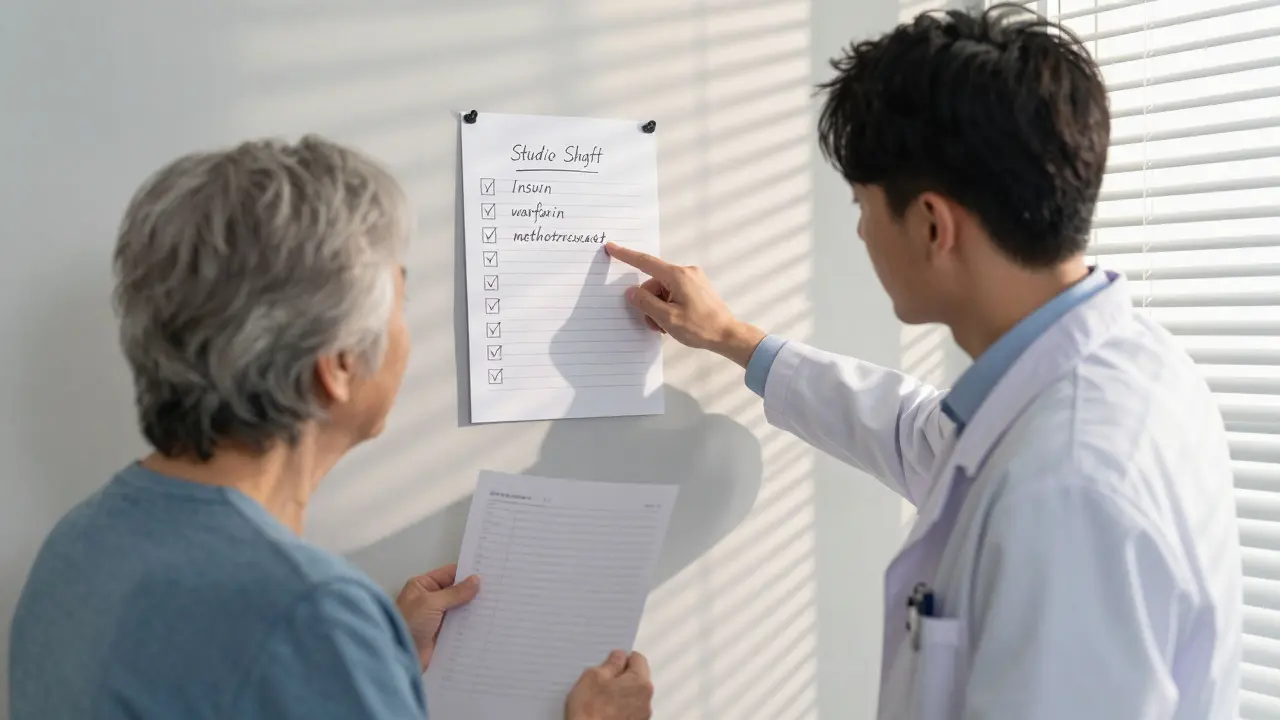
A safety alert isn’t just a pop-up on a computer screen. It’s a clear, written warning tied to a specific medication that has a known risk of causing serious harm if used incorrectly. The Institute for Safe Medication Practices (ISMP) defines these as high-alert medications: drugs where errors are rare, but when they happen, the consequences are severe. This includes insulin, anticoagulants like warfarin, opioids like morphine, neuromuscular blockers used during surgery, and oral methotrexate for autoimmune conditions.
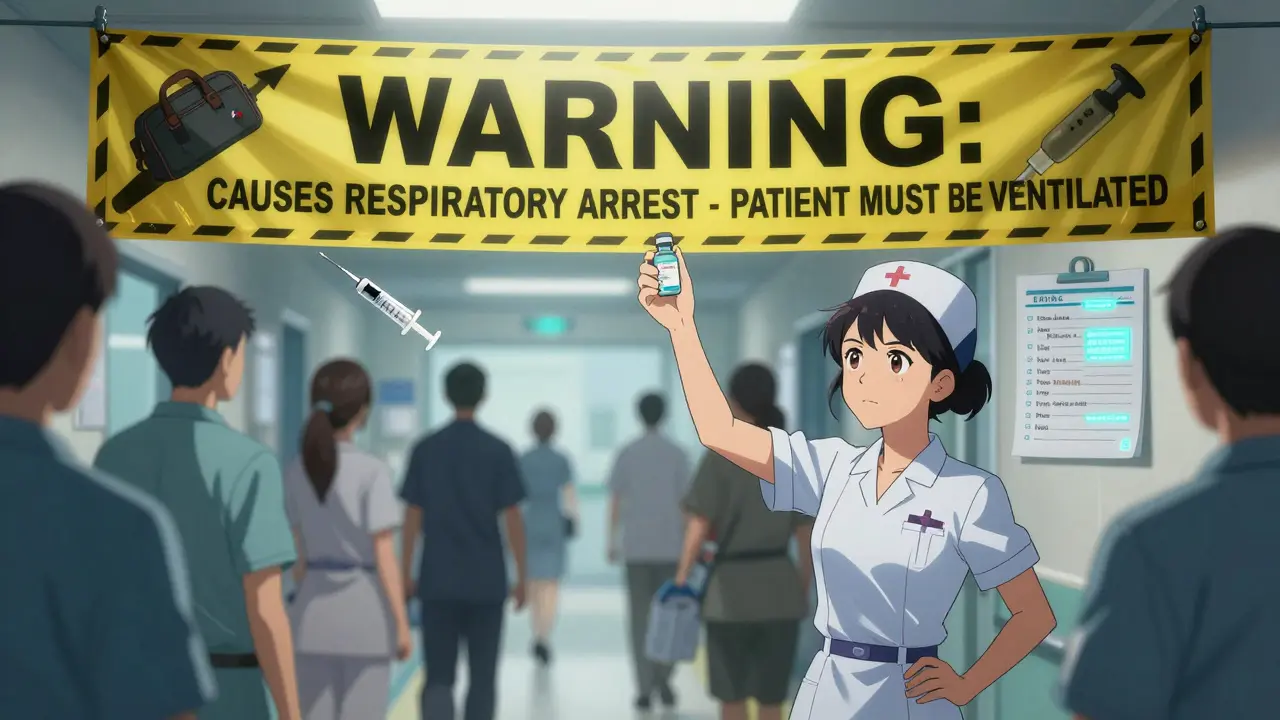
These aren’t just general warnings. Each alert must be specific. For example, the ISMP mandates that all containers of neuromuscular blockers carry the exact label: “WARNING: CAUSES RESPIRATORY ARREST - PATIENT MUST BE VENTILATED.” No room for interpretation. No vague phrasing. This level of detail matters because a nurse grabbing the wrong vial in a rush shouldn’t have to guess what the risk is.
Why Documentation Makes the Difference
Electronic alerts alone don’t cut it. Studies show that when systems rely only on pop-up notifications, up to 49% of alerts get ignored or bypassed. Why? Alert fatigue. Too many warnings, too often, and people stop paying attention.
The real solution is structured documentation. This means writing down exactly what steps were taken to prevent harm-not just that an alert existed. For example:
- When prescribing oral methotrexate, the prescriber must document the specific diagnosis (e.g., rheumatoid arthritis) and confirm the dose is weekly, not daily.
- When administering insulin, staff must record that the concentration was verified, the dose was double-checked by a second clinician, and the patient was educated on signs of low blood sugar.
- For every time a safety alert is bypassed, the reason must be logged-not just “clicked through,” but “bypassed due to urgent intubation, patient under anesthesia.”
This creates a trail. A trail that lets teams see patterns: Are certain drugs being bypassed too often? Are staff skipping double-checks because they’re rushed? Documentation turns vague risks into solvable problems.
How to Set Up a Safety Alert System
Setting up a system doesn’t need to be overwhelming. Start with these four steps:
- Build your facility’s high-alert list. Use the ISMP 2024-2025 master list as a starting point, then tailor it to your setting. A small clinic might focus on insulin and warfarin. A hospital might add opioids, IV potassium, and chemotherapy agents. This list should be reviewed every six months.
- Link alerts to actions. For each high-alert medication, define what must be documented. Don’t just say “check dose.” Say: “Dose verified by two licensed staff, patient weight recorded, and patient education confirmed.”
- Use standardized forms or digital templates. Paper checklists work, but digital systems with required fields reduce errors. If your EHR doesn’t have built-in templates, create them. A simple form with dropdowns and mandatory fields cuts down on missing info.
- Track compliance. Aim for at least 95% scanning and documentation rates. If bypasses exceed 5% of total alerts, dig into why. Is it staffing? Training? Outdated protocols?
One clinic in Adelaide cut their insulin errors by 63% in 18 months by doing exactly this. They didn’t buy new software. They just started writing down what they were already doing-and made sure no one skipped it.
What Not to Do
Many teams fall into traps that make safety documentation useless:
- Don’t overload alerts. If your system generates more than 15 alerts per medication order, people tune out. Cut the noise. Only flag risks that have caused harm before.
- Don’t let documentation become a chore. If staff say, “I’m just checking the box,” you’ve failed. The goal isn’t to fill out forms-it’s to stop errors before they happen.
- Don’t ignore external alerts. The FDA releases about 120 drug safety notices each year. If your system doesn’t have a way to quickly integrate these-like a monthly review by your safety committee-you’re missing critical updates.
One rural pharmacy in South Australia stopped documenting alert bypasses because they didn’t have enough staff. The result? A patient received a double dose of warfarin after a nurse missed a change in their INR. The error was preventable. The documentation system existed. But it wasn’t used.
The Real Cost-and Real Savings
Implementing a full safety documentation system costs about $285,000 a year for an average hospital, according to the ECRI Institute. That includes staff time, training, software updates, and audits.
But the savings? Around $1.2 million per year from avoided adverse events. One study found that hospitals with full compliance had 4.2 medication errors per 1,000 doses. Those with partial compliance? 12.7. That’s more than triple the risk.
And it’s not just money. It’s trust. Patients feel safer. Staff feel more confident. And regulators notice. Starting in 2025, Medicare will tie reimbursement to how well hospitals document high-alert medication safety. No documentation? No bonus payments.
What’s Changing in 2025
The ISMP just updated its guidelines to include new requirements for compounded medications and vaccine errors. By December 31, 2025, every facility must document how they verify the strength and purity of custom-prepared drugs.
Also, the FDA’s new Sentinel Initiative is rolling out automated safety feeds. Instead of manually checking FDA alerts, your EHR can now receive them directly. Early adopters say this cuts manual entry by 80%. That’s huge.
By 2027, experts predict 75% of U.S. hospitals will use AI to auto-prioritize alerts based on their own error history. But even these systems aren’t perfect. One study found early AI tools missed 18% of critical alerts. So human review is still needed.
Start Small. Stay Consistent.
You don’t need to fix everything tomorrow. Pick one high-alert medication-say, insulin. Document how it’s prescribed, administered, and checked. Track errors for three months. Adjust. Then add another. Over time, this becomes part of your culture.
Remember: safety alerts aren’t about blame. They’re about building layers of protection. One layer might be a label. Another might be a checklist. Another might be a second pair of eyes. When all of them are documented, they work together. And when they do, lives are saved.
What medications are considered high-alert?
High-alert medications are those with a higher risk of causing serious harm if used incorrectly. Common examples include insulin, anticoagulants like warfarin, opioids (morphine, fentanyl), neuromuscular blockers, IV potassium, and oral methotrexate. The ISMP 2024-2025 list includes 19 categories. Facilities should customize this list based on their patient population and common error patterns.
Do I need special software to document safety alerts?
No, but it helps. You can start with printed checklists or simple digital forms. The key is consistency-not the tool. However, electronic health record systems with built-in alerts, mandatory fields, and audit trails reduce errors and save time. Look for systems that support barcode scanning and require clinician signatures before orders are finalized.
How often should safety documentation be reviewed?
Review your safety protocols at least every six months. Update them after any serious medication error, new FDA alert, or major change in staffing or procedures. Monthly safety committee meetings are strongly linked to fewer alert bypasses and better compliance.
What if staff keep bypassing alerts?
Don’t punish. Investigate. If bypass rates exceed 5%, hold a root cause analysis. Are staff skipping alerts because they’re overwhelmed? Is the alert unclear? Is the workflow broken? Often, the fix isn’t more rules-it’s better design. Maybe the dose limit is too low for some patients. Maybe the double-check is happening too late in the process. Adjust the system, not the staff.
Can small clinics afford this?
Yes. You don’t need a full IT system. Start with one high-alert medication. Use free templates from ISMP or ASHP. Assign one person (even part-time) to manage documentation. Track errors for three months. If you cut them by half, you’ve already paid for the effort. Many rural clinics report success by focusing on insulin and warfarin alone.

14 Comments
Jimmy V
March 14, 2026 AT 02:11Stop treating documentation like a checkbox. If your EHR doesn’t force a double-check with a signed log, you’re just gambling with lives. I’ve seen three overdoses in 18 months because someone ‘clicked through.’ No excuses. Mandatory fields. No exceptions. Period.
Emma Nicolls
March 15, 2026 AT 05:41i just started doing this for insulin at my clinic and wow its crazy how much it changed things. we used to have 2 near misses a week now its 1 every 3 weeks. its not about the form its about the habit. also we use a sticky note on the med cart now lol
Richard Harris
March 16, 2026 AT 05:41this is brilliant. we’ve been doing something similar in the UK with warfarin - written notes in the patient’s folder, signed by two nurses. simple. effective. no software needed. the real win? staff actually feel safer now. not just the patients.
Kelsey Vonk
March 16, 2026 AT 09:57i love how this isn’t about blame... it’s about layers. 🌱 one layer is the label, another is the checklist, another is the second pair of eyes. when they all stack up? magic. we’ve been trying to teach this to new nurses - not with powerpoints, but with stories. real stories. it sticks.
Tim Schulz
March 16, 2026 AT 21:16Oh wow. Another ‘document everything’ manifesto from the healthcare bureaucracy industrial complex. 🤡 Next they’ll make us write a haiku before giving aspirin. I’ve worked in 7 hospitals. The only thing that prevents errors? Training. Competent staff. Not paperwork. This is just performative compliance dressed up as safety.
Rex Regum
March 18, 2026 AT 06:06You call this a ‘lifeline’? This is a nightmare. I’ve seen nurses cry because they had to fill out 17 forms just to give a patient insulin. The system doesn’t protect people - it crushes them. And now we’re going to tie Medicare reimbursement to this? That’s not safety. That’s extortion. Stop pretending paperwork saves lives. It just makes people hate their jobs.
Kandace Bennett
March 19, 2026 AT 14:30OMG this is sooo important!! 💯🇺🇸 Only in the US do we actually take this seriously. In other countries? They just wing it. I work in a hospital where they still use handwritten med sheets. I’m literally shaking. We need a national mandate. Like, yesterday. #SafetyFirst #USAWins
Ali Hughey
March 20, 2026 AT 00:32Wait… so you’re telling me the FDA and ISMP are NOT being controlled by Big Pharma? 🤔 That’s what they want you to believe. But here’s the truth: these ‘safety alerts’ are designed to make hospitals buy expensive software. And then they track your every move. Your keystrokes. Your bypasses. Your sighs. This isn’t safety. It’s surveillance. And 2027? AI will be reading your soul before you give a pill. Wake up.
Sabrina Sanches
March 20, 2026 AT 09:46I just want to say thank you for writing this. I’m a nurse in rural Nebraska. We don’t have fancy EHRs. We have a whiteboard and a lot of heart. But we do the double-check. We write it down. And yes, it’s saved lives. Not because of tech. Because of people. This post made me cry. In a good way.
Shruti Chaturvedi
March 21, 2026 AT 08:08this is so true in india too we have so many errors with insulin and methotrexate because no one documents but i started a small group at my hospital we meet every monday just to talk about one case and now we have 90 percent compliance its not about the system its about the community
Stephanie Paluch
March 22, 2026 AT 02:05i used to think this was overkill until my cousin got a double dose of warfarin because the chart said 'monitor INR' but no one wrote down the actual number. she almost died. now i make sure every nurse i train writes the number. every time. no exceptions. thank you for saying this out loud.
tynece roberts
March 22, 2026 AT 08:43so i work in a pharmacy and we started doing the documented bypass thing last year. turns out like 70 percent of the time people were bypassing because the alert said 'high risk' but didn't say why. so we added a dropdown: 'confused by alert', 'patient allergic to something else', 'urgent'. now we fix the alerts instead of just ignoring them. small change. huge difference.
Hugh Breen
March 23, 2026 AT 05:14I’ve been doing this for 12 years. Started with paper lists. Now I train new staff. The moment they realize this isn’t about rules - it’s about showing up for someone who can’t show up for themselves? That’s when it clicks. You don’t need AI. You just need to care. And document it. 🙏
Byron Boror
March 23, 2026 AT 14:53This is why America leads in healthcare. Other countries? They ignore high-alert meds. We document. We audit. We hold people accountable. If you’re not doing this, you’re not just negligent - you’re un-American. Get with the program.