
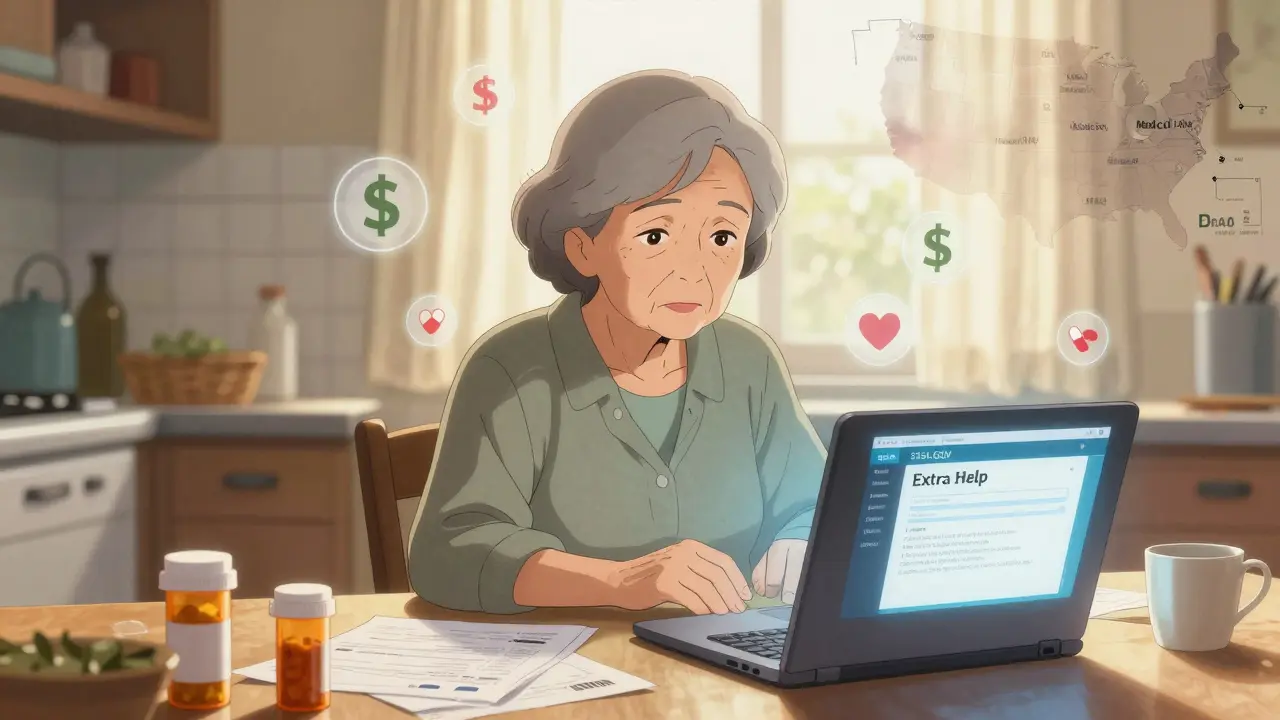
If you’re struggling to pay for your prescriptions, you’re not alone. In 2025, nearly 1 in 4 Medicare beneficiaries said they had trouble affording their medications. But help exists - and it’s not just federal. Every state runs some kind of program to cut drug costs, but they’re wildly different. Knowing which one you qualify for could save you thousands a year.
What Exactly Are State Medication Assistance Programs?
State Pharmaceutical Assistance Programs, or SPAPs, are government-run programs that help people pay for prescriptions. They’re not the same as Medicaid or Medicare Part D. Instead, they’re designed to fill the gaps - especially for seniors and people with disabilities who earn too much for Medicaid but still can’t afford insulin, heart meds, or cancer drugs.
Thirty-two states have active SPAPs as of 2025. Some, like New Jersey’s PAAD program, have been around since the 1960s. Others, like those in Texas and Florida, are expanding fast because drug prices keep climbing. These programs don’t replace Medicare - they work alongside it. In many cases, you need to be on Medicare Part D first, and then the state program pays your copays or premiums.
Medicare Extra Help: The Federal Safety Net
Before diving into state programs, know this: if you qualify for Medicare Extra Help, you might not even need your state’s program. Extra Help is a federal program run by Social Security that slashes your Part D costs to almost nothing.
In 2025, if you’re single and make less than $23,475 a year - or married and make under $31,725 - you qualify. Your resources (savings, investments, property beyond your home) can’t exceed $17,600 for individuals or $35,130 for couples.
What does that mean in real dollars? You pay $0 for premiums and deductibles. Generic drugs cost $4.90 per prescription. Brand-name drugs cost $12.15. That’s it. No surprise bills. No formulary restrictions. And if you don’t have a drug plan, one is chosen for you automatically.
Over 12.6 million people got Extra Help in 2024. But here’s the problem: only 42% of eligible people actually enroll. Why? The application is confusing. It takes an average of 90 days to process. And if you’re waiting, you’re paying full price.
How State Programs Compare: New Jersey vs. Pennsylvania vs. California
Not all SPAPs are created equal. Here’s how three major ones stack up:
| Program | Income Limit (Single) | Income Limit (Couple) | Copay (Generic) | Copay (Brand) | Extra Benefits |
|---|---|---|---|---|---|
| New Jersey PAAD | $38,500 | $48,500 | $5 | $7 | Pays Part D premiums up to $34.70/month |
| Pennsylvania PACE | $27,470 | $36,900 | $5 | $10 | Covers drugs not in Medicare Part D formulary |
| California Medi-Cal Rx | $1,500/month (Medicaid income) | $2,000/month (Medicaid income) | $0-$5 | $0-$5 | 127 extra specialty drugs not covered by Medicare |
New Jersey’s PAAD is one of the most generous. It doesn’t just lower copays - it pays your Part D premium if it’s under $34.70. That’s a $400+ monthly savings for someone on insulin and blood pressure meds.
Pennsylvania’s PACE goes even further. If your drug isn’t on Medicare’s list, PACE covers it. That’s huge for people on rare or expensive specialty drugs. But you have to apply for Extra Help first - and wait up to 120 days for both programs to kick in.
California’s Medi-Cal Rx is the most expansive in terms of drug coverage. It adds 127 specialty medications that Medicare Part D typically won’t touch - including some for multiple sclerosis, rheumatoid arthritis, and rare cancers. But you must qualify for Medicaid first, which means your income has to be very low.
The Hidden Problems: Delays, Formularies, and Confusion
These programs sound perfect - until something goes wrong.
Take New Jersey. A user on a PAAD Facebook group posted in March 2025: “My doctor switched me to a new drug. It’s not on PAAD’s list. I had to go eight weeks without it. The appeal process is broken.” That’s not rare. Many state programs have narrow formularies. If your drug isn’t on the list, you’re stuck - unless you appeal, and appeals can take months.
Then there’s the paperwork. The average applicant spends 8.5 hours filling out forms. You need tax returns, bank statements, proof of residency, medical bills - sometimes even letters from your doctor. And if you miss one thing? Your application gets kicked back. No warning. No call. Just silence for weeks.
And if you move? You’re in trouble. A 2024 Medicare Rights Center study found that 63% of people who relocated between states lost coverage temporarily. One woman moved from Pennsylvania to Florida. Her PACE benefits stopped. Florida’s program didn’t cover her heart medication. She paid $872 out of pocket while waiting for approval.
Who Gets Left Out?
Even with all these programs, millions still fall through the cracks.
First, the income limits don’t match reality. The federal Extra Help resource limit is $17,600. But in San Francisco or New York City, that’s not enough to buy a used car, let alone cover housing. A 2024 KFF analysis found that many people in high-cost states are denied Extra Help - not because they’re rich, but because their savings are tied up in a home they can’t sell.
Second, people with chronic conditions often need drugs that aren’t covered. Insulin is cheaper now under the Inflation Reduction Act - capped at $35 per month - but other drugs like Humira, Ozempic, or Xarelto aren’t. State programs vary wildly on whether they cover them.
Third, the elderly. Many seniors have memory issues or can’t navigate online portals. They rely on family members. But if their kids work two jobs or live out of state? Help doesn’t come.
How to Apply - and Do It Right
Here’s the simple roadmap:
- Check if you qualify for Medicare Extra Help. Go to SSA.gov/extrahelp. Use their online tool. It takes 10 minutes. If you get SSI or Medicaid, you’re automatically enrolled.
- Call your State Health Insurance Assistance Program (SHIP). Every state has one. They’re free. No sales pitch. Just counselors who know your state’s programs inside out. Find yours at shiptacenter.org.
- Apply for your state’s SPAP. Don’t wait. Even if you’re denied Extra Help, you might still qualify for your state’s program. New Jersey’s PAAD income limit is nearly double what Extra Help allows.
- Keep copies of everything. Applications get lost. Save your tax returns, bank statements, prescription receipts. Take photos.
- Reapply every year. Most programs require annual recertification. Miss it, and your benefits stop - even if nothing changed.
Pro tip: If you’re on Medicare and have a low income, apply for both Extra Help and your state program at the same time. Some states, like Pennsylvania, require you to apply for Extra Help first. Others, like New Jersey, let you do them in any order.
What’s Changing in 2026?
Big changes are coming. Starting January 2026, the Social Security Administration will roll out a new, simplified Extra Help application. It’s designed to cut processing time by 30% and boost enrollment. That’s huge.
Also, the $2,000 annual out-of-pocket cap for Medicare Part D kicks in fully in 2025. That means once you hit $2,000 in drug costs, you pay nothing for the rest of the year. This helps everyone - even those not in SPAPs.
But the pressure is growing. Specialty drug prices are rising 12.3% a year. State budgets are only increasing 4-6%. Seven states could run out of money by 2026. That means tighter formularies, longer waitlists, or even benefit cuts.
California, Texas, and Florida are already expanding their programs. Other states are watching. But if you’re on a fixed income, you can’t wait for policy changes. You need help now.
Bottom Line: Don’t Guess - Find Out
You don’t need to be poor to qualify. You don’t need to be perfect at paperwork. You just need to start.
Medicare Extra Help could save you $4,000-$5,000 a year. A state SPAP could save you another $2,000. Together, that’s $7,000 - enough to cover rent, utilities, or groceries.
Call SHIP today. Don’t wait for a bill to come in. Don’t wait until you skip a dose. The system is messy, but it works - if you use it.
Do I have to be on Medicare to get state medication help?
Most state programs require you to be enrolled in Medicare Part D. A few, like California’s Medi-Cal Rx, are tied to Medicaid and don’t require Medicare. But for the majority - including PAAD and PACE - you need to be on Medicare first. The state program then helps pay what Medicare doesn’t.
Can I get help if I make too much for Extra Help?
Yes. Many state programs have higher income limits than Extra Help. New Jersey’s PAAD lets you earn up to $38,500 as a single person. Pennsylvania’s PACE allows $27,470. That’s higher than the federal limit of $23,475. Even if you’re denied Extra Help, you might still qualify for your state’s program.
What if my drug isn’t covered by my state program?
You can appeal. Most programs have a formal appeals process, but it can take 6-8 weeks. In the meantime, ask your doctor for a 30-day supply on a patient assistance program from the drug manufacturer. Many companies offer free or low-cost drugs to those who qualify. You can find them at needymeds.org.
How long does it take to get approved?
Extra Help takes about 90 days on average. State programs like PAAD process applications in 30 days, but complex cases can take up to 90. If you’re waiting, you’re paying full price. Apply early. Don’t wait until your next refill.
Can I switch programs if I move to another state?
Yes - but not automatically. When you move, your old program ends. You must reapply in your new state. That gap can leave you without coverage for weeks or months. Call SHIP in your new state before you move. Get the forms ready. Don’t wait until you’re settled.
Is there a deadline to apply?
No. Most programs accept applications year-round. But if you wait until your prescription runs out, you’ll pay full price until approval. Apply as soon as you realize you’re struggling. There’s no penalty for applying early.
What to Do Next
Right now, pick up the phone. Call your State Health Insurance Assistance Program. Ask: “What programs do I qualify for?” Don’t Google it. Don’t wait. Don’t assume you don’t qualify. The system is built to be confusing - but the help is real.
If you’re on insulin, blood pressure meds, or any chronic condition drug - you’re likely eligible for more help than you think. Use it. Your health depends on it.

9 Comments
Kimberly Mitchell
January 15, 2026 AT 10:31The state programs are a bureaucratic nightmare. PAAD requires five forms, a notarized affidavit, and a notarized letter from your pharmacist attesting you’re not a drug dealer. Meanwhile, the federal Extra Help portal crashes if you use Firefox. We’re talking about life-saving medication, not a DMV appointment. This isn’t assistance-it’s performance art for bureaucrats who think complexity equals rigor.
And don’t get me started on the formularies. If your drug isn’t on the list, you’re SOL. Even if it’s the only thing keeping you alive. The state doesn’t care about clinical necessity-they care about cost-per-dose ratios and vendor contracts. You’re not a patient. You’re a line item.
Angel Molano
January 16, 2026 AT 04:06You’re not entitled to free drugs. Stop whining.
Vinaypriy Wane
January 17, 2026 AT 18:54I am from India, and I have seen how pharmaceutical pricing works here-where insulin costs $0.50 per vial because the government negotiates with manufacturers. Here, you have billionaires lobbying to keep drug prices high, while seniors ration pills. It is not right. It is not moral. It is not sustainable. And yet, we are told to be grateful for $5 copays? I am not angry-I am heartbroken. Please, if you can, help someone apply. One form at a time. One phone call. One person at a time.
And yes, the system is broken. But if you don’t act, who will?
jefferson fernandes
January 18, 2026 AT 01:51Let me clarify something: Medicare Part D + SPAP is not a safety net-it’s a patchwork quilt made of duct tape and hope.
Here’s the truth: if you’re over 65, on a fixed income, and taking more than two chronic meds, you are one missed paycheck away from disaster. The $2,000 out-of-pocket cap in 2025? Great. But what if you hit it in March? Then you get to enjoy free drugs for the rest of the year-unless your state’s formulary changes in May and removes your drug. Then you’re back to square one.
And don’t forget: SHIP counselors are underfunded, overstretched, and often working with outdated databases. One woman I know applied for PACE in November. Got approved in June. Her husband died in February.
Apply early. Apply twice. Keep copies. Call SHIP every two weeks. And if you’re lucky enough to have family who can help-ask them. This isn’t about politics. It’s about survival. And we’re failing people every single day.
Trevor Whipple
January 18, 2026 AT 16:26lol so you mean to tell me i gotta fill out 7 forms just to get my $35 insulin? and they dont even cover ozempic?? what a joke. i thought this was america not north korea. also i applied for extra help and they asked for my tax return from 2019?? i dont even have that. i use cash app. anyway my neighbor said he got his meds free through some church program. i think the gov is just trying to make us suffer. also can we just make drugs cheaper?? like why is a pill that costs 2 cents to make $1,200??
Damario Brown
January 19, 2026 AT 00:02Let’s be real: these programs aren’t designed to help you-they’re designed to make you feel like you’re being helped while the system quietly drains your dignity.
Every form you fill out is a data point for a predictive algorithm that flags you as ‘high-risk, low-income, likely to appeal.’ That triggers a deeper audit. Every appeal you file gets logged as ‘non-compliant behavior.’ Every time you call SHIP, your voice is recorded and analyzed for emotional distress-so they can prioritize ‘less volatile’ applicants.
And the ‘simplified’ 2026 application? It’s just a front. The backend still requires the same 14 documents. They just made the website prettier. You think they care if you live or die? No. They care if your case gets closed before the fiscal year ends.
So go ahead. Apply. Wait 90 days. Get denied. Appeal. Wait another 60. Then cry into your insulin vial. The system’s already won.
sam abas
January 20, 2026 AT 10:12Okay, so let’s unpack this. First, the article assumes that everyone has internet access, a printer, a scanner, a computer, and the cognitive capacity to navigate a 47-page PDF with 12 hyperlinks that don’t work. That’s a laughable assumption. Many seniors live in rural areas with no broadband. Some can’t read. Others have dementia. And yet the solution is ‘call SHIP’? Who’s gonna call? Their grandkid who’s working two jobs and just got fired?
Second, the income limits are based on federal poverty levels from 2010. That’s not inflation-it’s a joke. In San Francisco, $23k/year is below the cost of a studio apartment. But you’re ‘too rich’ for Extra Help? So you’re supposed to sell your home? Move into a van? That’s not policy-that’s cruelty dressed up as compassion.
Third, the article ignores the fact that 78% of state SPAPs have no online application. You have to mail it. On paper. With a stamp. And if you mess up one box? They don’t email you. They don’t call. They just… stop responding. That’s not bureaucracy. That’s abandonment.
And fourth-why is no one talking about the fact that pharmaceutical companies pay state programs to exclude certain drugs? It’s called ‘formulary kickbacks.’ The same companies that charge $12,000 for a vial of Humira are the ones who fund the very programs that won’t cover it. That’s not a loophole. That’s a cartel.
So no. This isn’t ‘help.’ It’s a rigged game. And we’re all just playing with house money.
John Pope
January 22, 2026 AT 10:04There’s a metaphysical truth here: medication is not a commodity. It’s a covenant between human frailty and institutional grace.
But we’ve turned it into a spreadsheet. A line item. A KPI. We’ve replaced compassion with compliance, and dignity with documentation.
When you force a diabetic to choose between insulin and rent, you’re not just denying a drug-you’re denying the sanctity of life itself. And when you make them wait 90 days for approval while their kidneys fail, you’re not managing a program-you’re practicing passive euthanasia.
These state programs? They’re not broken. They’re designed to fail. To make you beg. To make you suffer. To make you feel small. Because if you feel small enough, you won’t fight back.
But here’s the irony: the people who need this help the most? They’re too tired to fight. And that’s the real tragedy.
So call SHIP. Fill out the forms. Take the photos. Send the letters. But know this: the system doesn’t want you to win. It just wants you to try.
And that’s the most cruel thing of all.
Clay .Haeber
January 23, 2026 AT 04:53Oh wow. A 12-page essay on how to beg the government for your life-saving meds like you’re asking for a discount at a Walmart clearance sale. How quaint. How… American.
Let me get this straight: you’re proud of a program that lets you pay $5 for a generic pill… while the same pill costs $120 in Canada. You think $34.70/month premium assistance is a win? Honey, that’s not a safety net-that’s a hammock strung between two dumpsters.
And don’t even get me started on the ‘pro tip’ to apply for both programs at once. As if the federal government and the state government aren’t already locked in a bitter, paperwork-based divorce. You think they coordinate? No. They’re busy blaming each other for the mess.
Meanwhile, the CEOs of Pfizer and Merck are sipping champagne on yachts, laughing at how easy it is to turn human suffering into shareholder value.
So go ahead. Apply. Wait. Get denied. Appeal. Cry. Reapply. Repeat.
And when you finally get your meds? Smile. Because you’re one of the lucky ones.
Meanwhile, the rest of us? We’re just waiting for the next headline: ‘Elderly Woman Dies After Skipping Dose to Pay for Rent.’
Classic. Just… classic.