

Switching from a brand-name medication to a generic might seem like a simple cost-saving move-but for some people, it’s not that simple. You might have noticed your symptoms returning, your energy dropping, or even new side effects popping up after your pharmacy filled your prescription with a different pill. If that’s happened to you, you’re not alone. And you don’t have to accept it as normal. Talking to your doctor about staying on your brand medication isn’t about being difficult-it’s about being informed and proactive.
Why Some People Need to Stay on Brand Medication
Not all medications are created equal, even if they have the same active ingredient. The FDA says generics must be bioequivalent to brand-name drugs, meaning they deliver the same amount of active drug into your bloodstream. But bioequivalence doesn’t mean identical. Generics can differ in inactive ingredients-like dyes, fillers, or preservatives-which can cause real problems for some people. For example, if you’re allergic to lactose, gluten, or a specific dye, a generic version might trigger a reaction even though the active drug is the same. About 7% of patients report allergic or intolerant reactions to these inactive ingredients, according to the Journal of Allergy and Clinical Immunology a peer-reviewed medical journal that publishes research on immune system disorders and allergic reactions. That’s not rare. It’s a documented issue. Then there are drugs with a narrow therapeutic index-medications where even small changes in blood levels can cause big problems. Think levothyroxine for thyroid conditions, warfarin for blood thinning, or anti-seizure drugs like phenytoin or levetiracetam. A 2021 study in Neurology a leading medical journal focused on disorders of the nervous system found that patients switching from brand-name anti-epileptic drugs to generics had a 23% higher chance of having a seizure. Another study in the American Journal of Managed Care a publication that analyzes healthcare delivery, insurance, and cost-effectiveness showed a 17% spike in emergency visits for people switching between different generic versions of warfarin. These aren’t theoretical concerns. People on Drugs.com, Reddit, and patient forums regularly share stories like: "I hadn’t had a seizure in five years on Keppra. Three months after switching to generic, I had three in two weeks." That’s not coincidence. It’s clinical evidence you can bring to your doctor.How to Prepare for the Conversation
Your doctor isn’t against you. They’re caught between your needs and insurance rules. But they can’t help if you don’t give them the right tools. Start by gathering facts-not opinions.- Keep a symptom journal. Write down when you switched, what symptoms appeared, and when they improved after going back to the brand. Include dates, severity (on a scale of 1-10), and anything unusual-fatigue, mood swings, nausea, dizziness.
- Collect lab results. If your doctor monitors your blood levels (like INR for warfarin or TSH for thyroid meds), bring copies. Show them the numbers dropped or spiked after the switch.
- Check your pharmacy records. Did you switch brands more than once? Note each change and the reaction. Pharmacists can print this out for you.
- Look up your drug in the FDA’s Orange Book a public database listing approved drug products with therapeutic equivalence evaluations. Find the Therapeutic Equivalence Rating. Some drugs are rated AB (fully interchangeable), others are BX (not recommended for substitution). If yours is BX, that’s your evidence.
What to Say-The SBAR Method
Don’t just say, "I don’t like the generic." That sounds like preference. Say something specific. Use the SBAR framework doctors are trained to respond to:- Situation: "I was switched from brand-name Keppra to generic last month, and since then, I’ve had three seizures. I hadn’t had one in five years."
- Background: "I’ve been on this medication since 2018. I tried a different generic last year and had the same issue."
- Assessment: "I believe the change in formulation is affecting how my body absorbs the drug. My lab values also changed-my drug level dropped from 12 to 8 mcg/mL."
- Recommendation: "Can we stay on the brand? Or try another brand version if the generic is causing this?"
Insurance and Prior Authorization
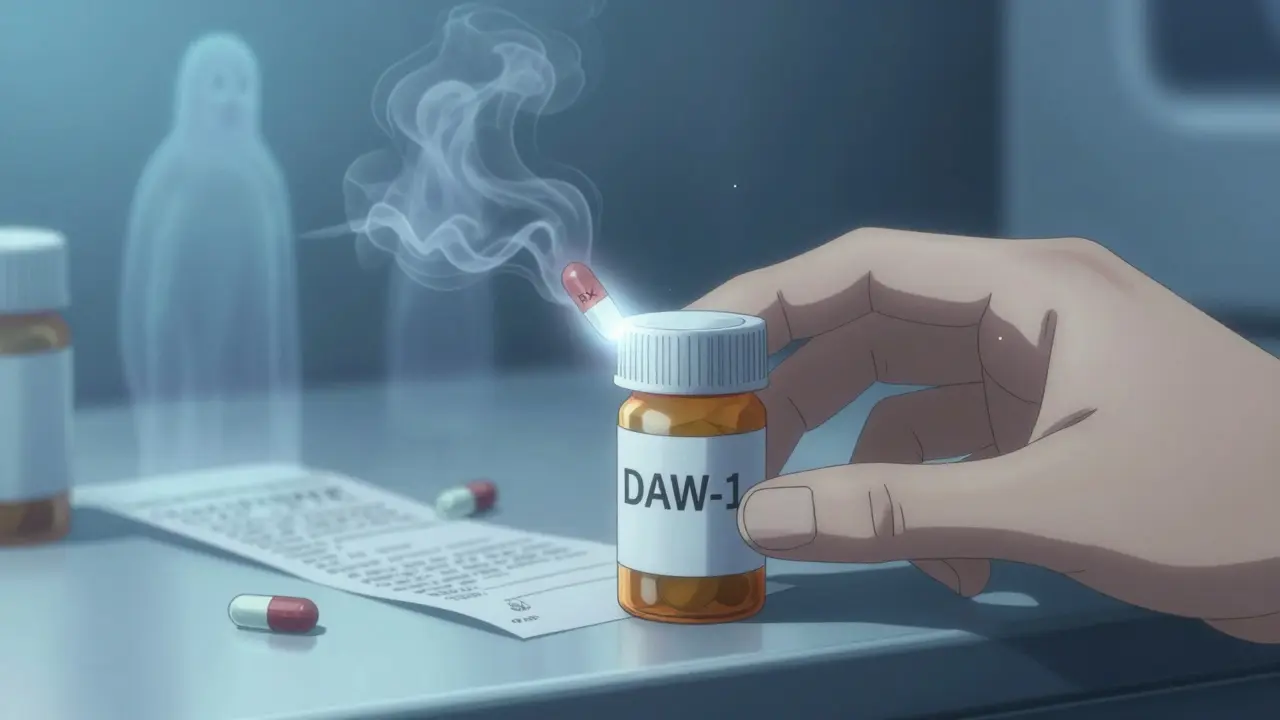
Here’s the hard truth: most insurance plans will automatically switch you to generic unless your doctor fights for the brand. That’s because generics make up 90% of prescriptions but only 15% of drug spending. Insurers push them hard. You’ll likely need a prior authorization. That means your doctor has to fill out paperwork proving medical necessity. This can take 15-30 minutes of their time. Some doctors avoid it. Others resent it. But you can help. Bring your symptom journal, lab results, and pharmacy records. Ask your doctor to write "Dispense as Written" (DAW-1) on the prescription. That code tells the pharmacy: "Do not substitute. This is medically necessary." According to the Kaiser Family Foundation a nonprofit organization that analyzes U.S. health policy and healthcare systems, 72% of insurance denials for brand-name drugs are overturned on appeal-when you have solid documentation.What If Your Doctor Says No?
If your doctor refuses, ask why. Are they worried about cost? Do they think you’re being irrational? Or do they genuinely believe the generic will work? If it’s about cost, ask if they’d consider a 30-day trial of the brand to see if symptoms improve. If they’re skeptical, offer to get a second opinion from a specialist-like a neurologist, endocrinologist, or pharmacist who specializes in medication therapy management. You can also ask for a referral to a pharmacist a licensed healthcare professional trained in medication safety and use who works with your insurance. Many insurers have clinical pharmacists who review prior auth requests. They often approve brand-name drugs when presented with clear evidence.
What About the Future?
The trend is clear: generics are here to stay. By 2027, the Generic Pharmaceutical Association predicts 95% of prescriptions will have a generic option. But that doesn’t mean everyone should switch. The FDA is improving how it evaluates complex generics-especially for drugs like thyroid meds and seizure treatments. And new tools like pharmacogenomic testing (which looks at how your genes affect drug response) might soon help doctors pick the right version for you-brand or generic-based on your biology, not guesswork. For now, your voice matters. You know your body better than any algorithm or insurance policy. If you’ve had a bad experience, document it. Bring it to your doctor. And don’t let anyone tell you it’s "just a pill."Real Talk: What Works
A patient in Adelaide, Australia, switched from brand-name levothyroxine to a generic after her pharmacy changed suppliers. Within weeks, her TSH levels jumped from 2.1 to 8.9. She felt exhausted, gained weight, and struggled to focus. She brought her lab reports to her GP, showed her symptom log, and asked to return to the brand. Her doctor wrote DAW-1. Her TSH dropped back to normal in six weeks. She didn’t demand. She didn’t argue. She presented facts. And she got what she needed. You can too.Can I just ask my pharmacist not to substitute my medication?
In most cases, no. Pharmacists are legally allowed to substitute generics unless your doctor writes "Dispense as Written" (DAW-1) on the prescription. Even if you ask, they may still switch it unless the prescription explicitly prohibits substitution. The only way to guarantee you get the brand is to have your doctor mark the prescription with DAW-1.
Are brand-name medications safer than generics?
Not inherently. Both must meet the same FDA standards for quality, purity, and strength. The difference isn’t safety-it’s consistency. Brand-name drugs are made by one manufacturer with one formula. Generics can be made by multiple companies with slightly different inactive ingredients, which can affect absorption or trigger reactions in sensitive individuals. The risk isn’t about being "unsafe," it’s about being less predictable for some people.
What if my insurance denies my request for the brand name?
You can appeal. Most insurers have a formal appeals process. Your doctor needs to submit clinical documentation-lab results, symptom logs, previous failed attempts with generics. If you’ve kept records, this is easier than you think. According to the Kaiser Family Foundation, 72% of appeals succeed when supported by solid evidence. Don’t give up after one denial.
Can I switch back to the brand if I tried the generic and it didn’t work?
Yes. Many patients try generics first, then return to brand when they notice side effects or loss of effectiveness. Your doctor can request a change in prescription at any time. You don’t need to stay on a generic forever just because you tried it once. Document what happened, and use that to support your next request.
Do all generics have the same ingredients?
No. While the active ingredient must be identical, the inactive ingredients-like fillers, dyes, and preservatives-can vary between manufacturers. One generic might use cornstarch, another might use lactose. If you’re sensitive to gluten, dairy, or artificial colors, even small differences can cause reactions. Always check the inactive ingredients listed on the label or ask your pharmacist.

11 Comments
Erica Santos
March 9, 2026 AT 20:53Oh wow, another article telling us to beg our doctors for the expensive version like we’re asking for a luxury car instead of a life-saving pill. 🙄
Let me guess - the real issue isn’t the generic, it’s that Big Pharma’s been paying off your ‘doctor’ to keep you hooked on $300/month brand names while they laugh all the way to the bank.
And don’t even get me started on the ‘symptom journal’ - yeah, because nothing says ‘medical science’ like scribbling ‘I feel sad and my hair fell out’ on a Post-It.
Meanwhile, 90% of people switch to generics and don’t even notice. But sure, let’s treat every individual like a snowflake with a unique biochemical rebellion against the laws of pharmacology.
It’s not about bioequivalence - it’s about profit margins. And you? You’re just the mark.
George Vou
March 11, 2026 AT 01:55they say generics are the same but they aint… i heard from this guy on youtube that the fda lets them use talcum powder as filler in like 30% of meds and that’s why people get cancer after switching… also my cousin’s dog died after eating a generic pill… not sure if that’s real but it feels real if u know what i mean…
plus the color of the pill changed from blue to green and that’s not a coincidence bro… colors are coded by the deep state to control your mood…
they’re watchin you.
you think this is about health? nah. it’s about control. and your doctor? he’s paid by the pharmas. they got microchips in the pills. i seen it on reddit.
stay on brand. stay free.
Scott Easterling
March 12, 2026 AT 11:37Ugh. Another one of these…
Did you read the FDA’s guidelines? Did you? No. You just read some blog that sounds smart.
Let’s be real: if your body can’t handle a generic, you probably have a psychological dependency on the brand name. You think the pill knows your name? It’s just a chemical.
And now we’re gonna pay $400 for a pill that does the same thing as the $10 one? That’s not healthcare. That’s consumerism with a stethoscope.
Also, DAW-1? That’s not a medical term - it’s a billing code. You’re being manipulated.
Stop making yourself a victim. Take the generic. Grow up.
And stop keeping journals. You’re not writing a novel. You’re taking medicine.
Mantooth Lehto
March 13, 2026 AT 17:07I switched to generic levothyroxine last year and I felt like a zombie. Like, full-on, can’t-get-out-of-bed, cry-for-no-reason, forget-my-own-name zombie. 😭
My doctor laughed. Said I was ‘overreacting.’
So I cried in his office. Then I cried in the parking lot. Then I cried in my car.
And then I went back to brand. And boom - energy. Clarity. I could feel my own thoughts again. 🥹
It’s not about being difficult. It’s about being alive.
Don’t let them tell you you’re dramatic. You’re not. You’re just not numb yet.
And if you’re one of those people who says ‘just take the generic’? You’ve never been truly sick. You don’t get it.
Love you. You’re not alone. 💛
Melba Miller
March 15, 2026 AT 01:50This is why America is falling apart.
Every time someone says ‘I need the brand,’ they’re not asking for health - they’re asking for privilege.
Generics exist to make healthcare affordable for the working class. But now we’ve got people treating their thyroid med like a designer handbag.
And don’t even get me started on ‘pharmacogenomic testing’ - that’s just a fancy way of saying ‘I want my own special pill because I’m too important for the common one.’
Meanwhile, my sister in Ohio is choosing between insulin and rent.
So yeah - keep your DAW-1. Keep your symptom journal. Keep your ‘I’m special’ narrative.
But don’t act like you’re saving lives. You’re just making insurance companies raise premiums for everyone else.
Stop being selfish.
Take the generic.
Or move to Canada.
Katy Shamitz
March 16, 2026 AT 01:20Oh honey, I feel you so much.
My mom was on brand-name warfarin for 12 years - perfect INR, no clots, no bleeds.
Switched to generic? Her INR went from 2.5 to 4.8 in three weeks. She ended up in the ER with a brain bleed. 😢
It’s not about being ‘difficult’ - it’s about being smart.
And your doctor? They’re overwhelmed. They’ve got 12 patients waiting. They don’t have time to fight insurance.
So here’s what I do: I print out the FDA’s Orange Book, highlight the BX rating, put it in a folder with my lab reports, and hand it to them with a smile.
‘I know you’re busy. But this could save my life.’
They always say yes.
Because when you’re calm, clear, and kind - they can’t say no.
You got this, sweetie. 💕
Nicholas Gama
March 16, 2026 AT 08:27Generic =/= inferior. But bioequivalence ≠ identity.
Therapeutic index matters.
AB vs BX ratings exist for a reason.
Pharmacokinetics aren’t opinions.
Stop emotionalizing science.
But also - don’t be a fool.
If your drug has a narrow TI, demand DAW-1.
It’s not elitism. It’s math.
Mary Beth Brook
March 16, 2026 AT 11:40Per FDA 21 CFR 310.5, bioequivalence is defined as no more than 80-125% AUC and Cmax variance. That’s a 45% window. For drugs with a narrow TI - like levothyroxine - that’s clinically significant.
DAW-1 is not a suggestion. It’s a clinical imperative for BX-rated agents.
Insurance formularies are driven by cost, not outcomes.
Pharmacists are legally bound to substitute unless prohibited.
Therefore: documentation is non-negotiable.
Lab trends. Symptom correlation. Switch history.
That’s not ‘emotional.’ That’s evidence-based practice.
And if your provider resists? Escalate to the clinical pharmacist. They’re trained to interpret this data.
Stop begging. Start presenting.
Neeti Rustagi
March 16, 2026 AT 13:03While the concerns raised in this article are indeed valid from a clinical perspective, I must emphasize the importance of balancing individual patient needs with the broader societal imperative of cost containment in healthcare.
In developing countries like India, where access to even basic medications is a challenge, the availability of affordable generics saves millions of lives.
While some patients may experience variability, this does not negate the overwhelming public health benefit of generic substitution.
Perhaps a middle path - such as mandatory disclosure of inactive ingredients and pharmacist-led patient counseling - could serve as a more sustainable solution.
Thank you for raising awareness, but let us not forget the millions who rely on generics simply to survive.
Philip Mattawashish
March 17, 2026 AT 06:57You think this is about pills?
No.
This is about control.
They don’t want you to know your body.
They want you to be passive.
They want you to trust the system.
But the system is rigged.
The FDA? They’re a front.
The doctors? They’re trained to obey.
The pharmacists? They’re paid to substitute.
You’re not a patient.
You’re a data point.
And your brand-name pill? It’s the last thing you own that’s truly yours.
Don’t let them take it.
It’s not medicine.
It’s resistance.
Tom Sanders
March 19, 2026 AT 06:41I tried the generic. Felt weird. Went back to brand. Done. No journal. No drama. Just don’t switch if it ain’t broke. Easy.