Medication Management Decision Guide
Are you experiencing something unusual after starting a medication? Let's find the safest way to handle it.
Which of these best describes your current situation?
You've probably heard a horror story about a medication-maybe from a coworker, a relative, or a random thread on the internet. Maybe someone told you that a certain drug "ruined their life," and now you're staring at your own prescription bottle with a sense of dread. It's a common feeling, but here's the reality: a huge portion of what we believe about medication side effects isn't actually based on science. These misconceptions don't just cause unnecessary anxiety; they lead people to stop treatments that are literally keeping them alive.
The problem is that we tend to trust a single anecdotal story more than a clinical trial involving thousands of people. But acting on a myth can be dangerous. When people self-discontinue medication based on a misunderstanding, they aren't just avoiding a potential side effect-they are inviting the original disease to come back with a vengeance. Let's clear up the confusion and look at what the data actually says about how these drugs work in your body.
The Danger of the "Just Stop It" Mentality
One of the most persistent and risky myths is the idea that if you feel something wrong after starting a pill, the only solution is to stop taking it immediately. It sounds like common sense-if something feels bad, stop doing it, right? In the world of medicine, that logic can be catastrophic. According to an analysis by AdhereTech in 2022, roughly 37% of people with chronic conditions have stopped their treatment because of perceived side effects without talking to their doctor first.
Here is the catch: most side effects are manageable. FDA is the United States Food and Drug Administration, a federal agency responsible for protecting public health by ensuring the safety and efficacy of drugs. Data from their Adverse Event Reporting System shows that while 10-20% of patients do experience some form of side effect, the vast majority of these issues can be fixed. Sometimes it's as simple as taking the pill with a meal or changing the time of day you take it. For example, a 2020 study in the Journal of Clinical Pharmacy and Therapeutics found that taking certain antibiotics with food reduced nausea by a staggering 68%.
Stopping abruptly is often worse than the side effect itself. Take antidepressants, for instance. A 2019 systematic review in the Journal of Clinical Psychiatry found that 56% of patients who quit antidepressants cold turkey suffered withdrawal symptoms. We're talking about dizziness, insomnia, and those strange "brain zaps" that feel like tiny electric shocks in the head. When you stop a medication, you aren't just removing the drug; you're shocking your nervous system.
| Medication Type | Common Myth/Action | Actual Risk/Outcome |
|---|---|---|
| Antidepressants | "I feel better, I can stop now" | 56% risk of withdrawal (insomnia, brain zaps) |
| Beta-Blockers | "I feel too tired to keep taking this" | 3.2x higher risk of recurrent cardiac events |
| Antibiotics | "Symptoms are gone, I'm cured" | 17% increase in likelihood of resistant infection |
The Truth About Antibiotics and "Feeling Better"
We've all been there: you're on a ten-day course of antibiotics, and by day four, you feel great. The fever is gone, the cough has stopped, and you think, "Why keep poisoning my system with chemicals if I'm already cured?" This is a massive misconception that fuels one of the biggest health crises of our time: Antibiotic Resistance is the process where bacteria evolve to survive the drugs designed to kill them, making infections harder to treat.
The CDC is the Centers for Disease Control and Prevention, the leading national public health institute of the United States, which warns that stopping antibiotics early allows the strongest bacteria to survive. These survivors then mutate and share their resistance, creating "superbugs." A meta-analysis in The Lancet Infectious Diseases showed that just one premature discontinuation increases the risk of a resistant infection by 17%.
The biological reality is that feeling better doesn't mean the bacteria are gone; it just means the bacterial load has dropped enough that your symptoms have faded. To actually eliminate 99.9% of the pathogens, you usually need the full 7-14 day course. When 63% of people believe they can stop as soon as symptoms fade, they aren't just risking their own recovery-they're contributing to a global problem that causes tens of thousands of deaths annually.
Statins and the "Muscle Pain" Scare
If you've ever looked up Statins, which are a class of lipid-lowering medications that reduce the amount of cholesterol made by the liver, you've probably seen people complaining about severe muscle aches. It's so common that 74% of patients discontinue them within the first year, according to a study in the American Journal of Cardiology.
But here is where the science gets interesting. The Cholesterol Treatment Trialists' Collaboration looked at 174,000 patients across 27 trials and found that the absolute risk difference for muscle symptoms between statin users and people taking a placebo was less than 1%. Even more shocking? The New England Journal of Medicine found that 90% of patients who thought they had statin-induced muscle pain could actually tolerate the drug when they didn't know whether they were receiving the drug or a placebo. This is a classic example of the "nocebo effect," where expecting a side effect actually causes you to feel it.
If you do experience muscle issues, you don't have to quit. There are different types of statins. Hydrophilic versions (like pravastatin or rosuvastatin) don't penetrate muscle tissue as easily as lipophilic ones, reducing muscle-related adverse events by 32%. Switching the type of drug, rather than quitting entirely, is often the winning move.
The OTC Trap: Are "Simple" Painkillers Safer?
There's a general belief that over-the-counter (OTC) medications are safer because they don't require a prescription. While they are accessible, that doesn't mean they are risk-free or universally effective. Many people spend months self-managing chronic pain with ibuprofen or acetaminophen, delaying professional treatment by an average of nearly 15 months. This often leaves the underlying condition untreated while the patient accumulates internal damage.
Take Acetaminophen, known as Tylenol in the US, which is a common medication used to treat pain and fever. It's widely seen as harmless, but doses exceeding 4,000mg per day can lead to severe liver toxicity. The CDC reports 56,000 emergency department visits annually related to this. Similarly, overloading on ibuprofen can lead to gastrointestinal bleeding, causing thousands of hospitalizations each year.
The myth here is that a prescription drug is "stronger" and therefore "riskier" than an OTC drug. In reality, the risk is all about the dose and the individual's health profile. An OTC drug taken incorrectly can be far more dangerous than a prescription drug taken under medical supervision.
Prescription Drugs vs. Illicit Substances
The opioid epidemic has highlighted a dangerous myth: the idea that because a drug is prescribed by a doctor, it is inherently safe. This belief led millions of people to believe that prescription opioids were a safe bet for long-term pain. In reality, the National Institute on Drug Abuse found that 53% of new opioid misuse cases in 2022 started with prescriptions obtained from friends or family.
A 2021 study by the American Society of Addiction Medicine showed that prescription opioids carry a 23% risk of developing a use disorder after just 30 days. While illicit fentanyl is significantly more lethal per dose, the "safety" of a prescription bottle is a dangerous illusion when the drug is used outside of strict medical guidelines. Furthermore, mixing these medications with alcohol increases mortality risk by 47%, turning a managed treatment into a life-threatening combination.
How to Actually Manage Your Meds
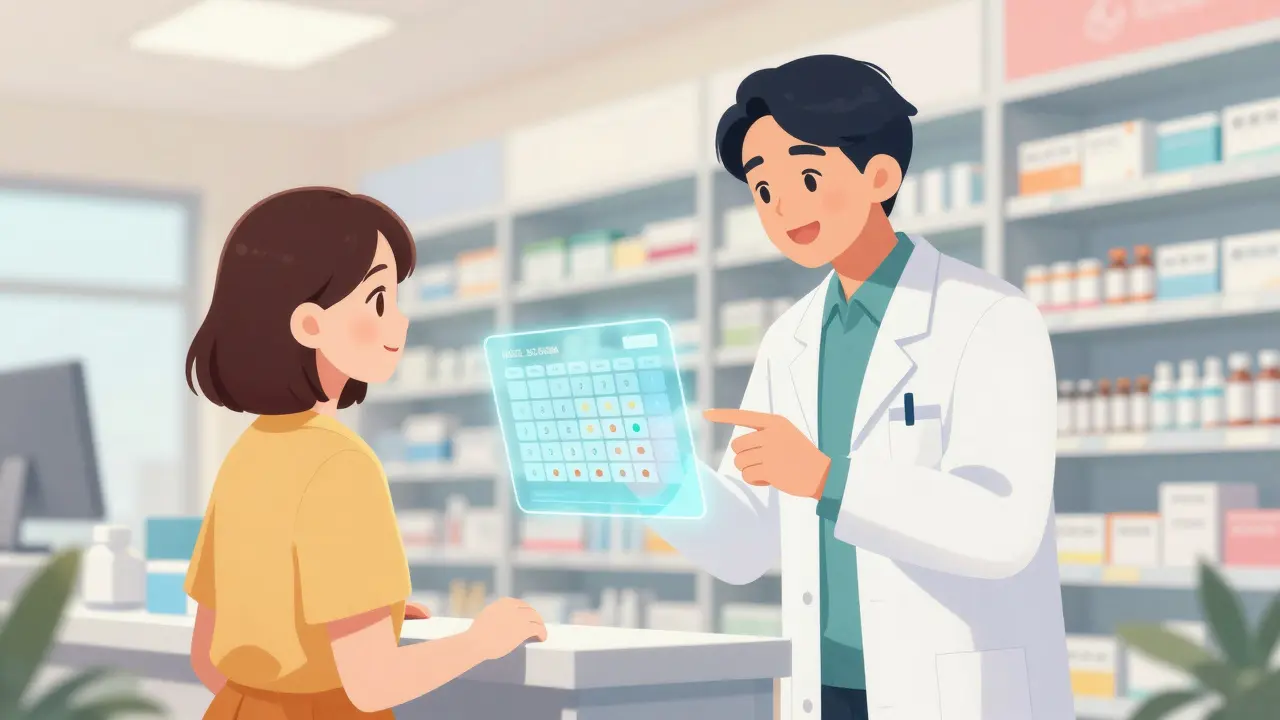
So, how do you navigate the space between a helpful medication and a frustrating side effect? The key is shared decision-making. Instead of Googling your symptoms and deciding to quit, use a "teach-back" method with your provider. Tell them exactly how you feel, and then explain back to them the plan for managing it to ensure there's no misunderstanding.
Pharmacists are your best resource here. A consultation for medication therapy management can reduce side-effect-related discontinuations by 41%. They can tell you if your nausea is a known side effect that vanishes after a week, or if it's a sign that you need a different dose. If you struggle to keep track, using visual schedules or adherence apps can help you distinguish between a side effect and a symptom of your actual illness.
What should I do if I suspect a medication is causing side effects?
The most important step is to contact your healthcare provider before changing your dose or stopping the medication. Many side effects are temporary or can be mitigated by adjusting the timing of the dose or taking the medication with food. Abruptly stopping some medications, such as antidepressants or beta-blockers, can cause severe withdrawal symptoms or increase the risk of a medical emergency.
Is it true that some side effects are just "in my head"?
While the symptoms are very real, they can sometimes be caused by the "nocebo effect." This happens when a patient expects a drug to cause a side effect because they read about it online, and the brain triggers those symptoms even if the drug itself isn't causing them. This is particularly common with statins and muscle pain.
Can I stop taking antibiotics once my symptoms disappear?
No. Feeling better does not mean the infection is fully gone. Stopping early allows the most resilient bacteria to survive and develop resistance. This not only increases your chance of the infection returning but also contributes to the global rise of antibiotic-resistant "superbugs." Always complete the full course as prescribed.
Are over-the-counter pain relievers safer than prescription drugs?
Not necessarily. While they are easier to access, OTC medications like acetaminophen and ibuprofen have significant risks if taken in high doses or over long periods, including liver toxicity and gastrointestinal bleeding. Prescription drugs, while more potent, are monitored by a doctor, which often makes them a safer choice for chronic conditions.
How can I tell the difference between a side effect and a symptom of my illness?
This can be tricky, but keeping a daily log of when you take your medication and when the symptoms occur can help. If a symptom appears shortly after a dose, it's more likely a side effect. If it's constant or fluctuates regardless of the medication timing, it might be the disease. Discussing these patterns with a pharmacist or doctor is the best way to get a clear answer.
Next Steps for Better Health
If you're currently taking a long-term medication and feeling hesitant, start by auditing your current routine. Are you taking your pills with food? Are you tracking your symptoms? Your next move should be a quick call to your pharmacist to see if there's a simple adjustment that could make your treatment more tolerable.
For those managing multiple chronic conditions, look into shared decision-making. Ask your doctor for a management plan that you help create. When you're part of the process, you're 52% less likely to quit your medication prematurely, because you actually understand why the drug is necessary and how to handle the bumps along the way.