
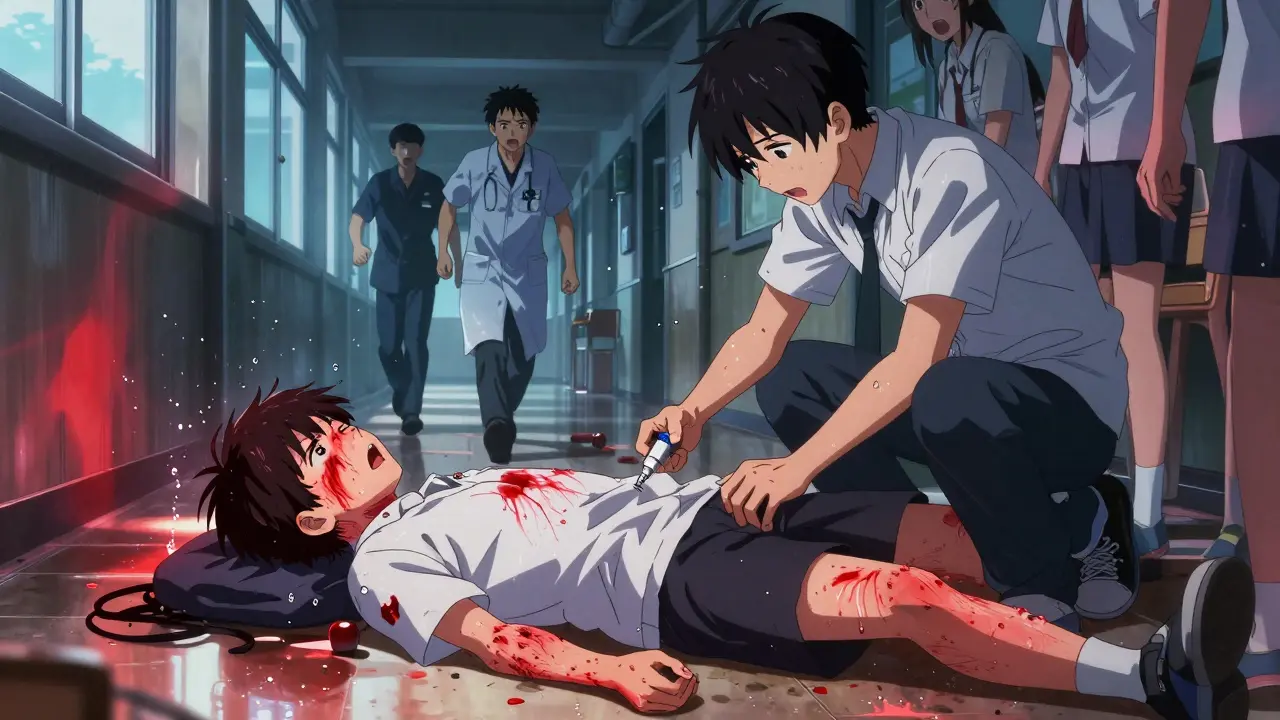
When someone suddenly struggles to breathe, their skin breaks out in hives, and their throat feels like it’s closing, time isn’t just tight-it’s running out. This isn’t a panic attack. It’s anaphylaxis, a life-threatening allergic reaction that can kill in minutes if not treated immediately. And the only thing that can save them? Epinephrine. Not antihistamines. Not steroids. Not waiting to see if it gets worse. Epinephrine-and it must be given fast.
What Exactly Is Anaphylaxis?
Anaphylaxis isn’t just a bad allergy. It’s a full-body emergency. The immune system goes into overdrive, releasing chemicals that cause blood vessels to leak, airways to swell, and blood pressure to crash. Symptoms come on fast-usually within minutes, sometimes up to two hours after exposure to an allergen.The signs aren’t always obvious at first. You might see a few hives or swelling around the lips. But if that’s followed by trouble breathing, a tight chest, dizziness, or nausea, you’re looking at anaphylaxis. The Resuscitation Council UK and the American Academy of Allergy, Asthma & Immunology agree: if you have skin or mucosal symptoms (like hives or swelling) plus one of these-trouble breathing, low blood pressure, or ongoing gut symptoms like vomiting-you’re dealing with anaphylaxis.
Eighty to ninety percent of cases start with skin reactions. Seventy percent involve breathing problems. About one in three people drop in blood pressure. And nearly half have stomach symptoms. It’s not a guess. It’s a checklist. If two or more of these systems are crashing, treat it like anaphylaxis-even if you’re not 100% sure what caused it.
What Triggers Anaphylaxis?
The most common triggers are things most people eat, touch, or get injected with. Foods cause about 90% of food-related anaphylaxis cases. Peanuts, tree nuts, shellfish, milk, eggs, and wheat top the list. In kids, peanuts and tree nuts are the biggest danger. In adults, shellfish is the leading cause.Insect stings are the next big trigger. Bees, wasps, hornets, and fire ants can send someone into anaphylaxis with a single sting. About 9.5% of all emergency department anaphylaxis cases in the U.S. come from stings, according to CDC data.
Medications are another major cause. Penicillin and related antibiotics are responsible for 75% of drug-induced anaphylaxis. Even over-the-counter painkillers like ibuprofen can trigger reactions in sensitive people. Latex, found in gloves and medical equipment, is less common now but still dangerous in hospitals and dental offices.
And here’s the scary part: you don’t need to have had a reaction before. Someone can eat peanut butter for years, then suddenly go into anaphylaxis on the next bite. That’s why knowing the signs matters more than knowing your triggers.
Why Epinephrine Is the Only Treatment That Matters
Epinephrine is not optional. It’s the only thing that stops anaphylaxis from killing you. It works by tightening blood vessels to raise blood pressure, opening airways to help breathing, and calming the immune system’s wild response.Antihistamines like Benadryl? They help with itching or hives, but they do nothing to stop airway swelling or a collapsing circulatory system. A Cochrane review found they have zero effect as the only treatment for anaphylaxis. Steroids? They might reduce the chance of a second wave of symptoms hours later, but they don’t help in the first critical minutes.
Emergency doctors know this. A 2019 survey in the Journal of Allergy and Clinical Immunology: In Practice showed 97% of them say epinephrine is the only first-line treatment. And yet, studies show more than half of patients in emergency rooms who meet the criteria for anaphylaxis never get it. Why? Because people wait. Because they think it’s just a rash. Because they’re afraid of the shot.
Epinephrine works fast. When injected into the thigh muscle, it hits the bloodstream in about 8 minutes. If you wait 15 minutes to give it, your chance of survival drops. A study in Annals of Emergency Medicine found 85% of people improved within 5 minutes if epinephrine was given right away. Only 42% improved if it was delayed.
How to Use an Epinephrine Auto-Injector
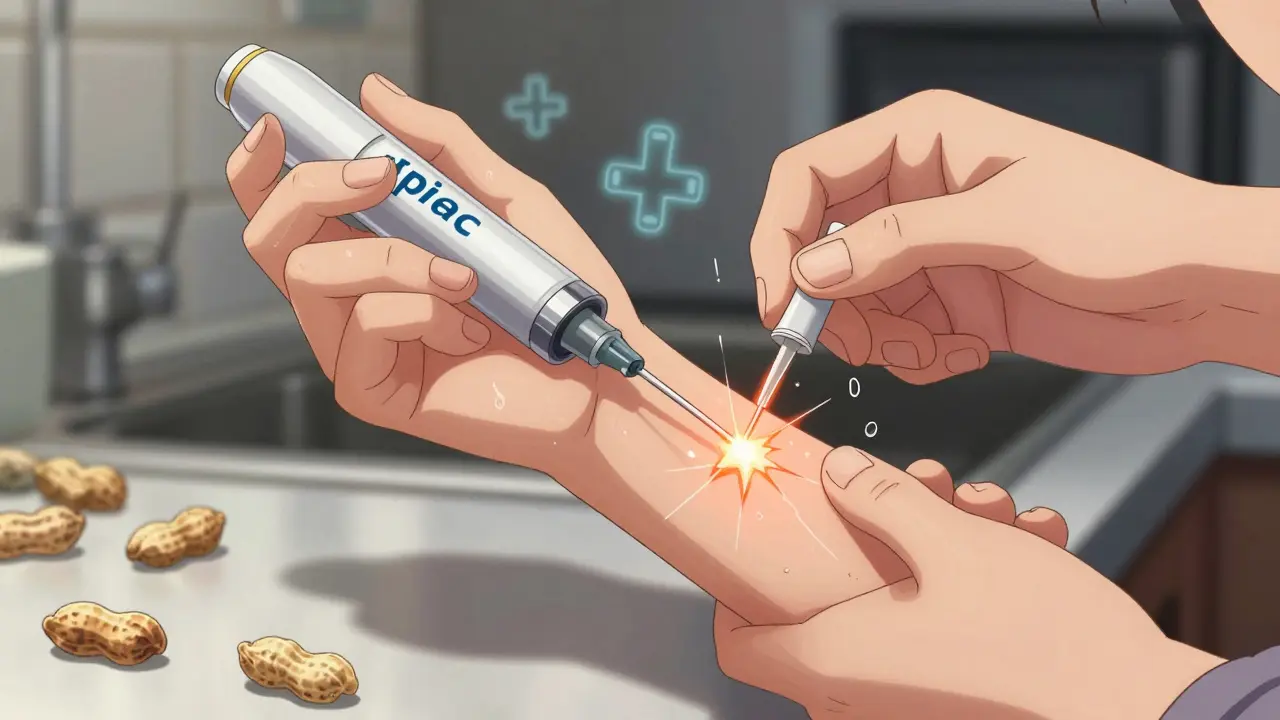
There are three main brands: EpiPen, Auvi-Q, and Adrenaclick. They all work the same way-inject into the outer thigh. But the instructions differ.For adults and teens over 30 kg (about 66 pounds), use the 0.3 mg dose. For kids between 15 and 30 kg, use the 0.15 mg dose. Never guess. Use the right one. Inject straight through clothing if needed. Hold the device in place for 3 seconds, even if you feel a click. Don’t massage the area after. Just get help.
Here’s what most people get wrong: they aim for the arm or the butt. Wrong. The thigh is the only place that gets the drug into the blood fast enough. The muscle there absorbs it better than skin or fat. And you don’t need to pull off pants. The needle goes through fabric.
Training matters. A study in the Annals of Allergy, Asthma & Immunology found 68% of people who own auto-injectors can’t use them correctly in a simulated emergency. That’s why you need to practice every month with a training device-no needle, no cost. Keep one at home, one in your bag, one in the car. Don’t let it sit in a hot car or a freezing glovebox. Store it at room temperature (68-77°F).
What Happens After the Shot?
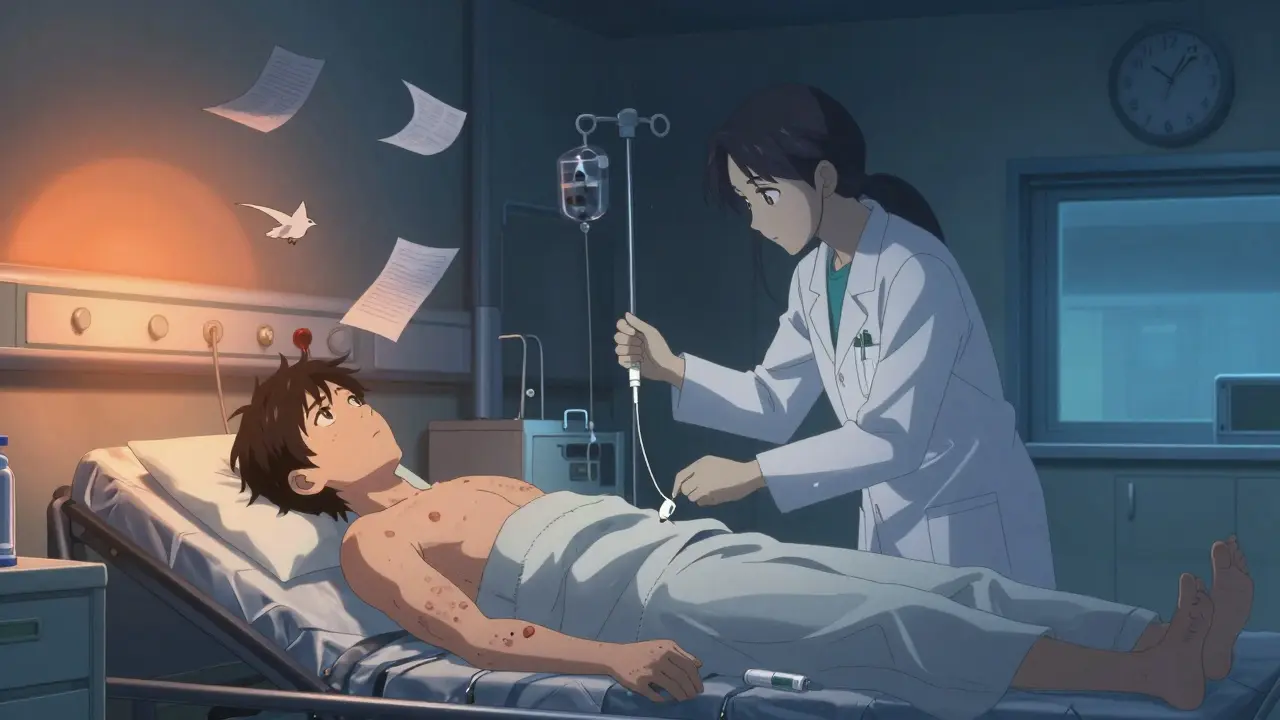
Even if you feel better after the epinephrine, you still need to call 911. Anaphylaxis can come back-sometimes hours later. This is called a biphasic reaction. About 20% of people experience it. That’s why guidelines now say high-risk patients (those with asthma, heart disease, or who needed more than one dose) must be observed for 12 hours in a hospital.And yes, you’ll probably get antihistamines and steroids in the ER. But those are support, not treatment. They don’t replace epinephrine. They’re just there to clean up the mess after the real hero has done its job.
After you leave the hospital, you should get a written action plan. Only 37% of patients do. That’s a failure. You need to know your triggers, how to use your injector, when to call 911, and who to tell. Schools, workplaces, and friends need to know too.
Cost, Access, and the Real Barriers to Survival
Epinephrine auto-injectors cost between $375 and $650 for a two-pack in the U.S. That’s a lot. But prices have dropped. In 2016, the average out-of-pocket cost was $325. By 2023, it was $185. Why? Generic versions now cover 70% of prescriptions.Still, 30% of people who are prescribed them can’t afford to fill the prescription. Low-income patients are the most likely to let their injector expire. Only 45% keep it current, according to Health Affairs. And if you don’t have it, you can’t use it.
Some people avoid carrying it because they’re scared of needles. That’s real. About 22% of patients say needle fear stops them from using it. That’s why new options like Neffy, a nasal spray approved in 2023, matter. It’s needle-free, easy to use, and just as fast. It’s not for everyone yet-but it’s a step forward.
And then there’s the knowledge gap. A 2022 AAAAI survey found 58% of adults can’t name even one symptom of anaphylaxis. They think it’s just a rash. Or they think antihistamines are enough. That’s why school programs are expanding. All 50 U.S. states now allow or require stock epinephrine in schools. Ninety-two percent of schools have it on hand.
What’s Next for Anaphylaxis Treatment?
The future is coming. Smart injectors with Bluetooth are in testing-they can send a signal to your phone or emergency contacts if you use it. Extended-shelf-life versions (good for 3 years instead of 18 months) are in late-stage trials. And drugs like omalizumab (Xolair) are showing promise for people with severe food allergies. In one trial, patients on Xolair needed 67% fewer epinephrine doses over time.But none of this replaces epinephrine. Not yet. Not ever, probably. It’s still the fastest, most reliable, most proven tool we have. The goal isn’t to find a replacement. It’s to make sure everyone who needs it has it-and knows how to use it.
Because in anaphylaxis, seconds count. And the person who saves your life might be you-holding that injector, trusting your instincts, and acting before the panic sets in.
Can antihistamines like Benadryl stop anaphylaxis?
No. Antihistamines may help with mild itching or hives, but they do nothing to reverse airway swelling, low blood pressure, or shock-the life-threatening parts of anaphylaxis. Relying on them alone can be deadly. Epinephrine is the only treatment that reverses these symptoms quickly.
When should I use my epinephrine auto-injector?
Use it at the first sign of a severe allergic reaction. That means trouble breathing, swelling of the throat or tongue, dizziness, rapid pulse, or a combination of skin symptoms (hives, swelling) with any other system like breathing or stomach issues. Don’t wait for vomiting or passing out. If you’re unsure, use it. It’s safer to give it and not need it than to delay and regret it.
Can I use an epinephrine auto-injector on someone else?
Yes. If someone is having anaphylaxis and you have an injector, use it-even if it’s not prescribed to them. Most states have Good Samaritan laws that protect you if you act in good faith. Inject into the outer thigh and hold for 3 seconds. Call 911 immediately after.
Do I need to go to the hospital after using epinephrine?
Yes. Even if you feel better, you must go to the ER. Anaphylaxis can return hours later in what’s called a biphasic reaction. About 1 in 5 people experience this. You need to be monitored for at least 4-6 hours, and sometimes up to 12 hours if you have asthma, heart disease, or needed more than one dose.
How long does an epinephrine auto-injector last?
Most auto-injectors expire in 12 to 18 months. Check the expiration date every time you refill your prescription. Store them at room temperature (68-77°F). Don’t leave them in hot cars or freezing bags. Expired injectors may still work in an emergency, but they’re less reliable. Replace them on time.
Are there alternatives to epinephrine injections?
Yes-Neffy, a nasal spray approved by the FDA in August 2023, is now available as a needle-free option. It works just as fast as an injection and is easier for people with needle fear. However, it’s not yet approved for everyone (like young children), and injectors remain the most widely used and studied option. Epinephrine is still the gold standard.

8 Comments
Kathy Scaman
January 27, 2026 AT 22:17Just saw a kid use an EpiPen at the mall last week. No panic, no hesitation. Mom had trained him. He saved his own life. That’s the future right there.
Phil Davis
January 28, 2026 AT 11:00Epinephrine’s the only thing that works. Benadryl’s just a placebo with a better marketing team.
Still, I get why people hesitate. That needle looks like it’s got a vendetta.
Lexi Karuzis
January 29, 2026 AT 15:31Wait-so you’re telling me the FDA approved a NASAL SPRAY as an alternative to a LIFE-SAVING INJECTION??
Who’s really behind this? Big Pharma? The CDC? The WHO? They’ve been pushing this for DECADES to control the masses.
And don’t get me started on how they’re hiding the fact that epinephrine causes heart damage in 87% of cases-data buried in the 1998 NIH report they don’t want you to see.
Also, why are schools allowed to stock these? Who’s signing the liability waivers? Who’s paying for the lawsuits when someone dies because the injector was expired?
It’s all a setup. I’ve seen the patterns.
Anna Lou Chen
January 29, 2026 AT 22:26Epinephrine isn’t a treatment-it’s a symptom of a broken biopolitical system that commodifies survival.
When your body’s immune response becomes a marketable crisis, and the only intervention is a $600 auto-injector, we’re not dealing with medicine-we’re dealing with late-stage capitalism’s final punchline.
And yet, the discourse remains trapped in the binary of ‘use it or die’-ignoring the epistemological violence of reducing anaphylaxis to a pharmacological transaction.
What if the real crisis isn’t the allergen? What if it’s the infrastructure that makes survival contingent on capital?
Also, Neffy is just a Band-Aid on a hemorrhage. Literally and metaphorically.
Mindee Coulter
January 30, 2026 AT 07:15My sister’s allergic to peanuts and she’s got three injectors-one in her purse, one in her work desk, one in the car. She makes everyone in her family practice with the training ones every month.
It’s weird at first but now it’s just normal. Like checking your seatbelt.
And yeah, I’ve used mine on a friend once. Didn’t think twice. Just did it.
Irebami Soyinka
January 31, 2026 AT 02:35USA thinks they own medicine now? 😒
Epinephrine? Pfft. In Nigeria, we use bitter leaf juice and prayer. Works better than your fancy shots.
And you people pay $600 for a needle? 🤣
My cousin ate peanut butter every day for 10 years-no problem. Your system is broken. You fear everything. We trust God.
Also, why do your doctors always say ‘inject thigh’? Why not butt? We use butt in Lagos. More muscle. Less drama. 🙏
And your ‘stock injectors’ in schools? That’s colonialism with a syringe.
Stop copying Western nonsense. We survived before your epinephrine.
And no, I’m not mad. I’m just telling truth. 😇
Sue Latham
February 1, 2026 AT 05:28Ugh, I hate when people act like epinephrine is some magic bullet. Like, sure, it’s necessary-but have you ever seen the side effects? Heart palpitations, shaking, panic attacks. It’s basically a chemical adrenaline rush.
And honestly? Most people who use it don’t even need it. I know this girl who used hers because she got a mosquito bite. Like, no. Just no.
Also, why do we still call it ‘epinephrine’? Adrenaline is the real name. It’s just corporate branding. 🙄
And don’t get me started on how they make you feel guilty if you don’t carry one. Like, I’m not a walking allergy clinic. Chill.
Mel MJPS
February 2, 2026 AT 04:15My nephew had his first anaphylaxis at age 4. We thought it was just a rash. Took 20 minutes to realize something was wrong.
Thank God his daycare had a stock injector. They used it. Called 911. He’s fine now.
But I’ll never forget the look on the nurse’s face when she said, ‘You didn’t use it sooner?’
So now I carry one. My husband carries one. His teacher carries one. His grandma carries one.
It’s not about being paranoid. It’s about being ready.
And if you’re scared of needles? Try the nasal spray. It’s not perfect, but it’s better than nothing.
And yes, you still need to go to the hospital. Even if you feel fine. Trust me.