
Fracture Risk: What Increases It and How to Reduce It
When we talk about fracture risk, the likelihood of breaking a bone due to weakness, trauma, or medication effects. Also known as bone fragility, it’s not just something that happens to older people—it’s a measurable danger shaped by what you take, how you live, and your body’s hidden biology. Many assume fractures come from big falls, but often they happen from something as simple as stepping off a curb or even sneezing hard. That’s because osteoporosis, a condition where bones lose density and become porous quietly weakens your skeleton over years, often without symptoms until it’s too late.
Medication side effects, the unintended harm caused by drugs taken as prescribed play a huge role. Long-term use of corticosteroids, some antidepressants, and even acid reflux meds like PPIs can leach calcium from bones. Stimulants for ADHD, while helpful for focus, may raise heart risks that indirectly affect balance and fall risk. And let’s not forget how drugs like benzodiazepines make you dizzy or slow your reflexes—turning a minor slip into a broken hip. These aren’t rare cases. Studies show nearly half of adults on long-term steroids develop bone loss severe enough to increase fracture risk.
It’s not all about pills. fall prevention, strategies to reduce the chance of stumbling or losing balance matters just as much. Poor vision, weak legs, cluttered floors, or even new glasses that throw off your depth perception can turn a normal day into a hospital visit. Physical therapy for joint disorders helps—not just by strengthening muscles, but by retraining your body to move safely. Simple changes like adding handrails, removing rugs, or using a cane aren’t signs of aging—they’re smart moves.
What you eat, how much you move, and whether you get enough vitamin D and calcium all feed into your bone strength. But here’s the catch: most people don’t know their fracture risk until they break something. That’s why understanding what’s quietly damaging your bones—whether it’s a daily pill, a sedentary job, or just skipping checkups—is the first step to staying whole. The posts below dig into exactly that: the hidden links between medications, movement, and bone health. You’ll find real-world advice on spotting risk before it turns into a fracture, what drugs to question, and how to protect yourself without waiting for pain to hit.
28
Nov
2025
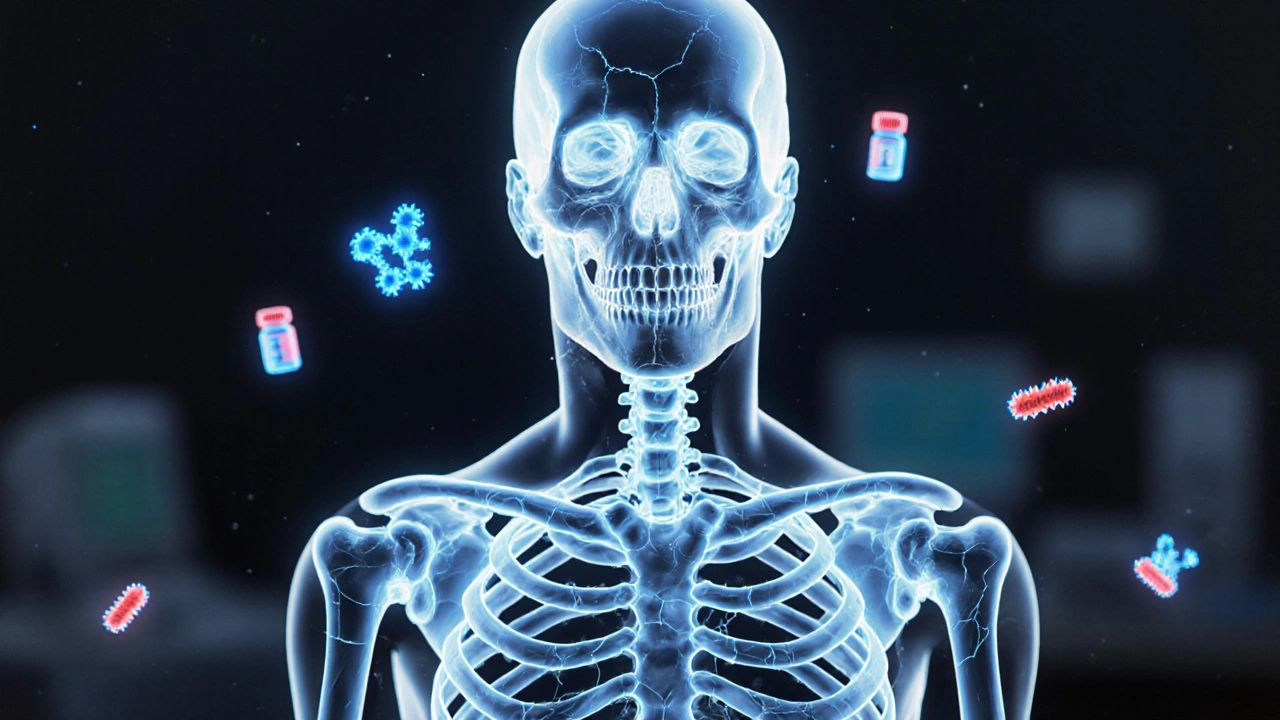
Osteoporosis and Bisphosphonate Therapy: What You Need to Know About Bone Density Loss and Treatment
Osteoporosis causes silent bone loss that leads to fractures. Bisphosphonate therapy slows bone breakdown, reduces fracture risk by up to 50%, and remains the first-line treatment for most patients. Learn how it works, who benefits, and what the risks are.
© 2026. All rights reserved.