

Imagine looking in the mirror and seeing patches of skin that don’t tan like the rest. Maybe they’re lighter, maybe slightly darker - white, pink, or brown - and they won’t go away no matter how much sun you get. If you’ve been there, you know how frustrating it is. You’re not dirty. You’re not sick in the way people think. But your skin looks wrong, and suddenly you’re avoiding the pool, skipping beach trips, or wearing long sleeves in 30°C heat. This isn’t just a cosmetic issue. For many, it’s a quiet, persistent source of stress. And the culprit? A yeast that’s already living on your skin.
What Exactly Is Tinea Versicolor?
Tinea versicolor, sometimes called pityriasis versicolor, is a common skin condition caused by the overgrowth of Malassezia yeast. These fungi are normal residents on human skin - they’re in the oil glands, especially on your chest, back, and shoulders. In most people, they stay quiet. But in some, they multiply out of control, and that’s when patches appear.
It’s not contagious. You can’t catch it from a towel, a locker room, or someone else’s skin. It’s not caused by poor hygiene. In fact, scrubbing too hard can make it worse by irritating your skin barrier. According to the Merck Manual (a trusted medical reference), this condition affects 2-8% of people in temperate climates, but in hot, humid places - like parts of Southeast Asia, Central America, or even northern Australia - rates jump to 30-50%.
Why? Heat and sweat create the perfect environment for Malassezia to thrive. Teens and young adults are most at risk because their skin produces more oil. The yeast feeds on sebum, and when it grows too fast, it releases a substance called azelaic acid. This acid blocks melanin production in the skin, leading to those pale patches. Darker patches? Those come from inflammation - the skin’s reaction to the yeast, not the yeast itself.
How Do You Know It’s Tinea Versicolor?
The patches are usually oval or round, about half a centimeter to a few centimeters across. They’re most common on the chest, upper back, shoulders, neck, and upper arms. In kids, they might show up on the face. The color varies: lighter than your skin tone (hypopigmented), darker (hyperpigmented), or even slightly reddish. They don’t itch much, if at all - that’s one thing that sets them apart from eczema or ringworm.
But here’s the catch: they don’t tan. When the rest of your skin gets golden in the sun, these patches stay pale. That’s why people often notice them in late summer or early fall. It’s not the yeast that’s gotten worse - it’s the contrast.
Doctors confirm the diagnosis with a simple test. A quick scrape of the skin, mixed with potassium hydroxide (KOH), and looked at under a microscope. The yeast looks like little spaghetti strands with meatballs - hyphae and round yeast cells. This test is 95% accurate, according to the Mayo Clinic. No blood tests. No biopsies. Just a quick look.
What Treatments Actually Work?
Good news: tinea versicolor is easy to treat. The bad news? It comes back - a lot. About 60-80% of people see it return within a year if they don’t take steps to prevent it.
First-line treatment? Topical antifungals. The most common and effective is Selsun Blue (selenium sulfide 2.5% shampoo). You don’t use it like regular shampoo. You apply it to the affected areas - and sometimes the whole chest and back - leave it on for 10 minutes, then rinse. Do this daily for 14 days. Studies from Advanced Dermatology show it clears the infection in 78% of cases.
Another option? Ketoconazole 2% shampoo - the same kind used for dandruff. Same method: apply, leave for 5-10 minutes, rinse. Daily for two weeks. It’s just as effective.
If the patches are widespread or the topical treatments don’t work, doctors may prescribe an oral antifungal like fluconazole. One 300mg pill once a week for two to four weeks. It’s 92% effective, but it requires a blood test first to check your liver. Not everyone needs this - only if the infection is stubborn or large.
Don’t waste time on home remedies like tea tree oil, apple cider vinegar, or coconut oil. There’s no solid evidence they work. Some people swear by them, but in clinical trials, they’re no better than placebo. Stick to what’s proven.

Why Does It Keep Coming Back?
This is the big question. Why, after everything clears up, does it return again and again? The yeast never leaves your skin. It’s always there. You just bring it back under control.
Heat and humidity are the biggest triggers. If you live in a place like Adelaide - where summers are hot and sticky - your skin is constantly primed for yeast overgrowth. So is oily skin. That’s why teens and young adults are most affected.
Other factors? Immune system changes. If you’re on long-term steroids, have diabetes, or are pregnant, your body’s natural balance shifts. Malassezia takes advantage. Also, sun exposure makes the patches more noticeable - not because the yeast is stronger, but because your normal skin tans and the affected areas don’t.
And here’s something most people don’t realize: stopping treatment too soon is the #1 reason it comes back. Many people feel better after a week or two. The patches fade. They stop the shampoo. Then, six months later - boom - the same spots reappear.
According to UCLA Health, if you stop preventive care after clearance, 92% of people will have a recurrence within 12 months. That’s not bad luck. That’s biology.
How to Prevent It From Coming Back
Prevention isn’t optional. It’s part of the treatment.
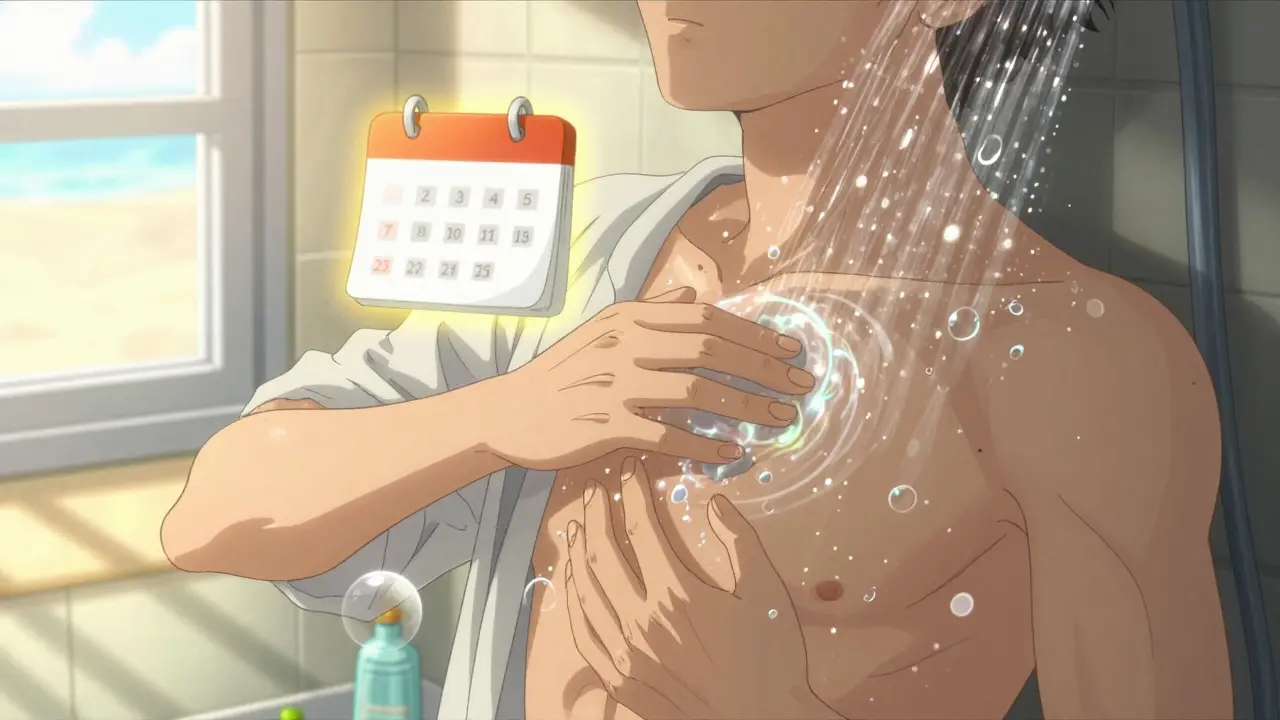
The most effective strategy? Monthly maintenance. After your initial two-week treatment, use ketoconazole 2% shampoo or selenium sulfide shampoo once a month, every month, for at least six to twelve months.
That’s it. One wash a month. That’s all it takes to drop your recurrence rate from 80% down to 25%, according to a UCLA Health study of 200 patients.
Here’s how to make it stick:
- Set a phone reminder for the first day of every month. 40% of patients who did this stayed on track, per Mayo Clinic nurse data.
- Use it after a sweaty day - even if you don’t have patches. Heat and sweat are the triggers.
- Wear loose, breathable, moisture-wicking clothes. Cotton and synthetic blends that pull sweat away reduce recurrence risk by 31%, according to Nationwide Children’s Hospital.
- Avoid oil-based lotions, creams, or sunscreens. They feed the yeast. Look for "oil-free" or "non-comedogenic" labels.
- Use a gentle, non-soap cleanser. Regular soap can dry and irritate your skin, making it easier for yeast to take over.
Some people ask: "Do I need to do this forever?" No. Most people can stop after 6-12 months of consistent monthly use. If you haven’t had a flare-up in a year, you’re likely in the clear. But if you’ve had three or more recurrences, the American Academy of Dermatology now recommends continuing monthly treatment year-round.
What About the Long-Term Discoloration?
This is the hardest part for many. Even after the yeast is gone, the skin can stay discolored for months. It takes time for melanin to return to normal. In 41% of cases, the patches stay visibly lighter for 6-12 months, according to Mayo Clinic patient feedback.
There’s no magic cream to speed this up. Sun exposure won’t help - it makes the contrast worse. The best thing you can do is be patient. Your skin will eventually even out. In the meantime, use sunscreen daily. It protects your skin and helps prevent further pigmentation imbalance.
Some people feel embarrassed during this phase. But remember: you’re not alone. The American Academy of Dermatology’s Versicolor Support Network has over 12,500 members who share tips, reassurance, and real-life experiences. You’re not weird. You’re not broken. You just have a common, treatable condition.
What’s Next in Treatment?
Science is looking at new ways to fight this. Researchers at UC San Diego found that certain good bacteria can suppress Malassezia by 68% in lab tests. That could lead to probiotic creams in the future.
Also, some strains of Malassezia are becoming less sensitive to ketoconazole. That’s why doctors are starting to test combination therapies - using two antifungals together - to prevent resistance. Clinical trials are underway, but they’re still years away from being widely available.
For now, the best approach is simple: treat early, prevent consistently, and don’t let fear stop you from living your life.
Frequently Asked Questions
Is tinea versicolor contagious?
No. Tinea versicolor is not contagious. You cannot catch it from touching someone else’s skin, sharing towels, or using gym equipment. It’s caused by your own skin’s yeast overgrowing due to heat, sweat, or oiliness - not by transmission from another person.
Can I use regular shampoo to treat it?
No. Only antifungal shampoos like ketoconazole 2% or selenium sulfide 2.5% (Selsun Blue) work. Regular shampoo doesn’t contain the active ingredients needed to kill Malassezia yeast. Using regular shampoo won’t help - and may even dry out your skin, making the condition worse.
Why do the patches stay white after treatment?
The yeast produces azelaic acid, which temporarily blocks melanin production. Even after the yeast is gone, it takes months for your skin to rebuild its natural pigment. This isn’t permanent damage - just a delay. Sun exposure won’t fix it; it makes the contrast worse. Be patient. The color will return, usually within 6-12 months.
Should I avoid the sun if I have tinea versicolor?
No, but protect your skin. Sun exposure doesn’t cause the condition, but it makes the patches more noticeable because your normal skin tans while the affected areas don’t. Use broad-spectrum sunscreen daily. It helps prevent further pigmentation issues and protects your skin from UV damage.
How often should I use antifungal shampoo for prevention?
Once a month, for at least six to twelve months after clearing the infection. Monthly use reduces recurrence rates from 80% down to 25%. If you’ve had three or more recurrences, the American Academy of Dermatology recommends continuing monthly treatment year-round. Set a phone reminder - it improves adherence by 40%.
Is tinea versicolor related to poor hygiene?
No. Tinea versicolor has nothing to do with being dirty. In fact, over-washing or using harsh soaps can damage your skin barrier and make it easier for yeast to overgrow. It’s about your skin’s natural oil and sweat levels, not cleanliness. Many people who bathe daily still get it.
Final Thoughts
Tinea versicolor isn’t dangerous. But it’s persistent. And it doesn’t care how clean you are, how much you sweat, or how hard you try to ignore it. The only way to beat it is to treat it right - and then keep treating it, even when it looks gone.
It’s not about perfection. It’s about consistency. One monthly wash. One reminder. One step to stop it before it starts.
If you’ve been struggling with this for months - or years - know this: you’re not alone. And you don’t have to live with patches that ruin your confidence. The solution is simple. It just takes a little patience - and a little discipline.

15 Comments
Amy Lesleighter (Wales)
December 25, 2025 AT 21:58i just used selsun blue for 2 weeks like the post said and it worked. no more weird patches. i stopped for 3 months and it came back. now i do it once a month. no big deal. my skin’s fine now. 🤷♀️
Peter sullen
December 27, 2025 AT 06:26The efficacy of topical antifungal agents, particularly selenium sulfide 2.5% and ketoconazole 2%, has been well-documented in peer-reviewed dermatological literature. The mechanism of action involves disruption of fungal cell membrane integrity via inhibition of ergosterol biosynthesis. Moreover, adherence to a monthly maintenance protocol reduces relapse rates from 80% to 25% (UCLA Health, 2022). Compliance is the critical variable; non-adherence is the primary etiological factor in recidivism.
Nikki Brown
December 28, 2025 AT 01:33People still use shampoo on their skin?? 😒 I mean, really? If you can’t keep your skin clean and dry, maybe you’re just lazy. I’ve never had this problem, and I don’t use any of that junk. Just wash with soap and stop being so gross. 🙄
Erwin Asilom
December 29, 2025 AT 13:50This is one of those conditions where consistency beats intensity. You don’t need to overhaul your life. You just need to remember one thing: once a month, shampoo on chest and back. That’s it. Set the reminder. Do it. It’s not magic. It’s math. And it works.
sakshi nagpal
December 29, 2025 AT 14:07Thank you for this detailed and compassionate explanation. As someone from India, where humidity is constant, I’ve seen this condition in friends and family. The cultural stigma around skin issues is real, but your emphasis on it being biological-not moral-helps. I will share this with my community.
Rajni Jain
December 29, 2025 AT 17:28i felt so alone with this until i read this. my mom thought i was dirty. my boyfriend said i looked "sick." i used ketoconazole for two weeks, then forgot. it came back. now i do it every month on the 1st. i even set a calendar alert. it’s not a cure, but it’s my peace. thank you for saying it’s normal.
Natasha Sandra
December 30, 2025 AT 04:07OMG YES. I used coconut oil because it’s "natural" and it made it worse 😭 then i tried selsun blue and it was like a miracle. now i do it monthly and i’m not scared to wear a tank top anymore. 🌞💖
roger dalomba
December 30, 2025 AT 10:04So you’re telling me the solution is to wash with dandruff shampoo once a month? Wow. Groundbreaking. Next you’ll tell us water is wet.
Becky Baker
December 31, 2025 AT 11:16This is why America needs better healthcare. You have to buy special shampoo and remember to use it every month? Meanwhile, in other countries, people just live and don’t stress over skin. We’re over-medicalizing everything. Just go outside. Sweat. Live.
Fabio Raphael
December 31, 2025 AT 19:14I’m curious-has anyone tried combining the monthly shampoo with probiotic skincare? The UCSD study mentioned bacteria suppressing Malassezia. I wonder if a gentle probiotic toner could help maintain balance without chemicals.
Steven Destiny
January 2, 2026 AT 07:02Stop waiting for it to go away. Start treating it like a habit, not a problem. One wash. One month. That’s your new routine. You’re not broken. You’re just human. And humans need simple systems. Do it. You’ve got this.
Sophia Daniels
January 4, 2026 AT 02:19I used to think I was the only one hiding in long sleeves in July. Then I Googled it. Then I cried. Then I used Selsun Blue. Now I wear crop tops and don’t care who sees my skin. It’s not perfect. But it’s mine. And I’m not apologizing for existing.
Sandeep Jain
January 4, 2026 AT 18:06i live in delhi. humidity is crazy here. i tried everything. finally did the monthly ketoconazole. it’s not perfect but it’s better. i just wash it after i sweat. no big deal. people think i’m weird for using shampoo on my back but who cares?
Brittany Fuhs
January 5, 2026 AT 15:16I can't believe people still believe in this "monthly shampoo" nonsense. In my opinion, if you're spending that much time worrying about yeast on your skin, you're probably just stressed and eating too much sugar. Fix your mindset, not your scalp.
Sumler Luu
January 7, 2026 AT 13:33I appreciate how this post doesn’t shame people for having this. I had it for years and felt like a freak. The part about the discoloration lasting months? That hit me. I thought I’d never tan again. Turns out, I just needed to be patient. Thank you.