
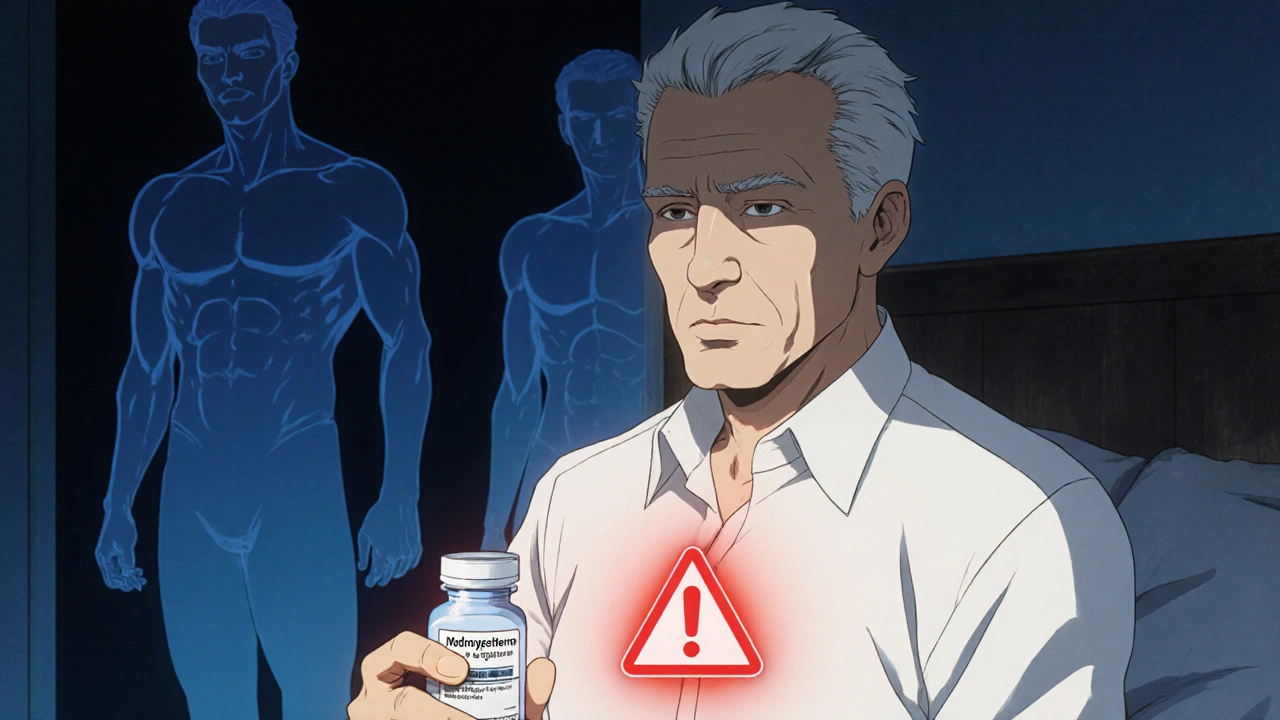
Most people think of medroxyprogesterone as a birth control pill for women. But in men, it’s used for very different reasons - and the side effects can be serious if you don’t know what to expect.
What Is Medroxyprogesterone?
Medroxyprogesterone is a synthetic hormone that acts like progesterone, a natural female sex hormone. It’s sold under brand names like Provera and Depo-Provera. While it’s commonly prescribed to women for menstrual issues or contraception, doctors sometimes use it in men to lower testosterone levels. It’s not a cure, but a tool to manage conditions where too much testosterone causes problems.
Men who take medroxyprogesterone usually do so because they have conditions like:
- Hypersexuality or compulsive sexual behavior
- Prostate cancer (as part of hormone therapy)
- Paraphilias or aggressive behaviors tied to high testosterone
- Gender-affirming care for transgender women (to suppress male hormones)
It works by blocking the signals from the brain that tell the testes to make testosterone. Less testosterone means reduced sex drive, lower sperm production, and slower growth of testosterone-sensitive tissues - like prostate tumors.
How Is It Given to Men?
For men, medroxyprogesterone is usually taken as a daily oral tablet. Doses range from 50 to 300 milligrams per day, depending on the condition being treated. Some doctors use the injectable form (Depo-Provera), given every 1 to 3 months, especially for long-term suppression.
It can take weeks to see results. Testosterone levels start dropping within 1 to 2 weeks, but full effects - like reduced libido or shrinkage of prostate tissue - may take 4 to 8 weeks. Unlike some hormone treatments, medroxyprogesterone doesn’t need blood tests every week. Most doctors check hormone levels every 3 months to make sure the dose is still right.
Common Side Effects in Men
Almost every man who takes medroxyprogesterone will notice some changes. These aren’t always bad - they’re often the goal - but they can be uncomfortable.
- Lower sex drive: This is intentional. Many men report a significant drop in sexual thoughts and urges.
- Erectile dysfunction: Harder to get or keep an erection. This usually improves after stopping the drug.
- Breast growth: About 1 in 3 men develop tender or enlarged breasts (gynecomastia). It can be permanent if not caught early.
- Weight gain: Especially around the belly. The body holds onto water and fat more easily when testosterone drops.
- Fatigue: Feeling tired all the time is common. It’s not just laziness - your metabolism changes.
- Mood swings: Some men feel depressed, anxious, or emotionally flat. Others report feeling calmer.
These side effects are dose-dependent. Lower doses may cause fewer issues, but might not work as well. Higher doses work faster but bring more risks.
Serious Risks You Can’t Ignore
Beyond the common side effects, there are real dangers that need monitoring.
- Blood clots: Medroxyprogesterone increases the risk of deep vein thrombosis (DVT) and pulmonary embolism. This risk is higher if you smoke, are overweight, or have a history of clots.
- Liver problems: Long-term use can stress the liver. Doctors check liver enzymes every 6 months.
- Bone thinning: Low testosterone leads to lower bone density. Men on this drug for more than a year often need a DEXA scan to check for osteoporosis.
- Diabetes risk: Studies show medroxyprogesterone can raise blood sugar levels. If you’re prediabetic, this drug could push you into full diabetes.
These aren’t rare. A 2023 study in the Journal of Clinical Endocrinology & Metabolism found that men on long-term medroxyprogesterone had a 40% higher chance of developing type 2 diabetes compared to those not on hormone therapy.
Who Should Avoid It?
Not every man is a good candidate. You should not take medroxyprogesterone if you:
- Have a history of blood clots, stroke, or heart attack
- Have untreated liver disease
- Are allergic to progesterone or any of its ingredients
- Have unexplained vaginal bleeding (yes, this applies even to men - doctors check for hormone-sensitive tumors)
- Are planning to father children in the next 6 to 12 months
It’s also not recommended for men under 18. The impact on developing bones and brains isn’t well studied.
What Happens When You Stop?
Many men wonder if the effects are permanent. The good news: most side effects reverse after stopping.
- Testosterone levels usually bounce back within 3 to 6 months.
- Libido and erectile function often return to normal.
- Breast tissue may shrink, but if it’s been there over a year, it might not go away without surgery.
- Bone density slowly improves, but you might need calcium, vitamin D, or weight training to help.
But here’s the catch: if you took it for prostate cancer, stopping might let the cancer grow again. That’s why doctors don’t stop it lightly.

Alternatives to Medroxyprogesterone
There are other ways to lower testosterone. Some are safer, some are more effective.
| Treatment | How It Works | Pros | Cons |
|---|---|---|---|
| Medroxyprogesterone | Blocks brain signals to testes | Oral, affordable, widely available | Higher risk of blood clots, weight gain, mood issues |
| Leuprolide (Lupron) | Shuts down pituitary gland | Very effective, used for prostate cancer | Expensive, requires injections, causes bone loss |
| Spironolactone | d>Blocks testosterone receptors | Lower risk of clots, used in transgender care | Can raise potassium, cause frequent urination |
| GnRH antagonists (e.g., degarelix) | Instantly blocks testosterone production | No testosterone spike at start | Very expensive, only for cancer |
Spironolactone is often preferred for transgender women because it’s gentler on the liver and heart. Leuprolide is the go-to for prostate cancer because it’s stronger. But medroxyprogesterone still has a place - especially for men who need a cheap, oral option and can’t tolerate injections.
Real-Life Use Cases
One 58-year-old man in Melbourne took medroxyprogesterone for 18 months after being diagnosed with prostate cancer. His PSA levels dropped from 14 to 0.8. But he gained 20 pounds, developed gynecomastia, and felt constantly tired. He stopped after his cancer went into remission. His testosterone returned in 5 months, but his breast tissue didn’t fully shrink.
Another man, 32, used it to control compulsive sexual behavior. He said it gave him back control. "I wasn’t addicted to sex - I was addicted to the chaos it caused. This drug quieted the storm," he told his therapist. He didn’t want to be castrated. This was his middle ground.
These aren’t rare stories. But they’re rarely talked about in public.
What to Do If You’re Considering It
If your doctor suggests medroxyprogesterone, ask these questions:
- What exactly are we trying to treat?
- Are there other options that don’t carry the same risks?
- How long will I need to take it?
- Will I need bone scans or blood sugar tests?
- What happens if I stop - and can I reverse the side effects?
Don’t be afraid to get a second opinion. This isn’t a routine prescription. It’s a powerful tool with serious trade-offs.
And if you’re taking it, don’t skip your follow-ups. Monitor your weight, mood, and energy. Tell your doctor about any chest pain, leg swelling, or sudden confusion. These could be signs of something dangerous.
Medroxyprogesterone isn’t a magic pill. But for some men, it’s the only thing that gives them back their life - even if it changes their body in ways they never expected.
Can medroxyprogesterone cause permanent breast growth in men?
Yes, it can. About 30% of men develop gynecomastia while taking medroxyprogesterone. If it’s caught early - within 3 to 6 months - it may shrink after stopping the drug. But if it persists beyond a year, the breast tissue often becomes fibrous and won’t go away without surgery. Regular check-ins with your doctor can help catch this early.
Does medroxyprogesterone affect fertility permanently?
No, not usually. Sperm production drops almost to zero while taking the drug, but it typically returns within 3 to 6 months after stopping. However, if you’re planning to have children, you should avoid this drug unless you’re using reliable contraception. Don’t assume your fertility will bounce back quickly - some men take longer than expected.
Is medroxyprogesterone safe for long-term use in men?
Long-term use (over 2 years) carries significant risks: bone loss, diabetes, liver stress, and blood clots. It’s generally not recommended unless absolutely necessary - like for advanced prostate cancer. If you’re on it long-term, your doctor should monitor your bone density, blood sugar, and liver enzymes every 6 months.
Can I take medroxyprogesterone with other medications?
It can interact with several drugs. Avoid combining it with blood thinners like warfarin - it increases bleeding risk. It can also interfere with diabetes medications, making blood sugar harder to control. Always tell your doctor about every pill, supplement, or herb you’re taking. Even over-the-counter ones.
Why isn’t medroxyprogesterone used more often for men?
It’s not FDA-approved for most male uses, so doctors prescribe it "off-label." Many are unfamiliar with its risks and benefits in men. Also, newer drugs like leuprolide or GnRH antagonists are more targeted and have better safety profiles for cancer. But for non-cancer uses - like managing compulsive behavior - medroxyprogesterone remains one of the few affordable, oral options available.

8 Comments
Ashley Miller
November 18, 2025 AT 19:32So let me get this straight - we’re giving men a female hormone to ‘fix’ their sex drive, but the FDA hasn’t even approved it for this? 😏 Meanwhile, Big Pharma’s out here selling Lupron for $10,000 a shot while Provera sits in a pharmacy drawer like a dusty relic. Coincidence? Or just another case of ‘if it’s cheap, it’s dangerous’? 🤔
Sherri Naslund
November 19, 2025 AT 10:49bro i took this for 6 months after my ex left and honestly? i felt like a ghost. no lust, no rage, just… quiet. like my brain was on mute. my tits got big and i cried watching puppy videos. my therapist said it was ‘emotional numbing’ - i said it was just peace. they dont get it. you think you’re fixing behavior but you’re just turning a man into a calm zombie with boobs. and yeah, i still have them. surgery? nah. they’re my reminder that sometimes, the cure is worse than the disease.
Martin Rodrigue
November 19, 2025 AT 20:27While the article provides a clinically accurate overview of medroxyprogesterone’s pharmacological profile in male patients, it is noteworthy that the risk-benefit analysis lacks contextualization within the broader framework of endocrine therapy. The cited 40% increased incidence of type 2 diabetes, while statistically significant, must be weighed against the baseline metabolic status of the cohort. Furthermore, the assertion that gynecomastia becomes fibrotic after one year is supported by histopathological studies, yet the time-to-onset of tissue remodeling varies considerably between individuals. A more nuanced discussion of pharmacokinetic variability - particularly CYP3A4 metabolism - would enhance clinical utility.
Greg Knight
November 19, 2025 AT 23:38I want to say this to anyone even thinking about this drug: you’re not broken. Your drive, your urges, your thoughts - they’re not enemies to be silenced. But if you’re at a point where you’re choosing this because you’re tired of feeling out of control, I see you. I’ve been there. The fatigue? Real. The weight gain? Brutal. The breast tissue? Yeah, that sucks. But here’s the thing - you’re not losing yourself. You’re choosing a different version of yourself. And if you’re doing it with support, with check-ins, with a doctor who actually listens? That’s courage. Not weakness. Keep showing up. Even on the days you feel like a stranger in your own skin. You’re still you. Just… quieter. And that’s okay.
Hannah Machiorlete
November 20, 2025 AT 22:08so like… if you’re trans and on this, are you just a walking side effect? like, you’re taking it to align your body but now you’re gaining weight, getting mood swings, and your bones are turning to dust? and then you’re told ‘it’s normal’? cool. so the price of being yourself is becoming a diabetic osteoporosis patient? thanks for the upgrade, medicine. also, why is this still the go-to for trans women when spironolactone exists? someone’s making bank off our suffering.
Kenneth Meyer
November 21, 2025 AT 23:45There’s something deeply human in how we pathologize desire - as if a man who feels too much is broken, not alive. Medroxyprogesterone doesn’t suppress testosterone; it suppresses society’s discomfort with male intensity. We call it ‘compulsive behavior’ when what we really mean is ‘uncontrollable by our standards.’ The drug doesn’t heal - it pacifies. And in doing so, it asks men to trade their vitality for peace. But peace without passion isn’t peace. It’s surrender. And surrender, no matter how quiet, is still a loss.
Donald Sanchez
November 23, 2025 AT 20:03bro i just found out my cousin is on this for ‘aggression’ and now he’s got boobies and cries at dog commercials 😭 and he’s like ‘it’s better than jail’… but like… why not just give him a gym membership? or therapy? or a hug?? also why is this even a thing? i thought we were past ‘fixing men’ with hormones? and why is it so cheap?? smells like a pharma loophole 🤡 #medroxyprogesteroneisnotanlifestyle
Abdula'aziz Muhammad Nasir
November 24, 2025 AT 01:17As a physician practicing in Lagos, I can confirm that medroxyprogesterone is often the only accessible option for men with prostate cancer or severe behavioral issues in low-resource settings. While the side effects are significant, the alternative - no treatment at all - is far worse. In Nigeria, Lupron costs more than a year’s salary. We use Provera because it saves lives, even when imperfect. We monitor liver enzymes, encourage calcium intake, and counsel patients on the reversibility of most effects. This isn’t ideal medicine - it’s necessary medicine. Let’s not dismiss it because it’s not glamorous. For many, it’s the only bridge to survival.