
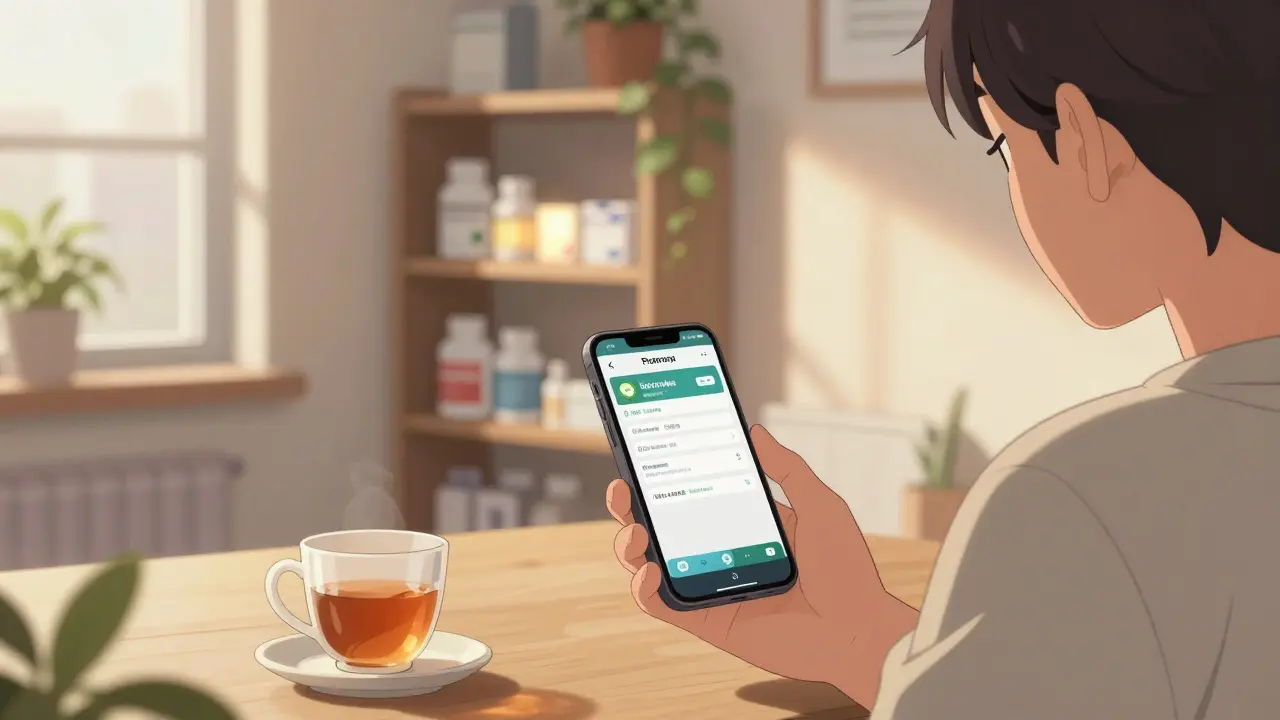
When you need a refill for your generic antidepressant or blood pressure med, you might not think twice about ordering it online after a Zoom visit. But behind that simple click is a tangled web of federal rules, state laws, and technical hurdles that could stop your prescription cold-especially if it’s a controlled substance. In 2025, telemedicine prescriptions aren’t just convenient. They’re regulated like never before, and the difference between a generic sertraline and a generic buprenorphine could mean the difference between getting your meds or waiting weeks for an in-person appointment.
What’s Allowed and What’s Not
Not all medications are treated the same under telemedicine rules. Non-controlled generics like generic sertraline, lisinopril, or metformin can be prescribed remotely with no federal restrictions. If your doctor confirms your condition during a video visit, they can send the script directly to your pharmacy-no in-person visit needed, no extra paperwork, no delays.
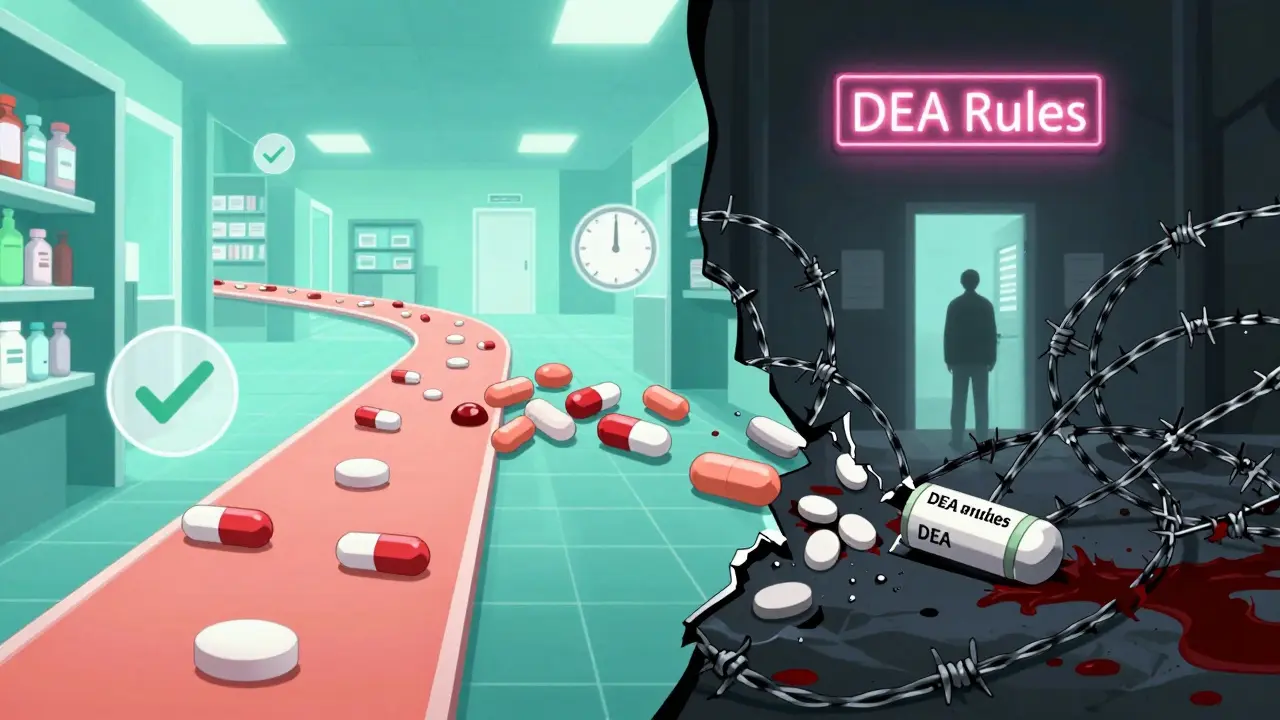
But if your prescription is for a controlled substance-even if it’s a generic version-you’re in a completely different system. Schedule III-V drugs like generic buprenorphine (used for opioid addiction), generic Adderall, or generic Xanax are tightly controlled. Under new DEA rules effective January 2025, you can only get these through telemedicine if your provider holds a special registration. And even then, there’s a hard limit: you can only receive an initial six-month supply via telemedicine. After that, you must either see your provider in person or meet strict continuing criteria.
This creates a strange gap in care. A patient with depression can get refills for sertraline every month without ever stepping into a clinic. But someone managing opioid use disorder with buprenorphine gets a six-month clock ticking-and if they live in a rural area with no nearby providers, that clock could mean a dangerous interruption in treatment.
How Providers Are Forced to Play by New Rules
Doctors aren’t just writing e-scripts anymore. To prescribe controlled substances via telemedicine, they must now register with the DEA under one of three new categories. The most common is the Telemedicine Prescribing Registration, which lets providers prescribe Schedule III-V drugs for opioid use disorder-but only if they:
- Check the patient’s state Prescription Drug Monitoring Program (PDMP) before every prescription
- Verify identity with a government-issued photo ID
- Use electronic prescribing for controlled substances (EPCS)
- Document the exact time and date of every PDMP check
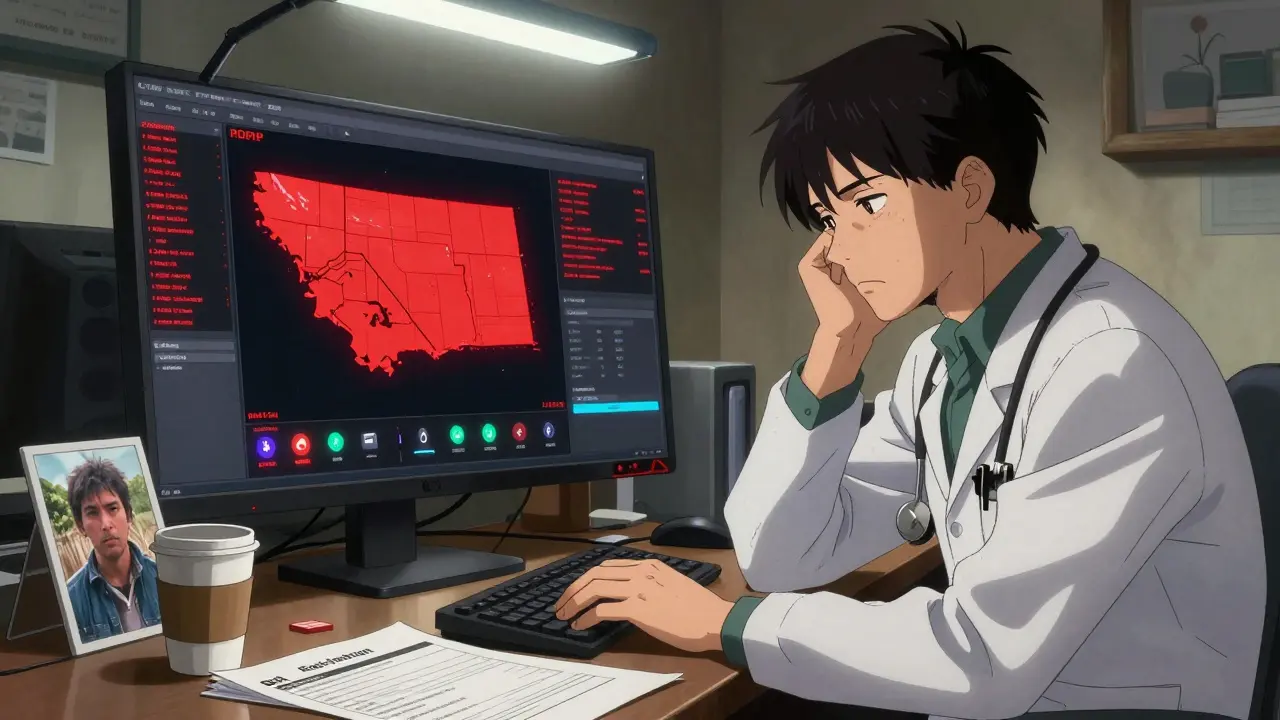
That’s not a suggestion. It’s mandatory. And it’s breaking workflows. A family doctor in Montana told a telehealth forum he spends 15 to 20 extra minutes per patient just checking PDMPs across three different state systems. That’s time he could spend treating patients, not chasing data.
Even worse, only 37% of telehealth platforms have fully integrated PDMP systems, according to DEA data from March 2025. That means prescriptions are getting rejected-not because the patient doesn’t qualify, but because the system can’t verify the doctor checked the database. One psychiatrist on Reddit said three of her prescriptions were denied this month because the pharmacy in Nevada didn’t recognize California-based providers under the new rules.
Why Generics Are the Real Winners in Telemedicine
Here’s the irony: the cheapest, most widely used medications-generics-are the easiest to get online. Because they’re not controlled, they’re not caught in the regulatory crossfire. A patient can get a 90-day supply of generic metformin, generic atorvastatin, or generic omeprazole in under 24 hours after a virtual visit. No PDMP checks. No ID scans. No DEA registration needed.
That’s why telehealth platforms are pushing non-controlled generics harder than ever. In 2025, 89% of addiction treatment providers use telemedicine to start patients on buprenorphine-but only because it’s a Schedule III drug with special exceptions. Meanwhile, 73% of patients say telemedicine improved their access to life-saving treatment. But for millions more with high blood pressure, diabetes, or anxiety, the system works smoothly. No delays. No red tape. Just a prescription sent to the pharmacy.
For providers, this creates a financial incentive: focus on non-controlled generics. They’re faster to prescribe, easier to manage, and don’t require costly compliance upgrades. That’s why the telemedicine market for non-controlled generics is projected to grow at 28.4% annually through 2030, while controlled substance prescribing is expected to shrink by 15-20% as platforms struggle to adapt.
The Hidden Cost of Compliance
Running a telehealth platform that handles controlled substances now costs 35% more than it did in 2023. Why? Because of the new DEA rules. Platforms have to invest in:
- Identity verification software that scans driver’s licenses or passports
- HL7 FHIR APIs to connect with state PDMPs
- EPCS-certified e-prescribing systems
- Staff trained on DEA documentation rules
And even then, 42% of initial registration applications were rejected in Q1 2025 because of missing documentation. One platform in Texas spent $87,000 on compliance tech and still got turned down because the doctor didn’t timestamp the PDMP check correctly.
Medicare’s new rules add another layer. Starting October 1, 2025, Medicare patients must have had an in-person mental health visit before they can get telehealth prescriptions for controlled substances. That’s a 47% drop in reimbursement potential for psychiatrists and addiction specialists. Many are now turning away Medicare patients entirely-just to avoid the paperwork.
What This Means for You
If you’re a patient:
- For non-controlled generics? You’re fine. Get your refills online. It’s safe, legal, and fast.
- For controlled substances like buprenorphine or Adderall? Know your limits. The six-month rule is real. Plan ahead. If you’re in a rural area, ask your provider about local clinics that offer in-person follow-ups.
- Don’t assume your pharmacy knows the rules. If your prescription gets denied, ask them to check if the prescriber is DEA-registered for telemedicine.
If you’re a provider:
- Don’t delay registration. The deadline for the old emergency rules is December 31, 2025. After that, you can’t prescribe controlled substances via telemedicine unless you’re registered.
- Start with non-controlled generics. They’re the easiest way to build your telehealth practice without drowning in compliance.
- Use the DEA’s Telemedicine Prescribing Resource Center. It’s updated monthly and has templates for PDMP documentation.
What’s Coming Next
The DEA’s final rules are expected by September 2025, but industry experts don’t expect another extension past December 31, 2025. The six-month rule for opioid treatment is under fire-addiction specialists argue clinical evidence shows 12 months is the minimum for success. But the DEA hasn’t budged.
The national PDMP system, funded with $127 million in 2025, won’t be fully operational until late 2027. That means for the next two years, providers will keep fighting broken systems, mismatched state databases, and pharmacy confusion.
One thing’s clear: telemedicine for generics is here to stay. It’s efficient, cost-effective, and meets real patient needs. But for controlled substances, the dream of seamless digital care is still being rebuilt-one failed PDMP check at a time.

14 Comments
christian ebongue
December 26, 2025 AT 23:31So let me get this straight: I can get my generic metformin in 20 minutes but if I need buprenorphine, I gotta play detective with state databases and a photo ID? Cool. Real cool.
jesse chen
December 28, 2025 AT 15:27This is so frustrating... I mean, really... it’s just... so unnecessarily complicated. Why does a person managing addiction have to jump through more hoops than someone getting heart meds? It doesn’t make sense. It just... doesn’t.
Joanne Smith
December 29, 2025 AT 14:22Generics are the unsung heroes of telemedicine-quiet, cheap, and somehow legally invisible. Meanwhile, buprenorphine? Oh no, that’s the villain in this Netflix docu-drama. DEA’s got a whole season planned: "The Six-Month Clock: A Tragedy in Four Acts."
Prasanthi Kontemukkala
December 30, 2025 AT 20:09It’s important to remember that behind every prescription is a person trying to survive. Whether it’s metformin or buprenorphine, the goal should be access-not paperwork. Let’s not let bureaucracy steal someone’s chance to heal.
Alex Ragen
December 30, 2025 AT 22:58One cannot help but observe the metaphysical absurdity of this regulatory landscape: the pharmacological equivalence of generics is universally acknowledged, yet their regulatory equivalence is categorically denied-by the very institutions that claim to uphold scientific rationality. The DEA, in its infinite wisdom, has constructed a Kafkaesque edifice where chemical structure is irrelevant, but timestamped PDMP logs are sacred scripture.
Lori Anne Franklin
December 31, 2025 AT 17:07i just got my generic zoloft refill and it was so easy... like ordering pizza... but then my friend tried to get her adderall and her dr spent 45 mins on a call with the pharmacy... i mean... come on??
Bryan Woods
January 2, 2026 AT 07:46The regulatory disparity between non-controlled and controlled substances in telemedicine is both predictable and unfortunate. While the intent behind the DEA's framework is to prevent diversion, the collateral damage to patient continuity of care is substantial and underreported.
Zina Constantin
January 4, 2026 AT 06:42As someone who grew up in a village where the nearest clinic was 70 miles away, I can tell you-telemedicine saved my life. But if I’d needed buprenorphine? I’d be dead by now. This isn’t policy. This is punishment disguised as caution.
Angela Spagnolo
January 5, 2026 AT 11:21Wait... so I can get my generic omeprazole in 10 minutes... but if I need my generic Xanax? I have to wait for a doctor who’s certified... who has a system that works... who’s not in a different state... and then hope the pharmacy doesn’t reject it because... the timestamp was off by 3 seconds??
Sarah Holmes
January 6, 2026 AT 15:21It is an abomination. A grotesque mockery of medical ethics. To deny continuity of care to those suffering from opioid use disorder under the guise of "safety" is not regulation-it is institutionalized cruelty. The DEA is not protecting patients; it is punishing the vulnerable in the name of bureaucratic convenience.
Jay Ara
January 8, 2026 AT 10:52in india we dont have this problem... if doctor says yes then pharmacy gives it... no PDMP no ID scan no timestamp drama... people just get better
Michael Bond
January 9, 2026 AT 20:20Generics are the real winners. No drama. Just meds.
Kuldipsinh Rathod
January 10, 2026 AT 09:17my uncle in texas got his buprenorphine denied because the system said his dr didn't check the pdmp... but the dr swears he did... so now he's got a week without meds... this is madness
SHAKTI BHARDWAJ
January 10, 2026 AT 23:13OH MY GOD THIS IS THE WORST THING EVER WHY DO WE EVEN HAVE TELEMEDICINE IF WE CAN’T USE IT FOR REAL MEDS?? I MEAN COME ON WHO DESIGNED THIS?? SOMEONE WHO’S NEVER HAD TO WAIT 3 WEEKS FOR A CLINIC APPOINTMENT??