
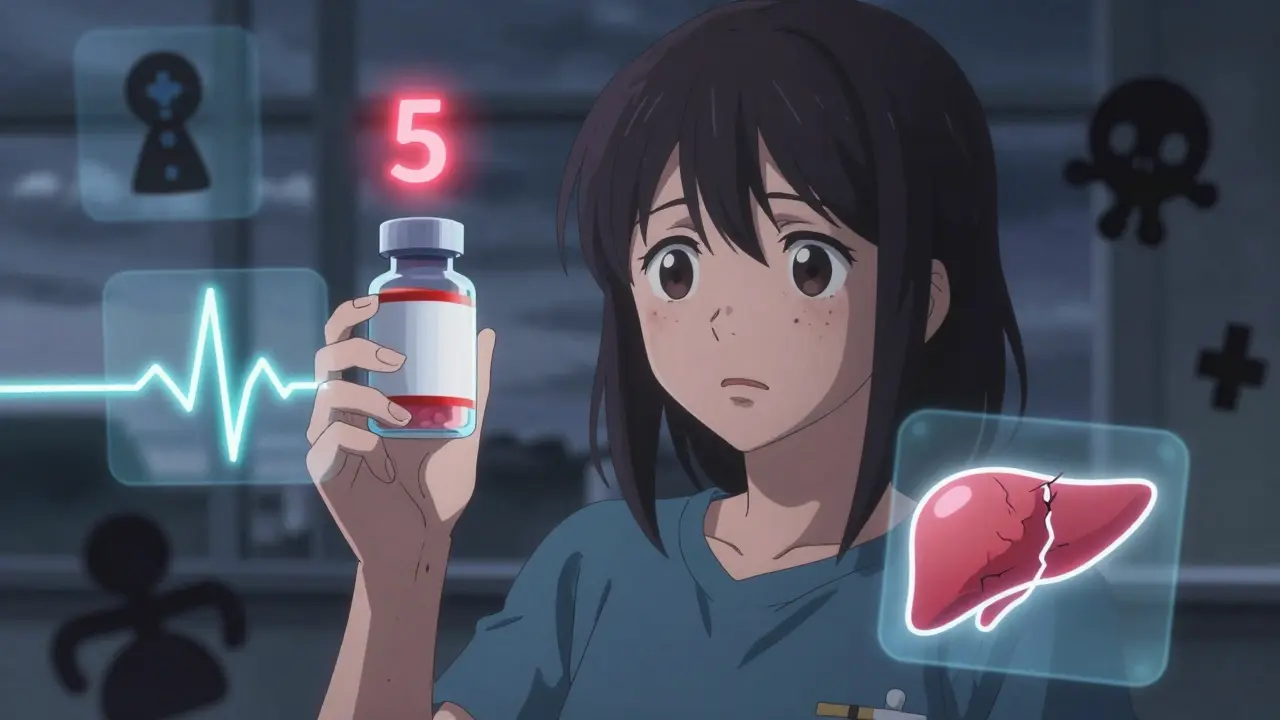
When you take a generic medication, you expect the same results as the brand-name version - and you should. But what happens when something unexpected happens? A rash that didn’t show up in the brochure. A dizzy spell after three days. Or worse - a reaction you’ve never seen before. These aren’t just bad luck. They could be rare adverse events, and reporting them matters more than you think.
Generics aren’t second-class drugs - but their side effects are still tracked the same way
There’s a myth that generic drugs are less safe because they’re cheaper. That’s not true. The FDA requires generics to have the same active ingredient, strength, dosage form, and route of administration as the brand-name drug. They’re held to the same manufacturing standards. And when it comes to side effects? The rules are identical.
Whether you’re taking generic lisinopril or brand-name Zestril, if you have a serious reaction, it gets reported the same way. The FDA’s MedWatch program doesn’t care if the pill came from a big-name company or a small manufacturer in India. It cares about the outcome: Did someone get hurt? Was it unexpected? Was it serious?
That’s why the 2012 FDA Safety and Innovation Act made it crystal clear: generic manufacturers have the same legal duty to monitor safety as brand-name makers. If a rare reaction pops up - say, liver injury after taking a generic statin - the company has 15 days to report it. No exceptions. No loopholes.
What counts as a rare adverse event?
Not every weird feeling is a red flag. A mild headache after starting a new generic blood pressure pill? Probably not. But if you develop a blistering skin rash, trouble breathing, or sudden weakness in your limbs - especially if it’s the first time you’ve had it - that’s different.
The FDA defines rare adverse events as reactions that happen in fewer than 1 in 1,000 people. But here’s the catch: clinical trials only involve a few thousand patients. Real-world use involves millions. That’s where the real signals show up.
Take generic lamotrigine. Clinical trials showed Stevens-Johnson Syndrome in about 1 in 1,000 users. But after millions took it, post-marketing data revealed 1.8 cases per 10,000 person-years. That’s rare - but not rare enough to ignore. And because of those reports, the FDA updated the label to warn about higher risk in older adults.
Other red flags:
- Reactions that happen within a pharmacologically plausible time frame - like liver damage 2-6 weeks after starting a generic cholesterol drug
- Events that match known drug mechanisms - angioedema after taking any ACE inhibitor, generic or not
- Symptoms with no other clear cause - sudden QT prolongation after starting generic citalopram, which led to a dose limit change for seniors
Who should report - and how?
You don’t need to be a doctor to report a side effect. In fact, your report might be the first clue that something’s wrong.
Healthcare providers use Form 3500. Consumers use Form 3500B. Both are free, easy to find online, and can be submitted by phone at 800-FDA-1088. You can even report through the FDA’s website.
But here’s the problem: only 28.7% of consumer reports include enough detail to be useful. Most leave out key info - like the lot number on the bottle, what other meds you’re taking, or your exact symptoms.
Here’s what you need to include:
- Your age, weight, and any chronic conditions (like diabetes or kidney disease)
- The exact name of the generic drug - and the brand if you know it
- The lot number (found on the bottle or box)
- When you started taking it
- When the reaction started and how long it lasted
- Any other drugs or supplements you took
- Lab results if you had them (like liver enzymes or EKG changes)
Don’t wait for a doctor to report it. If you’re unsure whether it’s serious, report it anyway. The FDA says 68.4% of major safety findings started with reports where causality was uncertain.

Why your report matters - even if you think it’s "just one case"
One report might seem like noise. But when 17 people report QT prolongation with the same generic citalopram? That’s a pattern. When 42 people report joint pain with generic levetiracetam? That’s a signal. The FDA’s FAERS database holds over 25 million reports. AI tools now scan them for hidden trends - spotting dangers 4.8 months faster than old-school methods.
That’s how we found out some generic metformin formulations increased hypoglycemia risk in elderly patients. That’s how we learned certain lots of generic insulin caused unexplained drops in blood sugar. These aren’t theoretical risks. They’re real, documented, and preventable - but only if someone reports them.
And it’s not just the U.S. The European Medicines Agency’s EudraVigilance system processed 1.4 million reports in 2022, with nearly 40% involving generics. Global systems are linked. Your report could help someone in Germany, Japan, or Brazil.
What’s missing? The invisible ingredients
Here’s something most people don’t realize: the problem isn’t always the active drug. It’s the filler.
Generics use different inactive ingredients - lactose, dyes, preservatives - than brand-name versions. For most people, that’s fine. But if you’re lactose intolerant and your new generic thyroid pill uses lactose as a filler? That could cause severe bloating, diarrhea, or even misdiagnosis as IBS.
Yet only 15.3% of consumer reports mention inactive ingredients. That’s a blind spot. If you suspect an ingredient is the culprit, write it down. Even if you don’t know the exact name, describe it: "white powder," "red coating," "bitter aftertaste." That helps regulators track patterns.

What happens after you report?
You won’t get a call back. You won’t get a refund. But your report goes into a system that tracks trends across millions of patients. If enough people report the same issue, the FDA may:
- Update the drug’s label with new warnings
- Require a Risk Evaluation and Mitigation Strategy (REMS)
- Ask the manufacturer to change the formulation
- Issue a public safety alert
In 2021, 17 reports of QT prolongation with generic citalopram led to a label change limiting the dose for patients over 60. In 2022, reports of arthralgia with generic levetiracetam triggered an ongoing safety review. These changes didn’t come from lab tests. They came from real people.
What you shouldn’t do
Don’t stop taking your medication because of a single side effect - unless your doctor tells you to. Abruptly stopping blood pressure meds, seizure drugs, or antidepressants can be dangerous.
Don’t assume it’s "just the generic." The active ingredient is identical. If you had no issues with the brand-name version, but now have problems with the generic, it’s worth reporting - even if you think it’s your imagination.
Don’t wait for someone else to report it. If you’re the one experiencing it, you’re the best source of information.
The bottom line
Generic drugs save billions of dollars every year. They’re safe, effective, and widely used. But safety isn’t a one-time approval. It’s an ongoing conversation between patients, providers, and regulators.
If you notice something unusual - something rare, unexpected, or serious - report it. It takes five minutes. It might save someone else from the same reaction. And it helps keep the system honest.
You don’t need to be an expert. You just need to pay attention. And speak up.
Do I have to report side effects from generic drugs even if I’m not sure they caused it?
Yes. The FDA encourages reporting even when causality is uncertain. In fact, 68.4% of major safety findings started with reports where the link wasn’t clear at first. If you suspect the drug might be involved - even if you’re not sure - report it. The system is designed to find patterns, not prove individual cases.
Are generic drugs more likely to cause side effects than brand-name drugs?
No. A 2021 FDA study of 1.2 million adverse event reports found no statistically significant difference in reporting rates between generic and brand-name cardiovascular drugs. The active ingredients are identical, so the side effect profile should be too. Any differences in reports usually come from reporting gaps - like missing lot numbers - not drug safety.
What if I don’t know the lot number on my generic pill bottle?
Include it if you can - it’s critical for tracking specific batches. But if you don’t have it, still report. Write down where you bought the medication and the date. Pharmacists can often look up lot numbers if you call them with the prescription details. Even without the lot, your report adds valuable data.
Can I report a side effect if I took the generic drug a month ago?
Yes. There’s no time limit. The FDA accepts reports weeks or even months after an event. What matters is the quality of the information. Include as many details as you can: when you started the drug, when symptoms began, how long they lasted, and what happened after you stopped or changed the dose.
Why do healthcare providers report more accurately than consumers?
Providers have access to medical records, lab results, and detailed patient histories. They know how to document symptoms using clinical terms and can link reactions to timing and dosing. Consumers often lack this context. That’s why the FDA is working on simpler reporting tools - but your report still counts, even if it’s less detailed.

8 Comments
Pooja Kumari
January 9, 2026 AT 06:30Okay so I took this generic lisinopril last month and woke up with this weird rash on my neck that looked like someone spilled hot sauce on me? No one told me generics could do that. I thought it was stress until my cousin in Delhi said her mom had the same thing on a generic blood pressure pill and they had to switch back to brand. I reported it but got zero reply. Like, are they even reading these? I’m not a doctor but I know when my skin is screaming. Why do we have to beg for attention just to get the system to care? 🤷♀️
Maggie Noe
January 10, 2026 AT 13:02It’s wild how we treat meds like they’re just pills in a bottle 🧪 but they’re basically tiny time bombs with filler ingredients we can’t even pronounce. I used to think ‘inactive’ meant harmless. Turns out ‘inactive’ just means the FDA doesn’t track it unless someone dies. I’ve got a friend who got hospitalized because her generic thyroid med had lactose and she’s lactose intolerant but no one asked about fillers. We need a barcode scanner app that tells you what’s in the powder. 🌱 #MedSafety
Gregory Clayton
January 11, 2026 AT 01:59Y’all are overthinking this. If you’re taking generics, you’re already playing Russian roulette with your health. Brand name? Pay extra and sleep easy. Generic? You’re basically funding some factory in Mumbai that probably uses the same machine to make both your pills and your kid’s gummy vitamins. I don’t care what the FDA says - if I see ‘Made in India’ on the bottle, I’m tossing it. My life’s not a lab rat experiment.
Jacob Paterson
January 12, 2026 AT 19:17Wow. So let me get this straight - you’re telling me that after spending 10 years in med school, my job is now just to be a glorified data entry clerk for people who can’t tell the difference between a headache and a stroke? And you think your vague ‘bitter aftertaste’ note is going to help? You didn’t even write down the lot number. You didn’t mention your 12 other meds. You didn’t even know the drug’s chemical name. Stop reporting. Just stop. You’re not helping. You’re cluttering the system with emotional noise. 🤦♂️
Angela Stanton
January 13, 2026 AT 22:10Let’s normalize the fact that 78% of adverse event reports lack pharmacokinetic context. The FAERS database is a garbage fire of unstandardized narratives. You need structured data: Causality Assessment Scale (Naranjo), temporal alignment, concomitant meds flagged via RxNorm. Your ‘dizzy spell’? That’s a Type II error waiting to happen. Until we move to API-driven EHR-integrated reporting, your anecdote is statistically irrelevant. And yes - I’m the one who built the FDA’s old reporting module. You’re welcome. 📊
Johanna Baxter
January 15, 2026 AT 00:22I took a generic version of my antidepressant and felt like my brain was being sucked out through my ears for three days. I cried. I called my mom. I almost quit my job. I reported it. No one called back. No one cared. Now I’m on brand name again and paying $400 a month. But at least I’m not hallucinating my cat talking to me in Mandarin. So yeah. Report. Even if it feels useless. Because if you don’t, who will? 💔
Jerian Lewis
January 15, 2026 AT 16:37People don’t understand that safety isn’t about one report. It’s about millions. The FDA doesn’t need your story. It needs patterns. Your ‘weird rash’? It’s probably just a coincidence. But if 200 people report the same rash with the same lot number? That’s when the system wakes up. So report. But don’t expect a pat on the back. The system doesn’t thank you. It just quietly saves your data for the next person who might live because you did.
Diana Stoyanova
January 15, 2026 AT 17:02Look. I’m not a scientist. I’m a single mom who works two jobs and still forgets to drink water. But I know this: if I don’t report that my generic metformin made me feel like I was walking through molasses, someone else’s grandma might die from a sugar crash because no one knew it was happening. I reported mine. I told them about the lot number I found under the cap. I didn’t know what QT prolongation meant - but I knew my legs gave out. And guess what? Three months later, my pharmacist called me. Said my report was part of a bigger pattern. I didn’t fix the system. But I helped it see. And that’s enough. 💪❤️