
High cholesterol isn’t just a number on a lab report-it’s a silent threat that can lead to heart attacks, strokes, and early death. For millions of people, especially those with a history of heart disease or very high LDL (the "bad" cholesterol), medication is not optional. And when it comes to lowering LDL, statins have been the gold standard for over 35 years. But they don’t work for everyone. Muscle pain, fatigue, liver concerns, or just plain intolerance push many people to look for other options. So what’s left when statins don’t cut it? Let’s cut through the noise and lay out exactly how statins compare to the alternatives that actually work.
How Statins Actually Work
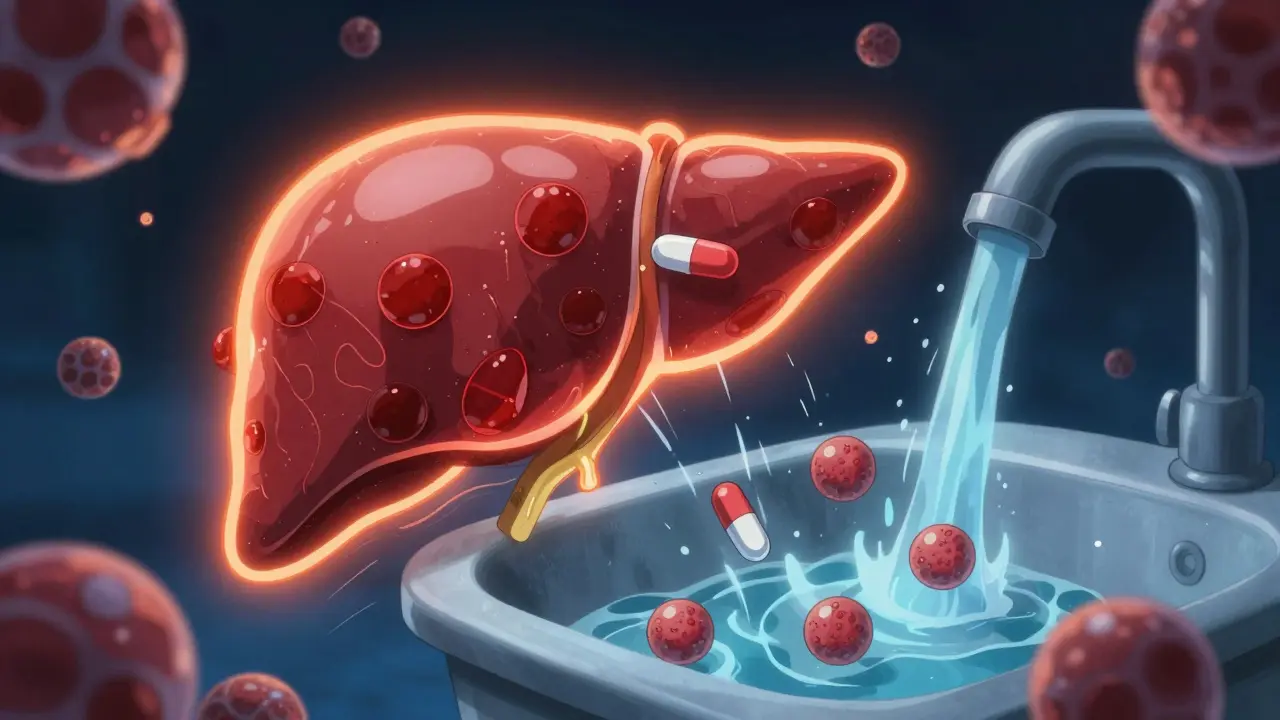
Statins aren’t magic pills. They work by blocking a specific enzyme in your liver called HMG-CoA reductase. This enzyme is responsible for making cholesterol. When it’s slowed down, your liver starts pulling more LDL cholesterol out of your bloodstream to use for its own needs. It’s like turning off the faucet and opening the drain at the same time.
The most common statins you’ll hear about are atorvastatin (Lipitor) and rosuvastatin (Crestor). These are the heavy lifters-they can drop LDL by 40% or more at high doses. Simvastatin and pravastatin are older and milder. The big difference? Some statins, like simvastatin and atorvastatin, are processed by the CYP3A4 liver enzyme. That means they can clash with other meds-like certain antibiotics, grapefruit juice, or even some heart drugs. Pravastatin and rosuvastatin? They mostly fly under the radar. Fewer interactions. Fewer headaches.
Here’s something most people don’t realize: doubling your statin dose doesn’t double the effect. If you go from 20 mg to 40 mg of atorvastatin, you might only get an extra 6% drop in LDL. That’s the law of diminishing returns. And yet, every little bit matters. Studies tracking over 39,000 people found that lowering LDL by just 0.51 mmol/L (about 20 mg/dL) cuts heart attacks and strokes by 15%. That’s why doctors push for the highest tolerated dose-not because they’re being aggressive, but because the data is clear.
Why People Stop Taking Statins
About 25% of people quit statins within the first year. Why? Muscle pain. It’s the #1 reason. Not everyone gets it, but for those who do, it’s real. Aching legs, tired arms, stiffness that doesn’t go away. It’s not just "being old." It’s a biological reaction. Studies show 5-10% of people on standard doses feel it. For some, it’s so bad they stop cold turkey.
But here’s the catch: many of these people could stay on statins if they switched. Maybe simvastatin gave them trouble, but pravastatin? No problem. Maybe daily dosing was the issue-switching to every-other-day might help. Or perhaps they were on too high a dose to begin with. A 10 mg dose of rosuvastatin might be just as effective as 40 mg of simvastatin, with way fewer side effects. The key? Don’t give up after one bad experience. Talk to your doctor. Try another statin before calling it quits.
And then there’s the myth: statins cause diabetes. Yes, there’s a slight increase in risk-about 0.1% to 0.2% per year. But for someone with high cholesterol and a family history of heart disease, the benefit of preventing a heart attack far outweighs that tiny risk. Statins don’t cause heart disease. They prevent it.
Ezetimibe: The Quiet Helper
If statins aren’t working or causing side effects, ezetimibe (Zetia) is the most common next step. It works completely differently. Instead of blocking cholesterol production in the liver, it blocks absorption in the gut. Think of it like a bouncer at a club-keeps dietary cholesterol from getting into your bloodstream.
Alone, ezetimibe lowers LDL by about 15-22%. That’s not huge. But when you pair it with a low-dose statin? The combo drops LDL by 21-27%. That’s almost as good as doubling the statin dose-with fewer side effects. Many patients report feeling better on ezetimibe plus a low-dose statin than on a high-dose statin alone. It’s also cheap. Generic ezetimibe costs under $10 a month. No injections. No complex dosing. Just one pill a day.
It’s not a replacement for statins. But it’s a powerful partner. The National Institute for Clinical Excellence (NICE) recommends it for people who can’t tolerate statins or need extra help. And for those who’ve tried multiple statins and still struggle, it’s often the first alternative that makes sense.

PCSK9 Inhibitors: The High-Tech Option
Then there’s the big gun: PCSK9 inhibitors-alirocumab (Praluent) and evolocumab (Repatha). These are injectables, given every two or four weeks. They’re not for everyone. But for certain people, they’re life-changing.
How do they work? Your liver has LDL receptors that grab cholesterol from the blood. But a protein called PCSK9 destroys those receptors. PCSK9 inhibitors block that protein. More receptors = more LDL cleared = lower numbers. These drugs can slash LDL by up to 60%. In one study, people with existing heart disease who took evolocumab had a 20% lower risk of heart attack, stroke, or death from heart disease.
And here’s the kicker: unlike statins, they don’t increase the risk of hemorrhagic stroke. In fact, for people who’ve had a brain bleed before, PCSK9 inhibitors might be the safer choice. Statins thin the blood slightly. These don’t.
But there’s a downside: cost. A year’s supply of a PCSK9 inhibitor runs about $5,850. Generic statins? As low as $4 a month. Insurance battles are real. Many patients report being denied coverage three or four times before approval. And you need to learn how to inject yourself-subcutaneous shots in the stomach or thigh. It’s not hard, but it’s not casual.
Still, for someone with familial hypercholesterolemia, or someone who’s had a heart attack despite being on high-dose statins, this is a game-changer. The data is solid. The effect is dramatic. The barrier? Access.
Newer Players: Bempedoic Acid and Inclisiran
Bempedoic acid (Nexletol) came onto the scene in 2020. It’s an oral pill that blocks a different enzyme in the liver-ACL-instead of HMG-CoA reductase. That means it doesn’t interfere with muscle cells the way statins sometimes do. It lowers LDL by about 17% on its own. Combine it with ezetimibe? You’re looking at a 30-35% drop. It’s also been shown to reduce heart attacks and strokes in high-risk patients.
And then there’s inclisiran (Leqvio), approved in late 2021. This one’s wild. It’s a small interfering RNA therapy. Think of it like a gene silencer. It tells your liver to make less PCSK9. One shot, then another three months later, and then just twice a year. That’s it. It lowers LDL by 40-50% when used with a statin. No daily pills. No weekly injections. Just two tiny shots every six months.
It’s not widely available yet. Cost is still high. But it’s the future. Adherence is the biggest problem in cholesterol treatment. If you can’t take a pill every day, or you hate shots, this could be the answer.

What About Supplements?
You’ve seen the ads: red yeast rice, plant sterols, omega-3s, garlic pills. They sound natural. Safe. Effective. But here’s the truth: none of them come close to statins.
Red yeast rice contains a natural form of lovastatin. That means it has the same side effects as prescription statins-but without the safety monitoring. No one knows how much active ingredient is in each capsule. The FDA has warned against it. Plant sterols? They lower LDL by about 5-10%. That’s nice, but not enough if your number is 200. Omega-3s? They help triglycerides, not LDL. And garlic? A 2022 review found no significant effect on cholesterol in controlled trials.
Harvard Health put it bluntly: "If you need to lower your LDL, a statin works, and these supplements do not." Don’t waste your money. Don’t risk your health. If you’re considering supplements, talk to your doctor first. They’re not alternatives. They’re distractions.
Choosing the Right Path
There’s no one-size-fits-all. Your path depends on your risk, your history, your side effects, and your access to care.
- If you tolerate statins? Stick with them. High-intensity statins save lives.
- If you get muscle pain? Try switching statins. Try lowering the dose. Try every-other-day dosing.
- If you still can’t tolerate statins? Add ezetimibe. It’s affordable, safe, and effective.
- If you have very high LDL, a history of heart attack, or familial hypercholesterolemia? Consider PCSK9 inhibitors. They’re powerful. They’re safe. The cost is high, but so is the risk of doing nothing.
- If you hate pills or injections? Keep an eye on inclisiran. It’s coming. And it’s promising.
The goal isn’t to avoid statins. The goal is to lower your LDL to a safe level. Statins are the best tool we have. But they’re not the only tool. And for many people, the right combination of therapies-not just one-is what keeps their heart healthy for decades to come.
Can I just take ezetimibe instead of a statin?
Ezetimibe alone lowers LDL by about 15-22%, which is modest. For most people, that’s not enough to reduce heart attack risk significantly. It’s best used with a low-dose statin, not as a standalone replacement. If you truly can’t take statins, ezetimibe is a good second option-but it’s not as powerful.
Do PCSK9 inhibitors cause muscle pain like statins?
No. PCSK9 inhibitors like alirocumab and evolocumab don’t affect muscle cells the way statins do. In clinical trials, muscle pain rates were similar to placebo. That’s why they’re often chosen for patients who had statin intolerance. They’re also safe for people with a history of muscle disorders.
Is it true that statins can cause liver damage?
Serious liver injury from statins is extremely rare. The FDA removed routine liver enzyme monitoring in 2012 because studies showed it didn’t help predict harm. A mild, temporary rise in liver enzymes happens in about 1% of users, but it usually resolves on its own. If your liver enzymes rise above three times the normal level, your doctor may pause the statin-but this is uncommon.
Why don’t more doctors prescribe PCSK9 inhibitors if they’re so effective?
Cost and access. At $5,850 a year, they’re 100 times more expensive than generic statins. Insurance companies often require patients to try and fail on at least two statins, plus ezetimibe, before approving them. Many patients give up after being denied coverage multiple times. Doctors want to prescribe them-but they can’t if the system blocks access.
Are there any natural ways to lower cholesterol as well as statins?
No. Diet, exercise, and supplements can lower LDL by 10-15% at best. Statins lower it by 30-60%. That gap isn’t just a little difference-it’s the difference between a moderate risk and a high risk of heart attack. Lifestyle changes are essential, but they’re not replacements for medication in high-risk patients.
If you’re struggling with high cholesterol, remember: you’re not alone. Millions are in the same boat. The tools exist. The science is clear. The goal isn’t perfection-it’s progress. Talk to your doctor. Ask about alternatives. Don’t accept side effects as inevitable. There’s almost always a better way.

8 Comments
Greg Scott
February 19, 2026 AT 08:31Statins saved my life, but man, the muscle pain was brutal. Switched to pravastatin and dropped the dose - now I feel like a human again and my LDL’s under 80. Don’t give up after one bad pill.
Michaela Jorstad
February 20, 2026 AT 04:12I’m so glad someone finally broke this down without hype! My dad had a heart attack at 58, and after three different statins, we tried ezetimibe + low-dose rosuvastatin. He’s been stable for 5 years now. No muscle pain. No drama. Just one pill. Why isn’t this the first-line advice?!
Chris Beeley
February 21, 2026 AT 00:40Let me be clear: if you’re relying on supplements like red yeast rice or omega-3s, you’re not treating your cholesterol-you’re playing Russian roulette with your coronary arteries. The data is not ambiguous. Statins reduce all-cause mortality by 15-20% in high-risk groups. Supplements? They’re glorified candy. The fact that people still believe in garlic pills as a therapy is why American healthcare is in such a mess. You wouldn’t use honey to treat sepsis, so why treat LDL like it’s a cold? This isn’t wellness influencer content-it’s life-or-death biochemistry.
Hariom Sharma
February 21, 2026 AT 05:54From India, I’ve seen this firsthand. My uncle was on Lipitor, got terrible cramps, stopped cold. Then we tried ezetimibe with simvastatin 10mg - boom, no pain, LDL down to 75. And it cost less than 500 rupees a month. Why do doctors here still push high-dose statins first? We need more awareness about combos. Also, no one talks about how easy it is to inject PCSK9 inhibitors - my aunt does it herself while watching TV. It’s just a tiny needle. No big deal.
Liam Crean
February 23, 2026 AT 02:11Just wanted to add that inclisiran is a game-changer for adherence. I’m a nurse, and I’ve had patients who forget pills every day, skip injections, get discouraged. But twice-a-year shots? That’s a whole different ballgame. One guy I work with had 120 LDL on max statin + ezetimibe. After inclisiran, it’s 42. No side effects. He’s now biking 10 miles a day. It’s not magic-it’s science. And yeah, cost is insane right now, but when generics hit? This will be standard.
Davis teo
February 23, 2026 AT 18:37Okay, but what if you’re a 32-year-old with familial hypercholesterolemia and your insurance denied PCSK9 inhibitors FOUR TIMES? I had to max out my credit card to get evolocumab. My cardiologist cried when he saw my LDL was still 190 after six months on statins. This isn’t a debate-it’s a systemic failure. We’re letting people die because of billing codes. And now they want us to be grateful for ezetimibe? It’s like giving someone a Band-Aid after a gunshot wound. I’m not angry. I’m just… exhausted.
Caleb Sciannella
February 25, 2026 AT 15:54While the clinical efficacy of statins and their adjuncts is well-documented, one cannot overlook the sociocultural dimensions of medication adherence. In populations with limited health literacy, the narrative surrounding pharmaceutical interventions is often distorted by misinformation propagated through digital platforms. Furthermore, the economic disparity in access to PCSK9 inhibitors and inclisiran underscores a critical inequity in preventive cardiology. It is imperative that healthcare policy evolve to prioritize equitable access, not merely clinical outcomes. The science is robust; the system is not. We must align our institutional priorities with the ethical imperative to preserve life, regardless of socioeconomic status.
Danielle Gerrish
February 26, 2026 AT 23:42My mom took statins for 8 years. Got liver enzymes way up. Doctor said "it’s fine" - but she felt awful. Then we tried ezetimibe alone. LDL dropped from 180 to 120. She said she finally had energy again. No more napping after lunch. No more leg cramps. And she’s 72. I’m telling you - if you’re tired, achy, and your doctor says "just push through," ask for ezetimibe. It’s not sexy. It’s not a miracle. But it’s real. And it’s cheap. And it might be the thing that lets you live to see your grandkids graduate.