
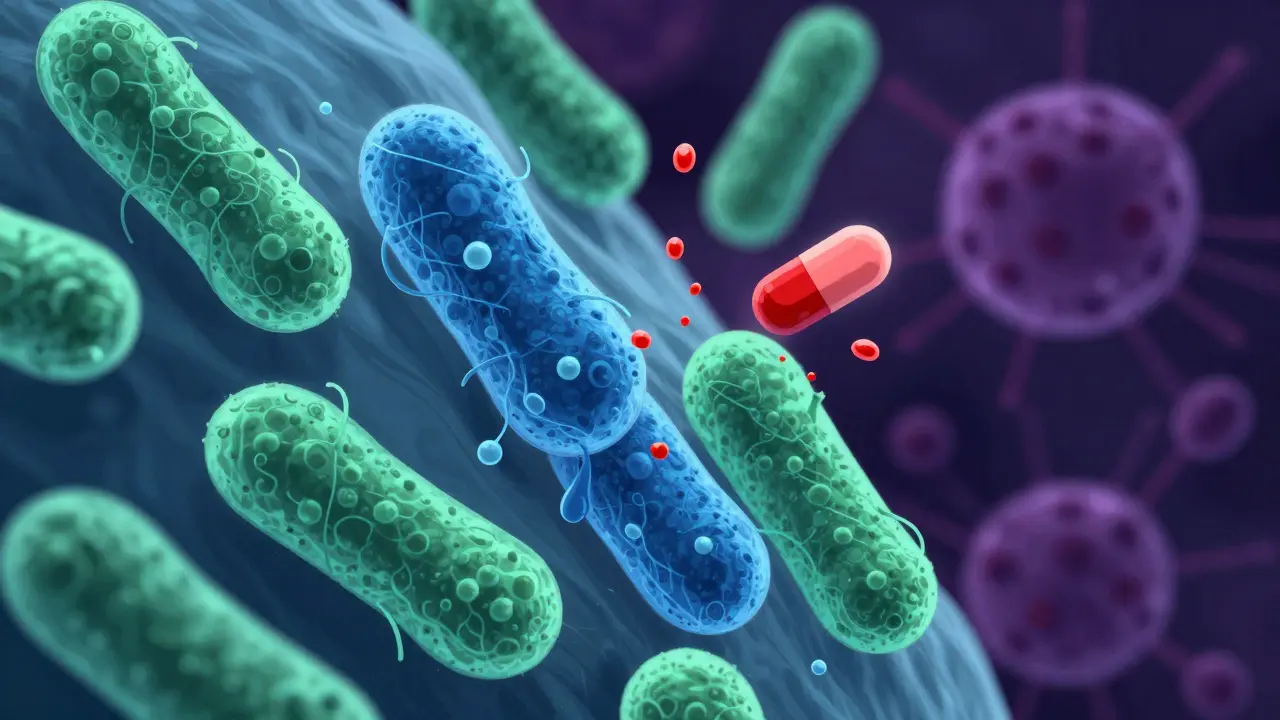
Every year, 500,000 people in the United States get a C. diff infection. That's a lot of people. And what's surprising? Antibiotics often cause it. Yes, the very medicines meant to help can sometimes trigger a dangerous infection. This condition, called C. difficile colitis, can lead to severe diarrhea, fever, and even life-threatening complications. But there's hope. A treatment called fecal microbiota transplantation (FMT) has proven incredibly effective for people with recurrent infections. Let's break down how antibiotics lead to this problem and why FMT works.
What is C. difficile colitis?
C. difficile colitis is a bacterial infection that causes severe diarrhea and inflammation of the colon. It occurs when antibiotics disrupt the natural balance of gut bacteria, allowing Clostridioides difficile bacteria to multiply and release toxins. Symptoms include watery diarrhea (three or more times a day for two days), abdominal pain, fever, and loss of appetite. In severe cases, it can lead to life-threatening complications like toxic megacolon or colon perforation.
How antibiotics trigger C. diff
Antibiotics are lifesavers, but they can also wipe out good bacteria in your gut. This creates an opening for C. difficile to take over. Not all antibiotics carry the same risk. A JAMA Network Open study analyzing over 33,000 hospitalizations found that piperacillin-tazobactam (a type of BLBLI antibiotic) has the highest risk, with a hazard ratio of 2.18. This means it's more than twice as likely to cause C. diff compared to other antibiotics. Clindamycin and later-generation cephalosporins like ceftriaxone also rank high risk. On the flip side, tetracyclines like doxycycline show much lower risk.

Antibiotic risk levels for C. diff
| Antibiotic Class | Risk Level | Examples |
|---|---|---|
| High Risk | Very High | Piperacillin-tazobactam, clindamycin, later-generation cephalosporins (e.g., ceftriaxone) |
| Medium Risk | High | Carbapenems (e.g., meropenem), fluoroquinolones (e.g., ciprofloxacin) |
| Lower Risk | Low | Tetracyclines (e.g., doxycycline), penicillins (e.g., amoxicillin) |
What is fecal microbiota transplantation?
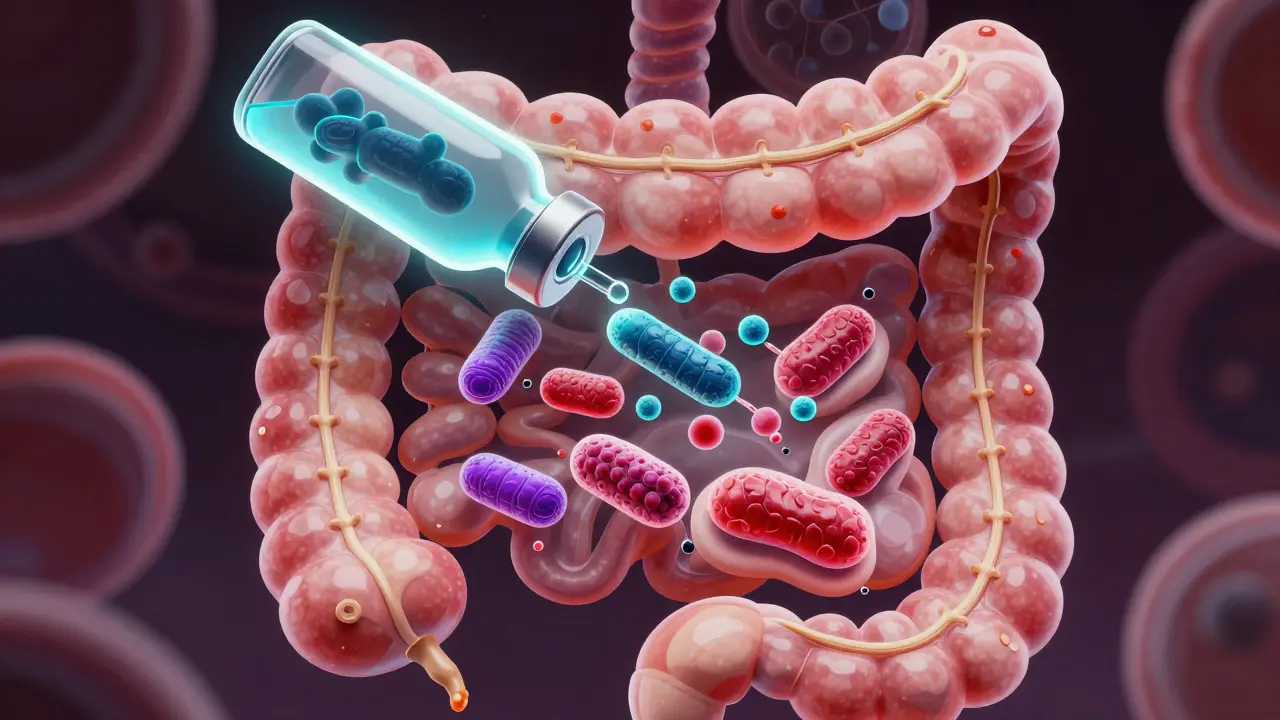
Fecal microbiota transplantation (FMT) is a procedure where stool from a healthy donor is transferred to a patient's colon. This restores healthy gut bacteria that antibiotics destroyed. The process starts with rigorous donor screening. Donors must pass extensive tests for infections like HIV, hepatitis, and other pathogens. The stool is processed into a solution and delivered via colonoscopy, enema, or oral capsules. The New England Journal of Medicine published a landmark 2013 study showing FMT cured 94% of recurrent C. diff cases compared to just 31% with standard antibiotics. Today, the Centers for Disease Control and Prevention (CDC) and Infectious Diseases Society of America (IDSA) guidelines recommend FMT for patients with three or more recurrences.
Prevention and current guidelines
Preventing C. diff starts with smart antibiotic use. The Start Smart-Then Focus program by the CDC and Department of Health Advisory Committee recommends reviewing antibiotics within 48-72 hours. This means asking: "Do we still need this antibiotic? Is there a narrower-spectrum option?" For example, switching from piperacillin-tazobactam to a lower-risk antibiotic like amoxicillin when possible. The National Institutes of Health (NIH) also found that antibiotic exposure increases CDI risk by 8% for each additional day of treatment. This highlights the importance of using antibiotics only when necessary and for the shortest duration possible. For recurrent cases, newer treatments like fidaxomicin (a narrow-spectrum antibiotic) and bezlotoxumab (a monoclonal antibody) show promise. Fidaxomicin has a 90% sustained response rate versus 86.1% for vancomycin, and bezlotoxumab reduces recurrence by 10% when added to standard therapy.
Frequently Asked Questions
What causes C. difficile colitis?
C. difficile colitis is caused by the bacterium Clostridioides difficile. It typically occurs after antibiotic use disrupts the natural gut bacteria, allowing C. diff to overgrow and produce toxins. Hospital settings and long-term antibiotic use are common risk factors, but community cases are rising too.
Which antibiotics carry the highest risk for C. diff?
Piperacillin-tazobactam, clindamycin, and later-generation cephalosporins like ceftriaxone have the highest risk. Studies show these antibiotics have hazard ratios over 2.0, meaning they're more than twice as likely to trigger C. diff compared to other antibiotics. Tetracyclines like doxycycline and penicillins like amoxicillin are lower-risk options.
Is fecal microbiota transplantation safe?
Yes, when performed correctly. Donors undergo rigorous screening for infections like HIV, hepatitis, and other pathogens. The FDA requires informed consent due to potential risks, but serious complications are rare. Recent FDA-approved products like Rebyota and Vowst have strict quality controls, making them safer than older physician-compounded FMT methods.
How effective is FMT for recurrent C. diff?
FMT is highly effective for recurrent C. diff. Landmark studies show 81-94% cure rates after one or two treatments. This is far better than antibiotics alone, which only resolve about 31% of recurrent cases. Current guidelines recommend FMT for patients with three or more recurrences.
Can I prevent C. diff without antibiotics?
Yes. The best prevention is avoiding unnecessary antibiotics. If you need antibiotics, ask your doctor about the lowest-risk option and shortest duration. The CDC's Start Smart-Then Focus program emphasizes reviewing antibiotics within 48-72 hours. For high-risk patients, probiotics or monoclonal antibodies like bezlotoxumab may help, though evidence is still developing.
Are there alternatives to FMT?
Yes. For initial infections, fidaxomicin is preferred over vancomycin due to better sustained response rates. Newer treatments like SER-109 (an oral microbiome therapeutic) and bezlotoxumab (a monoclonal antibody) show promise. However, FMT remains the most effective option for recurrent cases with multiple relapses.

12 Comments
Diana Phe
February 7, 2026 AT 10:06Antibiotics are a plot by big pharma to keep people sick.
They know FMT works but suppress it.
The government is in on it.
Always question authority.
Trust me, I know.
Carl Crista
February 7, 2026 AT 14:24Antibiotics cause C diff but not a conspiracy
Studies show it's natural
FMT is real science
Check the NEJM study
Bella Cullen
February 9, 2026 AT 04:51Always check alternatives when prescribed antibiotics.
Sam Salameh
February 11, 2026 AT 03:12Antibiotics are essential but need careful use.
Don't be scared.
Always talk to your doc.
Georgeana Chantie
February 12, 2026 AT 15:32FMT is not real science.
Big Pharma controls everything.
This is incorrect 😒
Matthew Morales
February 14, 2026 AT 05:52Hey, I had a friend who got C diff from antibiotics.
😊 FMT saved him.
Typos sorry! 🤷♂️
one hamzah
February 15, 2026 AT 12:52Gut health is crucial for overall wellness.
FMT is a game changer for recurrent C diff cases.
🌟 The microbiome is like a garden-needs balance.
🌱 Always consult experts!
Phoebe Norman
February 15, 2026 AT 21:12Microbiome balance is vital.
FMT restores diversity.
But risks exist.
Need more research.
Emotional impact is huge.
Lana Younis
February 16, 2026 AT 01:22Gut health is super important.
FMT helps a lot for recurrences.
🌍 Always check with doc.
Misspellings sorry!
Samantha Beye
February 17, 2026 AT 09:20More research needed. But FMT works for many. Stay positive!
Rene Krikhaar
February 18, 2026 AT 10:29Antibiotics are vital but must be used judiciously.
Overuse disrupts gut flora leading to C. diff.
The CDC's Start Smart-Then Focus program recommends reviewing antibiotics within 48-72 hours.
This prevents unnecessary use.
Fecal microbiota transplantation has shown 81-94% success rates for recurrent cases.
It's far superior to antibiotics alone.
Studies in NEJM confirm this.
Always consult healthcare providers for alternatives.
Proper stewardship saves lives.
Microbiome health is crucial.
New treatments like fidaxomicin show promise.
Bezlotoxumab reduces recurrence rates.
Always stay informed.
Trust evidence-based medicine.
Recent FDA-approved products like Rebyota and Vowst are safe options.
Dr. Sara Harowitz
February 18, 2026 AT 16:31Conspiracy theories are unfounded. Antibiotics save lives; they're not a plot. FMT is evidence-based. CDC and IDSA endorse it! Always trust science!