
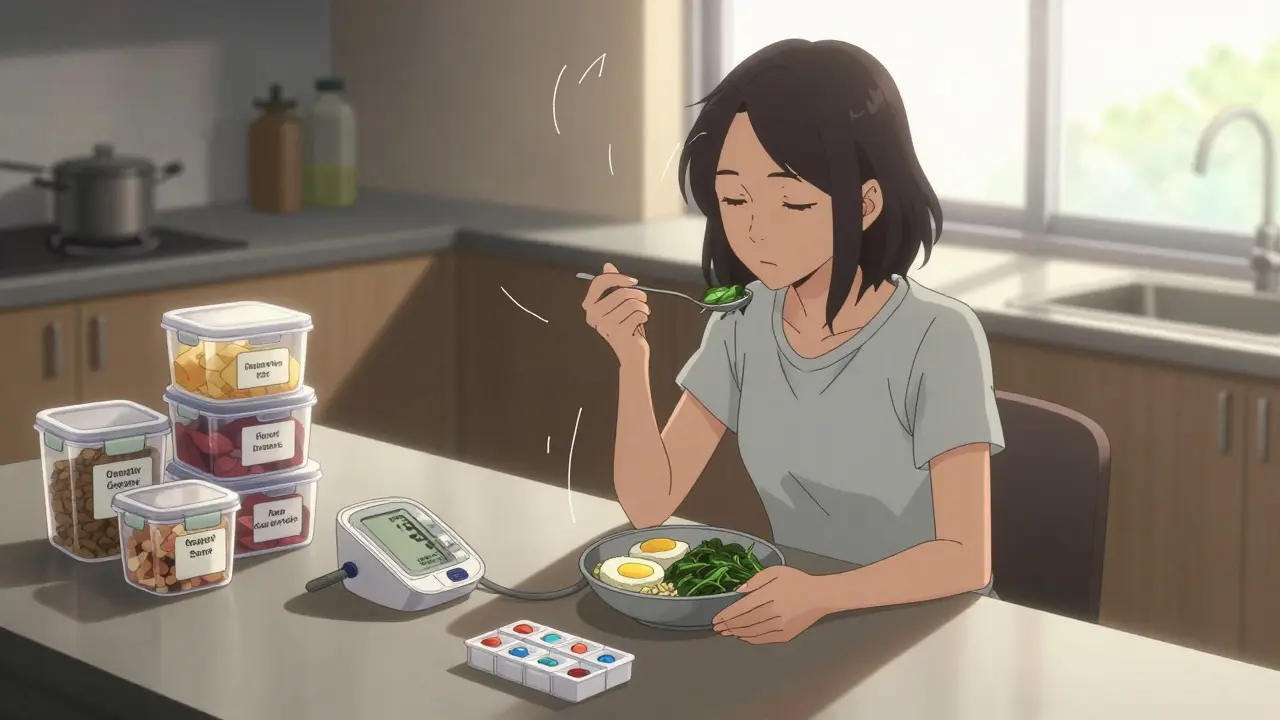
Steroid Sodium Tracker
Daily Sodium Intake Tracker
Help manage steroid-induced weight gain and fluid retention by keeping sodium under 1,500 mg daily.
Current Intake
- No entries yet
Sodium Tips
Limit sodium to under 1,500 mg a day. That's less than one teaspoon of salt. Avoid processed foods, canned soups, soy sauce, and restaurant meals. Read labels — even bread adds up.
What to eat: Focus on fresh foods like vegetables, fruits, lean proteins, and whole grains. Avoid processed snacks, deli meats, and packaged foods.
Why it matters: Steroids cause your body to hold onto water. Reducing sodium helps prevent bloating, swelling, and weight gain while on steroids.
Take a daily pill like prednisone for your arthritis, asthma, or lupus, and you might feel like a miracle worker within hours. But after a few weeks, the scale climbs, your mood swings, your bones feel fragile, and you’re exhausted even after a full night’s sleep. You didn’t sign up for this. You just wanted to feel better.
That’s the cruel trade-off with corticosteroids. They’re one of the fastest ways to shut down inflammation in your body - faster than any other drug out there. But they don’t just turn off inflammation. They mess with your metabolism, your immune system, your bones, your mood, and even your sleep. The good news? You don’t have to just suffer through it. There are real, science-backed ways to fight back against the side effects - without giving up the benefits.
Why Corticosteroids Are So Powerful (and So Problematic)
Corticosteroids like prednisone, methylprednisolone, and hydrocortisone are synthetic versions of cortisol, the hormone your adrenal glands make naturally. They work by calming down your immune system, which is great if your immune system is attacking your joints, lungs, or skin. But they don’t know where to stop. They suppress everything - even the good stuff.
That’s why even low doses - like 5 mg of prednisone a day - can cause trouble if you take them for more than three months. At that point, your body starts to change. Fat shifts to your belly and face. Your muscles weaken. Your bones lose density. Your blood sugar creeps up. Your blood pressure climbs. And your risk of infection? It doubles.
Studies show that 50 to 70% of people on long-term steroids gain noticeable weight. One in three develops high blood pressure. One in five ends up with type 2 diabetes. And nearly half will lose bone mass - enough to put them at risk for fractures. These aren’t rare side effects. They’re the norm.
Stop the Weight Gain Before It Starts
Weight gain from steroids isn’t just about eating too much. It’s about how your body stores fat. Steroids trigger insulin resistance and make your body hold onto water. That’s why you wake up puffy and feel bloated even if you’re eating salads.
Here’s what actually works:
- Limit sodium to under 1,500 mg a day. That’s less than one teaspoon of salt. Avoid processed foods, canned soups, soy sauce, and restaurant meals. Read labels - even bread adds up.
- Get enough protein. Steroids break down muscle. Eating 1.2 to 1.5 grams of protein per kilogram of body weight daily helps preserve it. Eggs, chicken, tofu, lentils, and Greek yogurt are your friends.
- Don’t skip meals. Eating small, balanced meals every 3 to 4 hours keeps blood sugar stable. That reduces cravings and stops the sugar crashes that make you reach for cookies.
- Move daily. You don’t need to run a marathon. Walking 30 minutes a day, doing light resistance bands, or swimming helps fight fat gain and keeps your joints moving. Even gentle movement cuts fluid retention.
One woman on Reddit, ‘RheumieMom,’ gained 30 pounds in three months on 10 mg of prednisone. She tried everything - keto, intermittent fasting, intense workouts. Nothing worked until she cut sodium and started eating protein with every meal. She lost 18 pounds in six weeks - without changing her steroid dose.
Protect Your Bones - Don’t Wait Until It’s Too Late
One of the most dangerous side effects? Osteoporosis. Steroids stop bone-building cells from working and speed up bone loss. And it happens quietly - no pain, no warning. By the time you break a bone, it’s already too late.
Here’s how to stop it before it starts:
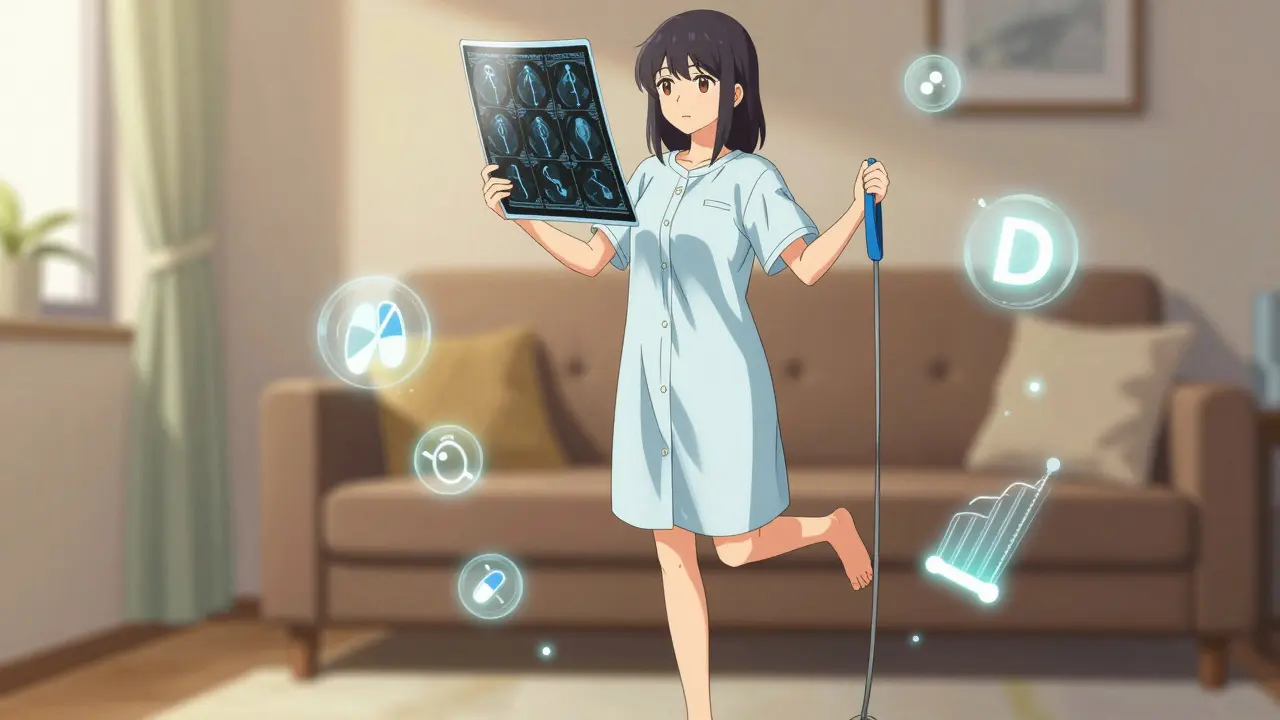
- Take calcium and vitamin D. Start immediately if you’re on 5 mg or more of prednisone daily for more than three months. Aim for 1,200 mg of calcium (from food and supplements) and 800 to 1,000 IU of vitamin D daily. Dairy, leafy greens, and fortified foods help, but most people need a supplement.
- Get a DEXA scan. This bone density test is simple and painless. Get one at the start of long-term therapy and again after one year. If your score shows osteopenia (early bone loss), your doctor may prescribe a bisphosphonate like alendronate - which can cut fracture risk by half.
- Do weight-bearing exercises. Walking, stair climbing, or even standing on one foot for 30 seconds a day helps stimulate bone growth. Strength training twice a week with light weights or resistance bands is even better.
A woman with lupus posted on the Lupus Foundation forum: ‘After two years on steroids, my DEXA scan showed osteopenia. I wish I’d started calcium sooner.’ She started supplements and walking daily. A year later, her bone density was stable.
Watch Your Blood Sugar and Blood Pressure
Steroids make your liver release more glucose and make your cells less sensitive to insulin. That’s why many people on long-term steroids develop prediabetes or full-blown type 2 diabetes.
Monitor this early:
- Check fasting blood sugar every 3 months. If it’s over 100 mg/dL, talk to your doctor. You may need metformin - which not only helps control blood sugar but can also reduce steroid-induced weight gain.
- Test HbA1c every 6 months. This gives you a 3-month average of your blood sugar. Aim for under 5.7%.
- Check blood pressure weekly during dose changes, monthly after that. If it’s above 140/90 on two visits, you need treatment. ACE inhibitors or calcium channel blockers are often used - they’re gentle on kidneys and don’t interfere with steroids.
One study found that patients who started blood pressure meds early while on steroids were 40% less likely to develop heart disease over five years.
Manage Mood Swings and Sleep Problems
‘Prednisone turned me into an emotional wreck,’ wrote one Reddit user. ‘I cried over spilled coffee and yelled at my kids for no reason.’
It’s not just you. Steroids affect brain chemistry - especially serotonin and dopamine. Anxiety, irritability, insomnia, and even depression are common.
What helps:
- Take your dose in the morning. This mimics your body’s natural cortisol rhythm and reduces nighttime stimulation.
- Avoid caffeine after noon. Even decaf coffee has enough to interfere with sleep if you’re steroid-sensitive.
- Try magnesium glycinate before bed. 200 to 400 mg can help calm your nervous system and improve sleep quality.
- Don’t ignore mood changes. If you’re feeling hopeless, anxious, or overwhelmed, tell your doctor. Antidepressants like SSRIs are safe with steroids and can help.

Tapering Off - Don’t Quit Cold Turkey
When you’ve been on steroids for more than a few weeks, your adrenal glands stop making cortisol. If you stop suddenly, you can go into adrenal crisis - low blood pressure, vomiting, fainting, even death.
Here’s how to taper safely:
- For doses above 20 mg prednisone daily: Reduce by 2.5 to 5 mg every 3 to 7 days.
- For doses below 20 mg: Drop by 1 mg every 1 to 2 weeks.
- Always carry a steroid emergency card. If you’re sick, injured, or having surgery, you need extra steroids - even if you’ve stopped taking them. Your body still needs cortisol for stress.
Many people stop steroids too fast because they feel better. But feeling better doesn’t mean your adrenals are back online. It can take months - sometimes over a year - for them to fully recover.
What’s Coming Next
Scientists are working on drugs that keep the anti-inflammatory power of steroids but ditch the side effects. One drug, vamorolone, has shown in trials to protect bones and reduce weight gain while still controlling inflammation. Another targets how your body processes cortisol in fat and liver tissue - promising better blood sugar control.
In the next five years, genetic testing may help doctors predict who’s most likely to gain weight or lose bone on steroids - and adjust treatment before problems start.
But for now, the best tool you have is awareness. Know the risks. Take the supplements. Monitor your numbers. Move your body. Eat clean. And don’t be afraid to ask your doctor: ‘Is there a way to reduce this dose?’
Corticosteroids save lives. But they don’t have to wreck them. With the right support, you can take them - and still live well.
Can I take calcium and vitamin D while on prednisone?
Yes, absolutely. In fact, it’s recommended if you’re on 5 mg or more of prednisone daily for more than three months. Calcium (1,200 mg daily) and vitamin D (800-1,000 IU daily) help protect your bones from steroid-induced osteoporosis. These supplements don’t interfere with the drug - they help prevent one of its most dangerous side effects.
How long does it take for steroid side effects to go away after stopping?
It depends on the side effect. Weight gain and fluid retention often improve within weeks after stopping. Blood pressure and blood sugar usually normalize in 1 to 3 months. But bone loss may not fully reverse - that’s why prevention is critical. Adrenal recovery can take 6 to 12 months, sometimes longer. Your body needs time to restart its own cortisol production.
Are there alternatives to corticosteroids for inflammation?
Yes, but they work slower. Drugs like methotrexate, sulfasalazine, or biologics (like adalimumab) are better for long-term control of autoimmune diseases. They don’t cause the same side effects as steroids. But they take weeks or months to work. That’s why steroids are often used short-term to control flares while waiting for these slower drugs to kick in.
Can I drink alcohol while taking corticosteroids?
It’s best to avoid it. Alcohol increases your risk of stomach ulcers - a known side effect of steroids. It also raises blood pressure and can worsen liver damage or blood sugar spikes. If you do drink, limit it to one drink occasionally and never on an empty stomach.
What should I do if I miss a dose of my steroid?
If you miss a dose by less than 2 hours, take it as soon as you remember. If it’s later in the day, skip it - don’t double up. Missing one dose won’t cause adrenal crisis, but regularly skipping doses can make your symptoms flare or make tapering harder. Set phone alarms or use a pill organizer to stay on track.
Do corticosteroids cause permanent damage?
Some side effects can be permanent if not caught early. Osteoporosis-related fractures, cataracts, and avascular necrosis (bone death in hips or shoulders) may not reverse. That’s why monitoring and prevention are so important. But most side effects - weight gain, high blood sugar, high blood pressure - can improve or resolve after stopping the drug, especially with lifestyle changes.
Next Steps: What to Do Today
If you’re on corticosteroids, don’t wait for side effects to hit. Start acting now:
- Ask your doctor for a baseline DEXA scan and blood sugar test.
- Start calcium and vitamin D supplements if you’re on long-term therapy.
- Track your sodium intake - use a free app like MyFitnessPal for a week.
- Set a daily reminder to walk for 30 minutes.
- Write down any mood changes or sleep issues - bring them to your next appointment.
You’re not powerless. With the right support, you can manage your condition - and your life - without letting steroids take control.

15 Comments
Ambrose Curtis
January 26, 2026 AT 14:07bro i was on 20mg for 6 months and thought i was gonna die. lost 25lbs just by cutting salt and eating eggs for breakfast. no joke. my joints still hurt but at least i don't look like a balloon anymore.
Linda O'neil
January 27, 2026 AT 07:40This is GOLD. I wish my rheumatologist had told me this 2 years ago. I started walking daily and taking calcium + D3 and my bone scan improved. You don't need to suffer. Small changes = huge difference.
Chris Urdilas
January 28, 2026 AT 05:20Wow. So let me get this straight. You're telling me if I just stop eating chips and drink water, my face won't look like a moon? I'm shocked. Who knew the cure was... not being a lazy sack?
Jeffrey Carroll
January 28, 2026 AT 11:10The clinical evidence presented here is both comprehensive and clinically actionable. I particularly appreciate the emphasis on early DEXA screening and the physiological rationale behind sodium restriction. This represents a model for patient-centered steroid management.
Phil Davis
January 30, 2026 AT 09:53I’ve been on prednisone for 4 years. I didn’t know any of this. Guess I’m just supposed to get fat, break bones, and cry over spilled milk. Thanks for the tips. Now if only my doctor would listen.
Irebami Soyinka
January 31, 2026 AT 20:31USA always think they got the monopoly on health advice 😂 I been on steroids since 2018 in Lagos and we just drink bitter leaf juice and pray. No calcium, no walking, just faith. My bones still standing 😎
doug b
February 2, 2026 AT 16:06You got this. Start with one thing. One. Just pick one. Walk today. Drink water. Take your calcium. Don't try to fix everything at once. Baby steps. You're not broken. You're adapting.
SRI GUNTORO
February 3, 2026 AT 22:21You people are so obsessed with supplements and tracking. Why not just pray? Why not trust God to heal you? This is modern idolatry-replacing faith with pills and protein shakes.
Kevin Kennett
February 4, 2026 AT 03:54I used to be that guy who thought steroids were a free pass to eat pizza and nap. Then I broke my wrist lifting a grocery bag. That’s when I started walking. Now I’m 30 lbs lighter and my doctor actually smiles when I walk in. You can do this. Not because you have to-but because you deserve to feel like yourself again.
Jess Bevis
February 4, 2026 AT 10:54Tapering slow = life saver. My uncle stopped cold turkey. Ended up in ER. Don’t be him.
Bryan Fracchia
February 5, 2026 AT 06:49It’s funny how we treat our bodies like machines you can just tweak with apps and supplements. But we’re not robots. We’re biological beings shaped by trauma, stress, sleep, and emotion. Maybe the real fix isn’t just calcium or walking-it’s learning to listen to what your body’s screaming when you’re on steroids. Not just managing side effects… but healing the whole system.
Rose Palmer
February 6, 2026 AT 00:40It is imperative to underscore the significance of baseline biomarker assessment prior to the initiation of prolonged corticosteroid regimens. The integration of evidence-based lifestyle interventions is not ancillary-it is foundational to mitigating iatrogenic morbidity.
Howard Esakov
February 7, 2026 AT 11:37I mean… I just take my prednisone and go about my life. If I get fat and tired? That’s just the price of being alive. Also I bought a $1200 smart scale and track my cortisol levels with an app. You’re all just doing it wrong.
Kathy Scaman
February 9, 2026 AT 00:30I just started on 5mg and already feel like a zombie. But hey, at least my skin is glowing? 😅
Anna Lou Chen
February 10, 2026 AT 21:58The entire paradigm of steroid management is predicated on a Cartesian reductionist model that pathologizes physiological adaptation. We must deconstruct the biomedical hegemony and re-embed the patient within a phenomenological framework of embodied resilience-not merely mitigate side effects through pharmacological countermeasures. The body is not a system to be optimized-it is a narrative to be co-authored.