

Diphenhydramine Overdose Risk Calculator
Risk Assessment Tool
Enter your weight and the amount of diphenhydramine ingested to determine potential overdose risk level.
Immediate Action Required
Call Poison Control immediately at 1-800-222-1222 if you suspect an overdose. Do not induce vomiting or give any home remedies.
Diphenhydramine is a first-generation antihistamine developed by George Rieveschl in 1943 and approved by the FDA in 1946. Marketed under brand names including Benadryl, Tylenol PM, and Sominex, it's used for allergies, insomnia, and motion sickness. But when taken in excess, it can cause severe toxicity requiring emergency care. Every year, over 12,000 people in the U.S. end up in emergency rooms due to diphenhydramine overdose - a number that's rising, especially among teens.
Recognizing Diphenhydramine Overdose Symptoms
Diphenhydramine overdose creates a classic anticholinergic toxidrome, remembered by the mnemonic "Dry as a bone, Red as a beet, Blind as a bat, Mad as a hatter, Hot as hades, Full as a flask." Each part describes specific symptoms:
- Dry as a bone: Extremely dry mouth, throat, and skin due to reduced saliva and sweat production. This can make swallowing difficult and increase the risk of dehydration.
- Red as a beet: Flushed, warm skin from blood vessel dilation. You might notice the face and neck turning red or feeling hot.
- Blind as a bat: Dilated pupils that don't react to light, causing blurred vision. This can make it hard to see clearly or focus on objects.
- Mad as a hatter: Confusion, agitation, hallucinations, or even psychosis. People may become disoriented, see things that aren't there, or act strangely.
- Hot as hades: High fever (over 104°F/40°C) from impaired temperature regulation. This can lead to heatstroke if not treated quickly.
- Full as a flask: Urinary retention leading to a distended bladder. This often requires catheterization in the hospital.
At doses over 5 mg/kg, symptoms start to appear. For example, a 70 kg adult taking more than 350 mg could experience toxicity. Life-threatening complications like seizures (15-20% of severe cases), dangerously slow heartbeats, or cardiac arrest occur at doses exceeding 20 mg/kg (1,400 mg for a 70 kg person). The National Poison Data System 2022 report shows that over 30% of diphenhydramine overdose cases involve children under 6 accidentally ingesting the medication, often from unsecured bottles.
Immediate Emergency Steps for Diphenhydramine Overdose
If you suspect someone has overdosed on diphenhydramine, act fast. First, call the Poison Control Center immediately at 1-800-222-1222. They'll give specific instructions based on the situation. Do not try to make the person vomit - this can cause choking or further harm. If the person is conscious, keep them calm and monitor their breathing. If they're unconscious, place them on their side to prevent choking. If they're having seizures, protect their head and keep them safe until help arrives. Do not give them anything to eat or drink. Every minute counts, so get professional help right away.
Recent data shows that 68% of diphenhydramine overdoses occur in people under 20. Social media challenges like "Benadryl challenges" have driven a 300% increase in intentional overdoses among teens between 2018 and 2022. The FDA and American Academy of Pediatrics have launched campaigns to warn about these dangers. Always store medications out of reach of children and never take more than the recommended dose - even for sleep aid.
Medical Treatment for Diphenhydramine Overdose
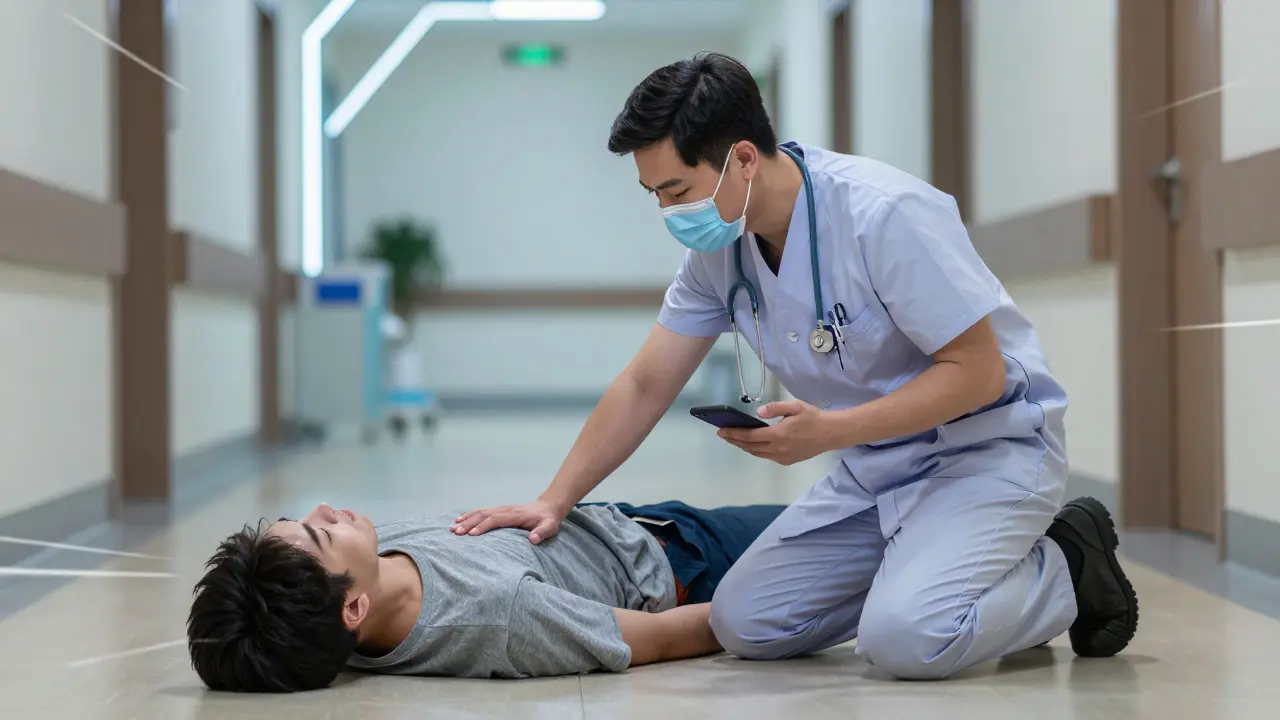
Hospitals treat diphenhydramine overdose based on symptoms. Doctors first check vital signs, including heart rate, blood pressure, and temperature. They'll run an EKG to look for QRS widening (over 100 ms) or QTc prolongation (over 450 ms in men, 470 in women). These electrical abnormalities can lead to dangerous heart rhythms.
For seizures or severe agitation, doctors use benzodiazepines like diazepam or lorazepam. For QRS widening, sodium bicarbonate is given intravenously. This helps correct the heart's electrical activity. A 2023 study in Clinical Toxicology found that early sodium bicarbonate use reduced hospital stays by 30% in severe cases. For delirium or hallucinations, physostigmine may be used - but only if there are no heart rhythm issues. Physostigmine has a 87% success rate in reversing delirium, but it's risky for people with heart problems.
Other treatments include IV fluids for dehydration and low blood pressure, cooling blankets for high fever, and catheterization for urinary retention. In rare cases where the heart stops, extracorporeal membrane oxygenation (ECMO) may be used. The University of Virginia Poison Control Center emphasizes that "tachycardia can be quite impressive, especially if the patient is agitated," with heart rates over 140 beats per minute common in severe cases.

Preventing Diphenhydramine Overdose
Prevention starts with safe storage and education. Keep all medications locked away, especially if children are around. Read labels carefully - diphenhydramine is in many OTC products like allergy pills, sleep aids, and cold medicines. Never mix it with alcohol or other sedatives. The biggest current risk is social media challenges. Between 2018 and 2022, intentional overdoses in teens jumped 300% due to TikTok and Reddit challenges promoting dangerous doses for hallucinogenic effects. The American Academy of Pediatrics launched "Don't Take the Benadryl Challenge" to combat this. If you or someone you know is tempted to try these challenges, remember: even 300 mg can cause terrifying hallucinations and require emergency care. Real user reports describe "waking up in an ER with a catheter and IV after taking 600 mg thinking I could get high."
Smartphone apps like Poison Help (downloaded 150,000 times since 2021) provide instant access to poison control centers and first-aid guidance. The FDA has also updated warnings about diphenhydramine misuse. Always follow dosing instructions and talk to a doctor before using diphenhydramine for sleep or allergies, especially if you have heart conditions or take other medications.
Can diphenhydramine overdose be fatal?
Yes, though rare. Fatalities occur in about 0.5% of severe cases, typically with ingestions exceeding 20 mg/kg. Most deaths involve cardiac complications like arrhythmias or respiratory failure. Immediate medical attention greatly improves outcomes. The National Poison Data System 2022 report shows that over 95% of diphenhydramine overdose cases are treated successfully with prompt care.
How long does it take for symptoms to appear after an overdose?
Symptoms usually start within 30 minutes to 2 hours after ingestion. However, cardiac complications like QRS widening can develop 2-4 hours later, which is why hospitals monitor patients for at least 4-6 hours even after symptoms improve. The University of Virginia Poison Control Center warns that "delayed cardiac effects are common, so observation periods must be thorough."
Is it safe to take diphenhydramine for sleep every night?
No. Doctors recommend diphenhydramine only for occasional sleep aid use (no more than 1-2 weeks). Long-term use can lead to tolerance, dependence, and side effects like dizziness, confusion, and urinary retention. It also increases fall risk in older adults. Always talk to a doctor before using it regularly - safer alternatives like melatonin or cognitive behavioral therapy for insomnia exist.
What should I do if my child accidentally ingests diphenhydramine?
Call Poison Control immediately at 1-800-222-1222. Do not induce vomiting. Keep your child calm and monitor their breathing. Even small amounts can be dangerous for children - a single dose of 25 mg can cause symptoms in a toddler. The American Academy of Pediatrics reports that 25% of diphenhydramine overdoses in children under 6 happen from unsecured bottles. Store all medications in locked cabinets to prevent accidental ingestion.
Can I use home remedies for diphenhydramine overdose?
No. Home remedies like drinking milk or inducing vomiting can make things worse. Diphenhydramine overdose requires professional medical care. Hospitals have specific treatments like sodium bicarbonate for heart issues or physostigmine for delirium. Attempting home treatment delays life-saving care and can lead to severe complications. Always call Poison Control or go to the ER immediately.

13 Comments
Sam Salameh
February 5, 2026 AT 06:03Protecting our kids from diphenhydramine overdose is a national duty. Every household should lock up meds. Social media challenges are putting teens at risk. We need stricter regulations and education. This isn't optional-it's our responsibility as Americans. Let's act now to prevent more tragedies.
Diana Phe
February 5, 2026 AT 15:35Big Pharma is behind this. The FDA knows diphenhydramine is dangerous but they don't care. They want you to take it so they can profit from the overdoses. This is a conspiracy. They're hiding the truth.
Bella Cullen
February 6, 2026 AT 08:02Don't take diphenhydramine for sleep. It's dangerous. Always consult a doctor.
Carl Crista
February 6, 2026 AT 21:24The real reason for the overdose stats is that the government wants to push vaccines. They know this drug is dangerous but they don't care. It's all part of the plan.
Dr. Sara Harowitz
February 7, 2026 AT 15:50Diphenhydramine misuse is a national crisis! It's time for stricter regulations and education! People need to stop being irresponsible!
Andre Shaw
February 7, 2026 AT 17:37You think diphenhydramine is bad? Well, I've been taking it for years and I'm fine. The real problem is lazy doctors not understanding the real risks. They don't know what they're talking about.
Carl Crista
February 8, 2026 AT 13:09Exactly! The doctors are in on it. They don't want you to know the truth about the pharmaceutical companies. It's all a big cover-up.
Kieran Griffiths
February 8, 2026 AT 16:37Understanding diphenhydramine overdose is crucial for everyone. It's not just about taking too much; it's about knowing the risks. The symptoms can be severe and life-threatening. Dry skin, flushed face, dilated pupils, confusion, high fever, and urinary retention are classic signs. These require immediate medical attention. If someone overdoses, don't try to make them vomit. Call Poison Control at 1-800-222-1222 right away. Keep them calm and monitor their breathing. If unconscious, place them on their side. Never give anything to eat or drink. Hospitals have specific treatments like sodium bicarbonate for heart issues. Benzodiazepines for seizures. Physostigmine for delirium but only if safe. Early intervention saves lives. Prevention is key-store medications safely and educate others. Social media challenges are a major issue. Teens are being misled into dangerous doses. We must all work together to stop this. It's not just a medical issue; it's a community responsibility. Let's stay informed and protect each other.
Rene Krikhaar
February 8, 2026 AT 20:55Always call poison control immediately. They know exactly what to do. Don't try home remedies. Time is critical in overdose cases.
one hamzah
February 9, 2026 AT 04:06Hey! Let's all stay safe! 🌟 Always read labels! 😊 #DontTakeTheChallenge 🚫
Elliot Alejo
February 9, 2026 AT 23:23I agree with the importance of proper storage. Locking medications away is crucial for child safety. Simple steps can prevent accidents.
Cullen Bausman
February 11, 2026 AT 18:01Diphenhydramine misuse is a threat to national security we must regulate this better
divya shetty
February 12, 2026 AT 14:35Diphenhydramine misuse is a serious issue requiring immediate attention. Proper storage of medications is essential to prevent accidental ingestion. Education about the dangers is crucial. This is not a matter of choice but of responsibility.