
When you walk into a pharmacy and pick up a generic version of your prescription, you’re benefiting from a decades-old legal battle fought in courtrooms, regulatory agencies, and Congress. It’s not just about saving money-it’s about whether a system designed to encourage innovation also lets companies block competition to keep prices high. Antitrust laws in the pharmaceutical industry exist to stop exactly that: companies using legal loopholes, shady deals, and bureaucratic tricks to delay the entry of cheaper generic drugs.
How Generic Drugs Became the Norm
Before 1984, getting a generic drug approved in the U.S. was a nightmare. Companies had to run full clinical trials, just like the brand-name maker, even though the active ingredient was identical. That made generics expensive to develop-and rare on shelves. Only 19% of prescriptions were filled with generics back then. That changed with the Hatch-Waxman Act, signed into law by President Reagan on September 24, 1984. Named after its sponsors, Senator Orrin Hatch and Representative Henry Waxman, the law created a shortcut: the Abbreviated New Drug Application (ANDA). Generic manufacturers no longer had to prove safety and effectiveness again. They just had to show their drug was the same as the brand-name version. In return, they had to respect existing patents. But here’s the twist: the law gave the first generic company to challenge a patent a 180-day exclusive window to sell their version. That’s not a reward-it’s a tool to kickstart competition. And it worked. By 2016, 90% of all prescriptions in the U.S. were filled with generics. Between 2005 and 2014, those generics saved consumers $1.68 trillion. In 2012 alone, the savings hit $217 billion.The Dark Side of the System
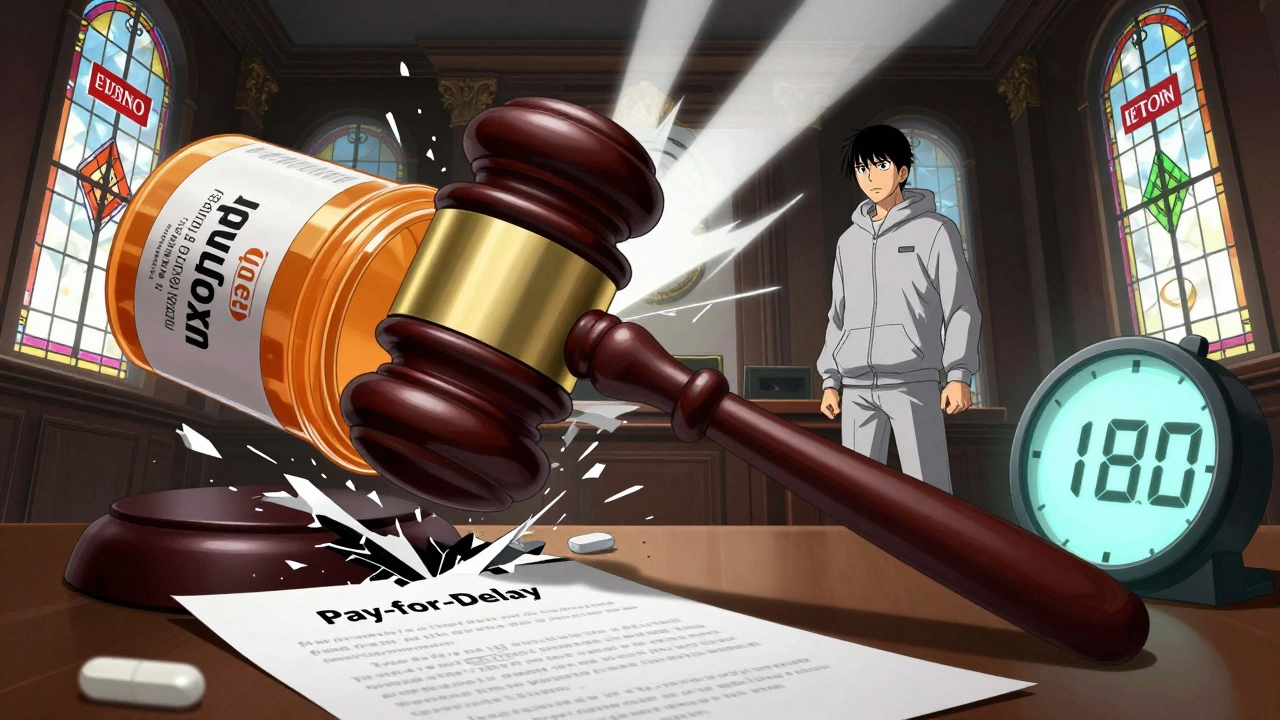
The Hatch-Waxman Act was meant to balance innovation and access. But over time, brand-name companies found ways to game it. One of the most common tactics? Pay-for-delay deals. In these agreements, the brand-name drugmaker pays a generic company to stay out of the market. Instead of fighting in court, they cut a deal: “We’ll pay you millions, and you won’t launch your cheaper version.” The FTC calls these reverse payments because money flows from the brand to the generic-backwards from how competition should work. The Supreme Court finally took a stand in 2013 with FTC v. Actavis. The court ruled these deals could violate antitrust laws if the payment was large and unexplained. It didn’t ban them outright, but it said courts could look closer. Since then, the FTC has pursued 18 pay-for-delay cases between 2000 and 2023, with settlements totaling over $1.2 billion. One of the biggest cases involved Gilead Sciences. In 2023, they paid $246.8 million to settle claims they paid a generic maker to delay the launch of a cheaper HIV drug. That’s not just a fine-it’s proof that companies are still betting big on blocking competition.Other Tricks to Block Generic Entry
Pay-for-delay isn’t the only trick. Here are three more common tactics:- Product hopping: A company slightly changes a drug’s formulation-say, switching from a pill to a capsule-right before the patent expires. Then they convince doctors and patients to switch to the new version. The old one gets discontinued, and generics can’t fill it. AstraZeneca did this with Prilosec and Nexium. Courts have been mixed on whether this is legal, but the FTC still sees it as a way to squeeze out competition.
- Sham citizen petitions: Companies file fake complaints with the FDA, claiming safety issues with a generic drug. These petitions delay approval, even when there’s no real problem. In 2023, the FTC sued Teva Pharmaceuticals for filing dozens of these to block a generic version of Copaxone, a multiple sclerosis drug. The case is still pending.
- Orange Book abuse: Brand-name companies list patents in the FDA’s Orange Book that don’t even cover the drug’s active ingredient. These fake listings scare off generic makers. In 2003, the FTC fined Bristol-Myers Squibb for listing patents that had nothing to do with the actual drug formulation.
Global Differences in Enforcement
The U.S. isn’t the only place fighting this battle. The European Union has taken a harder line. The European Commission has opened 27 antitrust cases between 2018 and 2022, and 60% of them focused on delaying generic entry. One tactic they’ve cracked down on? Withdrawing marketing authorizations in specific countries to block generics from entering those markets. They’ve also gone after companies that spread false information about generics-claiming they’re less safe or less effective. This is called disparagement, and it’s a quiet but powerful way to reduce demand. A 2023 report from CMS Law found that originator companies often use medical journals, conferences, and even social media to plant doubt about generics. China just released new rules in January 2025. Their Antitrust Guidelines for the Pharmaceutical Sector list five “hardcore restrictions” that are automatically illegal: price fixing, output limits, market division, joint boycotts, and blocking new technology. As of Q1 2025, six cases had been penalized-all involved price fixing through WhatsApp, WeChat, or automated pricing algorithms. China’s regulators are now using AI to monitor drug prices in real time.Who Pays the Price?
When generics are blocked, the cost isn’t just financial-it’s personal. A 2022 Kaiser Family Foundation survey found that 29% of U.S. adults didn’t take their medication as prescribed because they couldn’t afford it. That’s 74 million people skipping doses, cutting pills in half, or going without. The Congressional Budget Office estimates generic competition reduces drug prices by 30% to 90% compared to brand-name versions. That’s not a small difference. For someone on insulin, statins, or blood pressure meds, it’s the difference between managing their condition and ending up in the hospital. And it’s not just patients. Hospitals, insurers, and government programs like Medicare and Medicaid pay more when generics are delayed. In 2012, the U.S. government saved $100 billion just from generic drug use. That’s money that could have gone to schools, roads, or public health programs.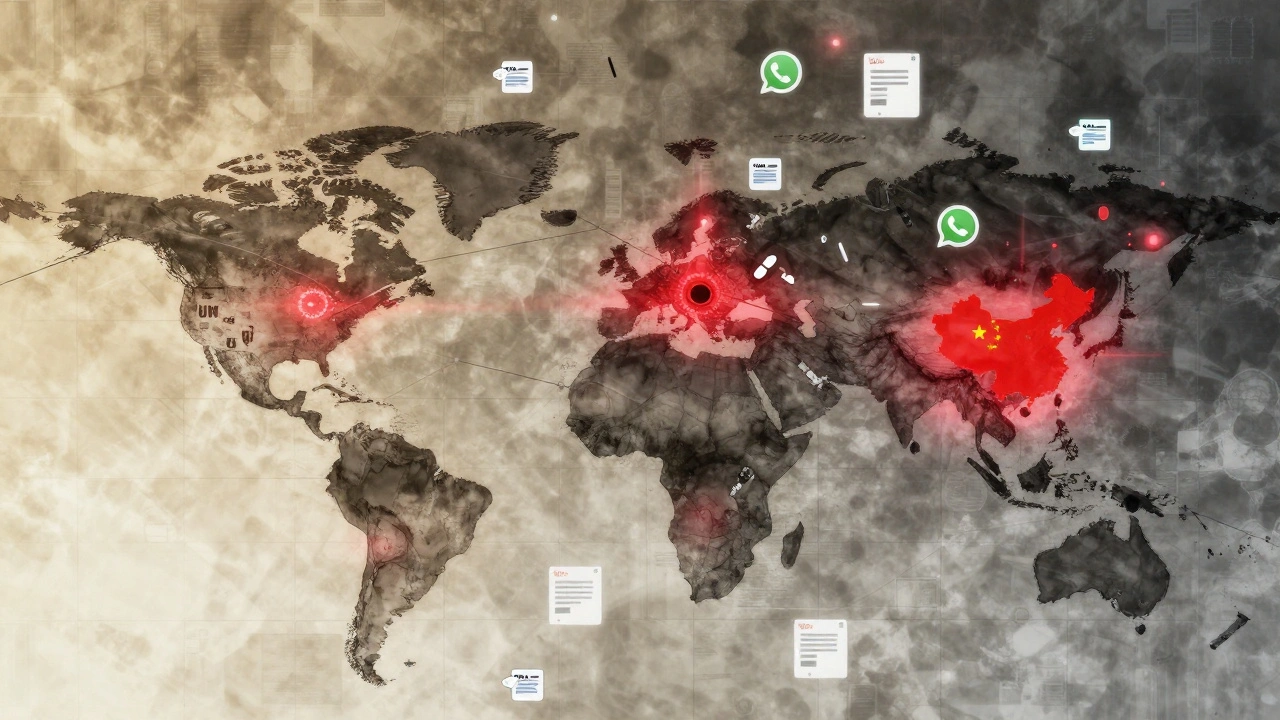
What’s Next?
The FTC is now focusing on digital collusion. In 2025, they’re watching how companies use algorithms to coordinate pricing-even without direct communication. If two generic makers use the same pricing software and their prices rise in lockstep, that’s a red flag. The European Commission’s 2023 Pharmaceutical Strategy says delays in generic entry cost European consumers €11.9 billion a year. That’s more than the entire annual budget of many small countries. In the U.S., lawmakers are pushing for the CREATES Act, which would force brand-name companies to supply samples of their drugs to generic makers. Right now, some companies refuse to provide samples, claiming safety concerns, but the real reason is to delay testing and approval.Why This Matters to You
You might think antitrust law is something that happens in Washington, behind closed doors. But every time you refill a prescription, you’re living the result of these battles. If the system works, you get a $5 generic instead of a $500 brand-name drug. If it’s broken, you pay more, wait longer, or go without. The Hatch-Waxman Act was a breakthrough. But like any law, it’s only as good as the people enforcing it. And right now, companies are still finding ways to twist it. The question isn’t whether generics should be allowed-it’s whether the rules will keep up with the tricks.What is the Hatch-Waxman Act and how does it affect generic drugs?
The Hatch-Waxman Act of 1984 created a legal pathway for generic drug approval in the U.S. by allowing manufacturers to file an Abbreviated New Drug Application (ANDA), proving bioequivalence without repeating expensive clinical trials. It also gave the first generic company to challenge a patent 180 days of market exclusivity to encourage competition. This law turned generics from a rare option into the standard-now 90% of prescriptions are filled with them.
What is a pay-for-delay agreement?
A pay-for-delay agreement is a deal where a brand-name drug company pays a generic manufacturer to delay launching its cheaper version. Instead of competing, the two companies settle a patent lawsuit with a cash payment. The FTC and courts now treat these as potential antitrust violations, especially when the payment is large and lacks a legitimate business reason.
How do product hopping and sham petitions delay generic entry?
Product hopping happens when a brand-name company slightly changes a drug’s form (like switching from a pill to a capsule) right before patent expiry, then discontinues the old version to push patients toward the new one-making generics harder to replace. Sham petitions are fake complaints filed with the FDA to delay generic approval. Both tactics are designed to extend monopoly control without innovation.
How much money do generic drugs save consumers?
Between 2005 and 2014, generic drugs saved U.S. consumers $1.68 trillion. In 2012 alone, savings reached $217 billion. Generic versions typically cost 30% to 90% less than brand-name drugs. For patients on chronic medications, that can mean the difference between affording treatment and skipping doses.
Are antitrust laws the same in Europe and China?
No. The U.S. focuses on pay-for-delay and sham petitions. The EU targets regulatory manipulation, like withdrawing marketing authorizations to block generics in specific countries. China’s 2025 guidelines explicitly ban price fixing through apps or algorithms and have already penalized six cases, mostly for collusive pricing. Enforcement varies, but all three regions are cracking down on tactics that delay generic competition.

14 Comments
Gwyneth Agnes
December 6, 2025 AT 23:30Generic drugs save lives. Period. If you're paying full price for insulin, you're being robbed.
Mansi Bansal
December 8, 2025 AT 09:38It is an incontrovertible fact that the pharmaceutical industry, in its current iteration, operates as a rent-seeking oligopoly, wherein intellectual property rights are weaponized to perpetuate monopolistic pricing structures, thereby contravening the very tenets of market efficiency and distributive justice.
Kay Jolie
December 9, 2025 AT 10:58I mean, have you SEEN the Orange Book? It’s basically a pharmaceutical version of a fake LinkedIn profile-patents listed like they’re endorsements from CEOs who’ve never even read the drug’s说明书. The system is rigged, and we’re all just collateral damage in a game of monopoly with pills.
pallavi khushwani
December 10, 2025 AT 08:03It’s funny how we talk about innovation like it’s sacred, but when the innovation is just finding new ways to delay a $5 pill, it’s not innovation-it’s exploitation. We need to ask: who benefits? And who suffers?
Billy Schimmel
December 10, 2025 AT 15:59So let me get this straight. The law was designed to save money... and now we’re paying more because the companies figured out how to use the law against us. Classic.
Shayne Smith
December 10, 2025 AT 21:28I had to choose between my blood pressure med and my cat’s food last month. No joke. This isn’t policy. This is survival.
Clare Fox
December 11, 2025 AT 03:33the whole thing is so messed up. why do we let corporations write the rules? they’re not even trying to hide it anymore
Karen Mitchell
December 11, 2025 AT 17:39The Hatch-Waxman Act was a catastrophic failure of legislative foresight. By incentivizing generic manufacturers to challenge patents, it created a perverse ecosystem wherein litigation became a profit center, not a safeguard.
Geraldine Trainer-Cooper
December 13, 2025 AT 01:35if the system works then why do i still have to call 3 pharmacies just to find my generic? and why does it cost more than my coffee?
Nava Jothy
December 13, 2025 AT 12:49THEY’RE ALL IN ON THIS!! 🤫 Big Pharma + FDA + Congress = One big $$$ machine. You think your meds are safe? Nah. They’re just profitable. 💸💊 #WakeUp
Myles White
December 13, 2025 AT 23:57You know, I’ve spent the last five years working in pharmacy supply chains, and I can tell you, the delays aren’t always the companies’ fault. There’s a backlog at the FDA that’s been growing since 2018, and the paperwork for ANDAs is insane. You’d think after 40 years they’d have automated something, but nope. Still faxing forms in some districts. It’s not just pay-for-delay-it’s bureaucratic inertia, and it’s just as damaging.
Ibrahim Yakubu
December 15, 2025 AT 16:16You think this is bad? Wait until China’s AI starts pricing drugs globally. They’re already using machine learning to predict which generics will be profitable. Soon, your insulin will be priced by an algorithm that doesn’t care if you’re diabetic. This isn’t capitalism. This is surveillance economics.
Brooke Evers
December 17, 2025 AT 14:02I just want to say how brave it is of you to write about this. So many people don’t realize how much their health depends on these legal battles. I’ve seen patients cry because they couldn’t afford their meds. I’ve held their hands while they picked between food and pills. This isn’t abstract. It’s human. And we need more voices like yours pushing for change.
Chris Park
December 17, 2025 AT 23:33Pay-for-delay? Sham petitions? Please. This is just the tip. The real game is the FDA’s revolving door-former pharma execs now writing the rules. And the CREATES Act? It’s a distraction. They’ll never force companies to hand over samples. That’s like asking a wolf to return the sheep. The entire system is designed to fail patients. You’re being played.