

Rhabdomyolysis Medication Risk Checker
Check your risk factors based on the clinical data provided in the article. Disclaimer: This is an educational tool, not a medical diagnosis. Always consult a healthcare provider.
| Warning Sign | Primary Culprits | Critical Risk | Urgency |
|---|---|---|---|
| Dark "cola" urine & muscle pain | Statins + CYP3A4 Inhibitors | Acute Kidney Injury (AKI) | Immediate ER Visit |
The Dangerous Dance of Drug Interactions
Most people think of drug interactions as a mild stomach ache or a dizzy spell. But in the case of rhabdomyolysis, the interaction actually attacks the integrity of your muscle cell membranes. When these membranes fail, enzymes like creatine kinase (CK) and myoglobin leak out. Myoglobin is a bully in the kidneys; it clogs the filtering system and causes direct toxicity, leading to acute kidney injury in up to 50% of patients. If you're not treated quickly, this can lead to permanent renal failure or the need for dialysis.
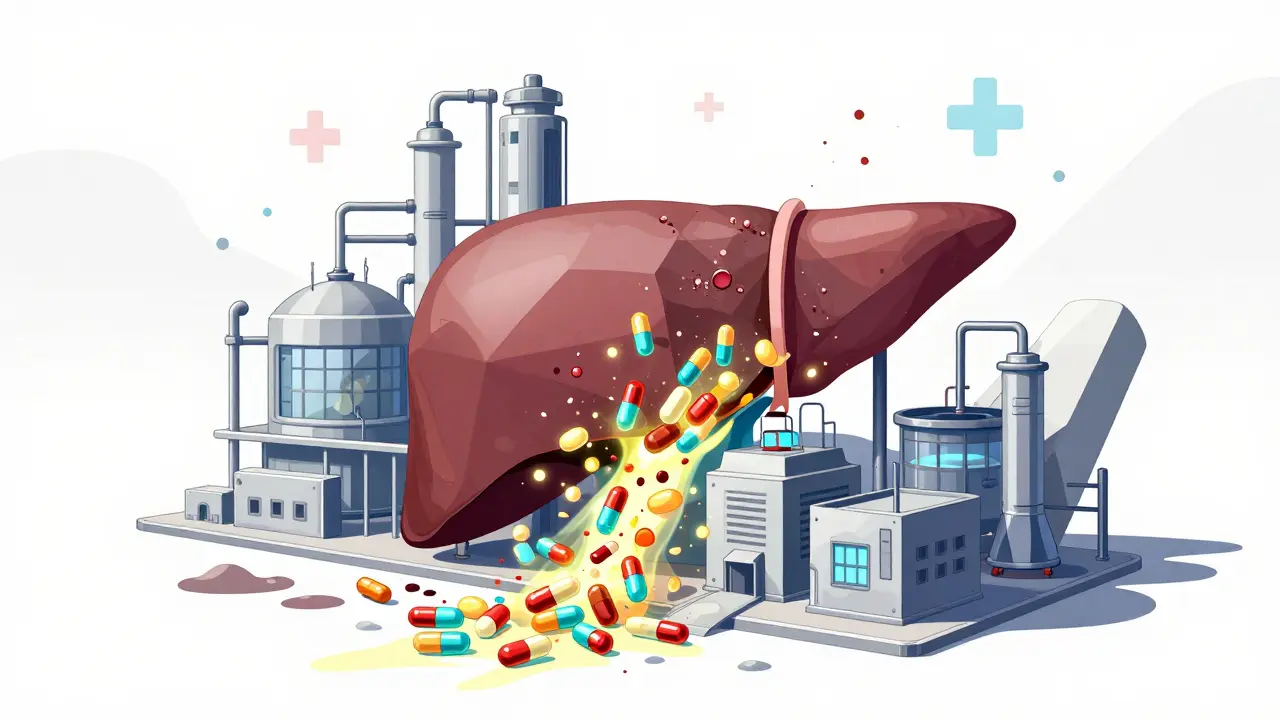
Why does this happen? Often, it's because of a specific enzyme in your liver called CYP3A4. This enzyme is like a processing plant that breaks down many common medications. If you take a drug that "blocks" this plant (a CYP3A4 inhibitor), other drugs you're taking-like certain cholesterol meds-start to pile up in your blood. Instead of being processed and cleared, they reach toxic levels that literally dissolve your muscle tissue.
The Statin Connection: More Than Just Muscle Aches
If you're on a statin for cholesterol, you've probably heard about "muscle pain." But there's a huge difference between mild soreness and full-blown rhabdomyolysis. Statins, specifically those like atorvastatin or simvastatin, are responsible for about 60% of all drug-induced muscle breakdown cases. On their own, they are generally safe, but the risk skyrockets when paired with the wrong partner.
For instance, combining a statin with gemfibrozil (a fibrate) can increase your risk by 15 to 20 times compared to taking a statin alone. Similarly, if you're prescribed an antibiotic like erythromycin while on simvastatin, the risk jumps nearly 19-fold because the antibiotic shuts down that CYP3A4 processing plant we mentioned earlier. This isn't just a theoretical risk; real-world data shows that nearly 89% of fatal statin-related rhabdomyolysis cases involved a CYP3A4 inhibitor.
Other High-Risk Medication Pairs
While statins get the most attention, other drugs can be just as dangerous. Take colchicine, often used for gout. On its own, it's manageable, but if you combine it with clarithromycin, you're looking at a 14-fold increase in risk. There are also more specialized drugs, like the cancer treatment erlotinib, which can cause CK levels to explode to over 20,000 U/L within just three days if taken with simvastatin.
In the ICU, doctors watch for Propofol Infusion Syndrome. This is a rare but lethal reaction where the drug causes mitochondrial toxicity, effectively cutting off the energy supply to your muscles. The mortality rate for this specific form of muscle breakdown is a staggering 68%, making it one of the most dangerous medication-induced emergencies known to medicine.
Who is Most at Risk?
Not everyone reacts the same way to these drug combinations. There are specific "red flags" in a patient's profile that make a reaction much more likely. If you are over 65, your risk is more than three times higher than a younger adult. Women also tend to experience these reactions more frequently than men. The most critical risk factor, however, is your kidney health. If your eGFR (estimated glomerular filtration rate) is below 60, your risk of developing rhabdomyolysis from drug interactions increases by 4.5 times because your body already struggles to clear toxins.
Then there is the "polypharmacy" problem. If you're taking five or more different medications, you are 17 times more likely to suffer a drug-induced rhabdomyolysis event. It's a compounding effect: the more drugs you have in your system, the higher the chance that two of them will fight over the same metabolic pathway in your liver.
Spotting the Emergency: The Classic Triad
You don't have to be a doctor to notice something is wrong, but you do have to be vigilant. Doctors look for the "classic triad" of symptoms, though only about half of patients show all three:
- Severe Muscle Pain: Usually felt in the shoulders, thighs, or lower back. This isn't a dull ache; it's a deep, debilitating soreness.
- Muscle Weakness: Difficulty standing up or lifting your arms.
- Dark Urine: This is the biggest red flag. Your urine will look like tea or cola because the kidneys are trying to filter out the massive amount of myoglobin.
Other signs include nausea, fever, or a sudden drop in how much you're urinating. If you've recently started a new medication or changed your dose and notice these symptoms, every hour counts. Over 50% of these cases happen within the first 30 days of a medication change.
How the Hospital Handles a Muscle Crisis
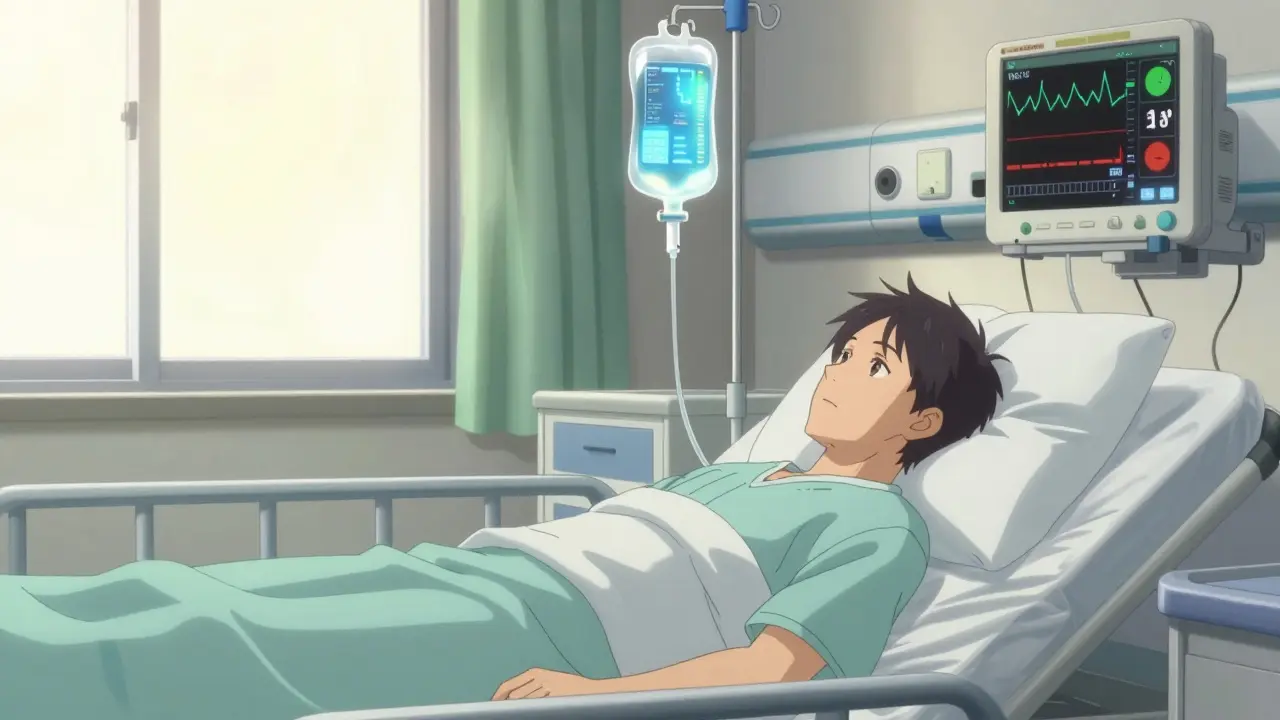
If you hit the ER with rhabdomyolysis, the goal is simple: flush the kidneys before the myoglobin permanently scars them. The primary treatment is aggressive intravenous hydration. Doctors typically pump in about 3 liters of normal saline in the first six hours and continue with high volumes to keep the urine flowing-usually targeting over 200mL per hour.
They may also use sodium bicarbonate to "alkalinize" your urine. By raising the pH of the urine above 6.5, they stop myoglobin from precipitating into solid plugs that block the renal tubules. While they do this, they'll be monitoring your blood for hyperkalemia (dangerously high potassium), which can cause your heart to stop if not managed with medication or, in severe cases, emergency dialysis.
Is rhabdomyolysis permanent?
The acute crisis is treatable, but the recovery varies. People who didn't suffer kidney failure usually recover in about 12 weeks. However, those who required dialysis often take nearly 29 weeks to fully recover. About 43% of survivors still report some muscle weakness six months after the event.
Can I take statins if I'm at high risk?
Yes, but you need a personalized plan. Some people have a genetic variant called the SLCO1B1*5 allele that makes them 4.5 times more likely to have a bad reaction to simvastatin. If you're high risk, your doctor might switch you to a statin that doesn't rely on the CYP3A4 enzyme or lower your dose.
How do doctors prove it's rhabdomyolysis and not just a strain?
They use a blood test for creatine kinase (CK). A normal level is low, but in rhabdomyolysis, it's usually at least 5 times the upper limit (often over 1,000 U/L). In severe medication interactions, these levels can soar past 100,000 U/L.
What should I do if I suspect a drug interaction?
Stop taking the suspected medication immediately and go to the emergency room. Do not wait for a scheduled appointment. Bringing a full list of all your medications, including supplements and over-the-counter drugs, will help the doctors identify the culprit faster.
Are there any non-drug causes for this?
Yes. While this article focuses on drugs, rhabdomyolysis can be caused by crush injuries, extreme over-exertion (like running a marathon without hydrating), severe burns, or prolonged exposure to extreme cold.
Next Steps for Your Safety
If you're managing multiple prescriptions, the best move is a "brown bag review." Put every single pill, vitamin, and herbal supplement you take into a bag and take it to your pharmacist. Ask them specifically: "Are any of these CYP3A4 inhibitors or substrates?" Pharmacists have the best tools to catch these interactions before they reach your bloodstream.
If you're starting a new medication, be hyper-aware of your body for the first 30 days. If you feel unusual muscle tenderness or notice your urine changing color, don't brush it off as "getting used to the medicine." Contact your provider immediately or head to the ER. Early hydration is the difference between a quick recovery and long-term kidney damage.
About author

© 2026. All rights reserved.