

Anaphylaxis strikes without warning. If you wait too long, your airways close, and blood pressure drops dangerously low. It is a race against time. For people with severe allergies to medications, food, or insect stings, having an Epinephrine Auto-Injector is a life-saving medical device designed for emergency treatment of anaphylaxis. Also known as EpiPen or Adrenaline Pen, it delivers a precise dose of adrenaline directly into your muscle. Knowing how to use this device before an emergency happens is the difference between surviving and facing a fatal outcome.
What is Anaphylaxis? Recognizing the Danger Signs
You cannot treat what you do not see. Anaphylaxis is a severe, potentially fatal allergic reaction. While many people think of food allergies, medication reactions are a leading cause of fatal anaphylaxis in adults. Your body releases chemicals that cause blood vessels to relax and narrow simultaneously, leading to shock.
Look for these critical symptoms immediately after exposure to a trigger:
- Respiratory Distress: Wheezing, throat tightening, difficulty breathing, or coughing.
- Skin Changes: Widespread hives, swelling of the face or tongue, flushing, or itching.
- Cardiovascular Collapse: Rapid heartbeat, fainting, dizziness, or a sudden drop in blood pressure.
- Gastrointestinal Issues: Severe vomiting, cramping, or diarrhea.
If you experience two or more of these systems reacting, assume it is anaphylaxis. Do not wait for confirmation. St. Louis Children's Hospital data shows untreated reactions can become fatal within minutes.
Understanding the Device Mechanics
The auto-injector works through a spring-loaded needle mechanism. Unlike a syringe that requires manual pushing, this device activates with a simple push. Most modern models contain either 0.15 mg of epinephrine for children weighing 15 to 30 kg or 0.3 mg for adults and larger children over 30 kg.
Different manufacturers produce variations of this technology. EpiPen is the most recognized brand globally. It uses a blue safety cap and requires holding the orange tip firmly against the thigh. There are newer options like Auvi-Q, which includes electronic voice instructions to talk you through each step. This feature matters because stress causes memory fog during emergencies. In clinical studies, users who heard the voice commands were significantly more accurate than those using silent devices.
In Australia, you might also encounter Jext, which is designed similarly but may have slight structural differences in activation. Always familiarize yourself with the specific model you carry.
Step-by-Step Administration Guide
When panic sets in, muscle memory takes over. Practice with a trainer device regularly. Here is the exact process for administering the shot:
- Grasp the Device: Hold the injector in your fist with the orange tip pointing down. If it is an EpiPen, remove the blue safety cap by pulling straight up.
- Position the Leg: Stand the patient up if possible, or lie them flat. Place the middle of their outer thigh on the floor or surface. This muscle group, called the Vastus Lateralis, absorbs the medication quickly.
- Inject Firmly: Swing your arm and thrust the injector against the thigh at a 90-degree angle. Aim for the outer mid-thigh area. Push hard until you hear a click or hiss. This indicates the needle has pierced the fabric and skin.
- Hold in Place: Keep the device pressed against the leg for a full three seconds. This ensures the full dose enters the tissue. Do not pull away early.
- Massage the Site: Remove the device and rub the injection site gently for ten seconds to help absorption.
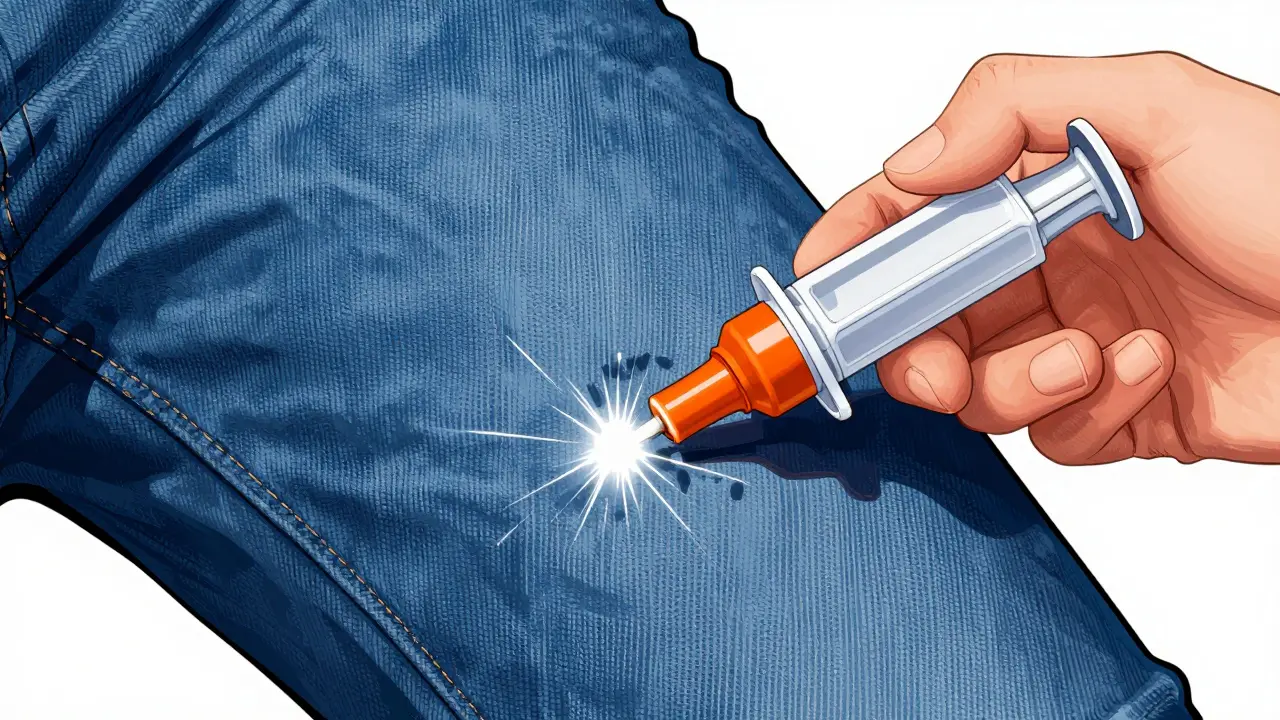
If the patient is wearing thick clothing like jeans, push through the fabric. Removing clothes wastes precious minutes. Research from Nationwide Children's Hospital confirms the needle penetrates through layers effectively.
Common Mistakes That Ruin Effectiveness
Even trained people make errors. A study published in Annals of Emergency Medicine found nearly 37% of untrained users made critical mistakes. Here is what to avoid:
| Mistake | Risk Factor | Solution |
|---|---|---|
| Not Removing Cap | No Drug Delivery | Practice removing caps during drills |
| Wrong Location | Reduced Absorption | Aim for outer thigh only |
| Short Hold Time | Incomplete Dose | Count to three slowly aloud |
| Buttock Injection | Fat Tissue Delay | Never inject into hip or buttock |
Another major issue is timing. Antihistamines like Benadryl are often taken first by mistake. This is dangerous. Antihistamines work too slowly for shock. Epinephrine constricts blood vessels immediately. Delaying the auto-injector increases the risk of death significantly.
Choosing the Right Brand for Your Needs
Not all injectors are identical. Cost, ease of use, and features vary widely. Prices fluctuate, but generally, the market splits into high-cost and lower-cost options depending on insurance and country regulations. In Australia, subsidy programs help manage costs, but out-of-pocket expenses can still range significantly.
| Brand Name | Dosage Options | Key Feature | Activation Method |
|---|---|---|---|
| EpiPen | 0.15mg, 0.3mg | Visual Indicators | Push Orange Cap |
| Auvi-Q | 0.3mg | Voice Guidance | Automatic Needle Deployment |
| Jext | 0.15mg, 0.3mg | Spring Mechanism | Pull Grey Cap |
| Neffy | Nasal Spray | Needle-Free | Inhalation Technique |
Newer technologies like Neffy Nasal Spray are emerging as alternatives. This needle-free option sprays into the nose. It is helpful for needle-averse patients but requires correct positioning to work. Current data suggests nasal delivery might be less effective for rapid systemic shock compared to intramuscular shots, though it remains better than nothing.
Storage, Expiration, and Maintenance
Your medicine is useless if expired. Epinephrine degrades quickly under heat and light. Store your injector in a cool, dry place between 15°C and 30°C. Do not leave it in the car glove box during summer months. Temperatures above 30°C destroy the potency.
Check the expiry date every month. If the liquid turns brown or contains particles, replace it immediately even if the date hasn't passed. Most manufacturers recommend replacement every 18 months regardless of use. Some models display a clear viewing window where you can verify solution clarity visually.
Post-Injection Protocol
Using the injector is step one, not the end. Epinephrine effects wear off after 15 to 20 minutes. This means symptoms can return. This recurrence is called a biphasic reaction. Statistics indicate delaying care leads to higher hospitalization rates.
After injection:
- Call Emergency Services Immediately: Dial 000 in Australia or 911 in North America. Tell them you used epinephrine.
- Monitor Breathing: Lay the person down with legs elevated to improve blood flow to the heart. Do not let them stand up or walk away.
- Prepare Second Dose: Keep a second injector accessible. If symptoms persist after 5 to 15 minutes, administer another dose.
- Hospital Visit: Go to the ER even if you feel better. Doctors need to monitor you for several hours to prevent rebound reactions.

Tips for Parents and Caregivers
If you are managing this for a child, coordination with schools is vital. Provide the school nurse with a spare device. Many states require written action plans. Teach older children how to hold the device themselves; they can often administer it faster than waiting for an adult. Practice sessions using trainer kits reduce error rates dramatically.
Frequently Asked Questions
Can I use an EpiPen if the needle is blocked by clothing?
Yes. EpiPen needles are designed to penetrate through thick denim or winter trousers. Remove the safety cap, aim for the outer thigh, and push firmly. Do not waste time stripping pants.
What should I do if my hands are shaking?
If you cannot hold steady, set the injector down on the floor, sit back on the device heel, or have someone else assist. Accuracy matters, but delivery speed matters more. Do not hesitate.
Does this work for bee stings?
Absolutely. Insect venom is a common trigger. Follow the same steps: recognize the anaphylaxis signs (swelling, breathing issues) and inject immediately.
How often should I replace the device?
Replace immediately after the printed expiration date passes. Generally, manufacturers recommend replacing every 18 months to ensure chemical stability.
Are side effects normal after use?
Yes. Palpitations, headache, anxiety, and tremors are common side effects of adrenaline. They usually resolve within 30 to 60 minutes and are safer than untreated anaphylaxis.
Final Thoughts on Readiness
Carrying the device is meaningless without preparation. You need to know where it is, how to open it, and exactly how to push it. Anaphylaxis does not give warnings. Be ready. Know your triggers. Keep two doses handy. Train your family. These actions save lives.

9 Comments
Kendell Callaway Mooney
March 31, 2026 AT 03:37It is really important that schools have these plans ready. Parents often forget to update the nurse when they change doctors. The trainer kits help build muscle memory without waste. Children over ten can learn to hold the device themselves. Communication between home and class staff saves time during an event.
Jonathan Sanders
March 31, 2026 AT 14:05I guess panic helps most of you get through the door.
Angel Ahumada
April 1, 2026 AT 18:48we live in a world where death waits around every corner yet we ignore the fragility of our own biology the chemical cascade feels like a betrayal by your own immune system but perhaps it is nature trying to protect us from poison we simply do not respect the body enough until it screams at us
Brian Yap
April 2, 2026 AT 16:16Mate just wanted to drop in regarding the Jext option we use locally. The grey cap pulls out pretty smooth compared to the blue ones over there. Just remember to check the local stock availability since subsidies vary by state. Staying calm helps too. Cheers.
emma ruth rodriguez
April 3, 2026 AT 16:48Many patients overlook the storage guidelines completely. Heat destroys the medication potency very rapidly. You cannot trust a pen kept in a car dashboard during summer. Temperatures above thirty degrees celsius are truly dangerous. Light exposure degrades the epinephrine solution quite fast. Check the viewing window monthly without fail. Brown liquid indicates total failure of the drug. Particles in the fluid mean immediate replacement is required. Do not use an expired unit during a medical emergency. Expiration dates usually fall eighteen months out. Manufacturers set these limits for strict safety reasons. Insurance often covers cost replacement annually now. Keep spare units in a cool dry drawer at home. Workplaces should stock devices in the break room specifically. Schools require annual inspection of the inventory regularly.
Cameron Redic
April 5, 2026 AT 05:11Why are we worrying about drawers so much when the needle penetrates fabric. This whole section on temperature is overblown. You focus on storage while missing the injection speed issue. People die because they hesitate not because of a drawer. Stop acting like scientists when basic delivery matters more.
dPhanen DhrubRaaj
April 6, 2026 AT 14:52in india prices are high for adults sometimes jext not common eppen is main choice storage is hard due to humidity here
RONALD FOWLER
April 7, 2026 AT 19:08I understand the frustration but safety protocols are vital for everyone involved. We want to support each other during these scary moments. Preparation reduces anxiety for families dealing with severe allergies. Let us work together to keep the community informed properly.
Michael Kinkoph
April 9, 2026 AT 01:46You MUST prepare for this situation! Ignoring allergy risks is irresponsible behavior! Society demands we take responsibility for our own health! Negligence leads to unnecessary tragedy! Every adult needs a device!