
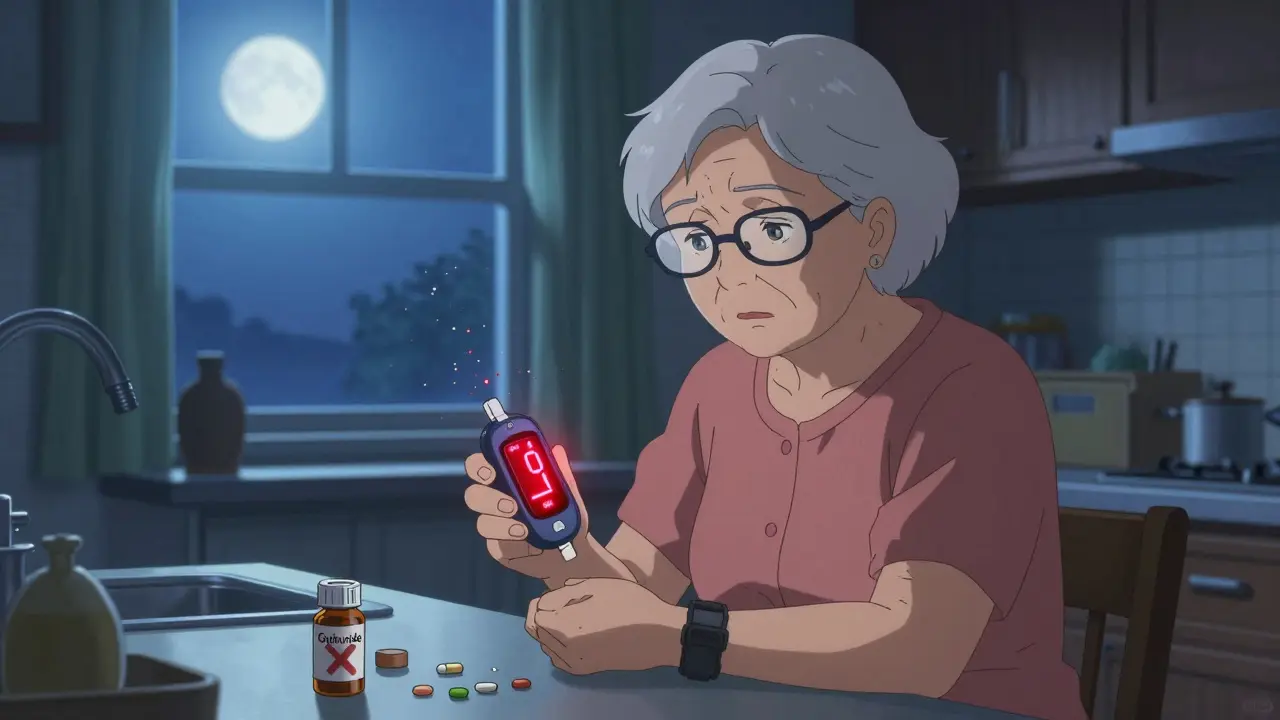
For many seniors with diabetes, the biggest danger isn’t high blood sugar-it’s low blood sugar. Hypoglycemia, or blood glucose below 70 mg/dL, is far more common and far more dangerous in older adults than in younger people. One in four Americans with diabetes is over 65, and for them, a single episode of severe low blood sugar can mean a fall, a trip to the ER, or even death. The truth is, many of the medications used to treat diabetes in seniors carry hidden risks that doctors and families often overlook. The goal isn’t just to control blood sugar-it’s to control it safely.
Why Seniors Are at Higher Risk for Low Blood Sugar
As we age, our bodies change in ways that make hypoglycemia more likely and more dangerous. Kidneys don’t filter drugs as well, so medications stick around longer. The liver doesn’t release glucose as quickly when blood sugar drops. And the body’s natural warning signals-like shaking, sweating, or a racing heart-get weaker. That means a senior might not feel a low coming until it’s too late. Research shows seniors experience hypoglycemia two to three times more often than younger adults. Even mild lows-between 54 and 69 mg/dL-can cause confusion, dizziness, or fainting. And once a senior has one severe episode, their risk of dying within the next year jumps by 60%. Falls from low blood sugar lead to broken hips, head injuries, and long-term disability. For many, it’s not the diabetes itself that ends their independence-it’s the treatment.Medications That Put Seniors at Risk
Not all diabetes drugs are created equal when it comes to safety. Some are far more likely to cause dangerous lows. The biggest culprits are older oral medications called sulfonylureas, especially glyburide (brand names: Glynase, Micronase, Diabeta). Glyburide stays in the body for a long time and is cleared mostly by the kidneys. In seniors with even mild kidney decline-a common issue after 70-it builds up and keeps lowering blood sugar for hours or even days. Studies show nearly 40% of seniors on glyburide have at least one hypoglycemic episode each year. One study found 19% of elderly patients on glyburide had severe lows requiring emergency care, compared to just 11% on glipizide. The American Geriatrics Society’s Beers Criteria, a trusted guide for safe prescribing in older adults, lists glyburide as a medication to avoid in seniors. The FDA now requires warning labels on all sulfonylureas highlighting this risk. And yet, many seniors are still prescribed it because it’s cheap and doctors aren’t always up to date on the latest guidelines. Insulin is another high-risk option. While effective, it requires precise timing and dosing. Seniors who forget meals, have trouble seeing their insulin pens, or live alone are at serious risk. One study found insulin use increases fall risk by 30% in older adults-mostly because of sudden dizziness from low blood sugar.Safer Alternatives for Seniors
The good news? There are far safer options available today. Newer medications have been designed specifically to avoid causing low blood sugar, even when taken alone. DPP-4 inhibitors like sitagliptin (Januvia), linagliptin (Tradjenta), and saxagliptin (Onglyza) are among the safest choices. These drugs work only when blood sugar is high, so they rarely cause lows. Studies show hypoglycemia rates with DPP-4 inhibitors are just 2-5% in seniors-compared to 15-40% with sulfonylureas. Many caregivers report dramatic improvements after switching: fewer nighttime lows, more energy, and no more emergency calls. SGLT2 inhibitors like empagliflozin (Jardiance) and dapagliflozin (Farxiga) also carry very low hypoglycemia risk when used alone. They work by helping the kidneys flush out extra sugar through urine. In clinical trials, patients on these drugs had about half the rate of low blood sugar compared to those on older medications. Metformin is still considered first-line for many seniors, but it’s not risk-free. It’s safe for most, but if kidney function drops too low (creatinine clearance under 30 mL/min), it can build up and cause lactic acidosis. Doctors should check kidney function at least once a year in seniors on metformin. And then there’s tirzepatide (Mounjaro), a newer injectable approved in 2022. In trials with seniors, it caused hypoglycemia in only 1.8% of users-far lower than insulin. While it’s more expensive, its safety profile makes it a strong option for those who need stronger control without the danger.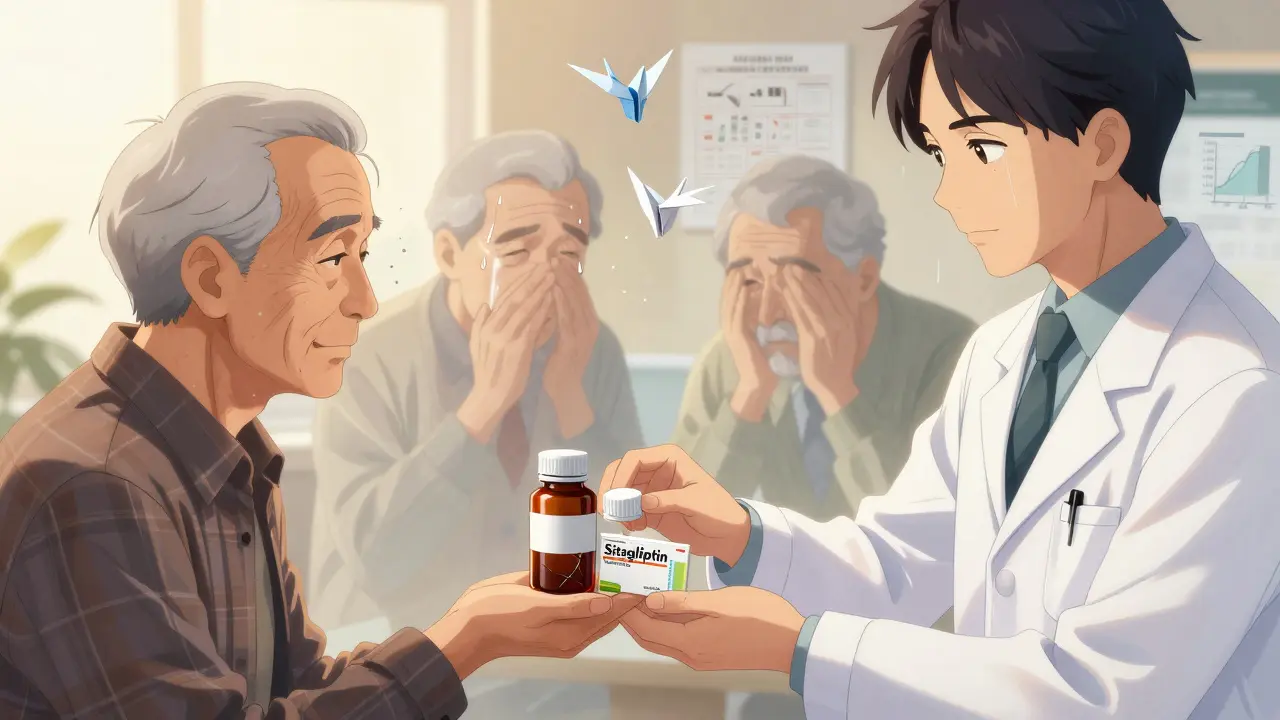
What Families and Caregivers Should Watch For
Medications are only part of the picture. Seniors often live alone, forget meals, or mix up pills. That’s why caregivers need to know the signs of low blood sugar-and act fast. Early symptoms include:- Headache
- Drowsiness or confusion
- Dizziness or lightheadedness
- Shakiness or sweating
- Fast heartbeat
- Extreme hunger
- Irritability or mood swings
Monitoring and Technology That Saves Lives
Traditional fingerstick testing is outdated for many seniors. It’s inconvenient, painful, and often skipped. Many seniors don’t test often enough, or they don’t recognize patterns. Continuous glucose monitors (CGMs) have changed the game. These small sensors, worn on the arm or belly, track blood sugar 24/7 and send alerts to a phone or watch when levels drop too low-even during sleep. One study showed seniors using CGMs had 65% fewer hypoglycemic events than those relying on fingersticks. CGMs are now covered by Medicare for many seniors with diabetes, especially those on insulin or with a history of lows. They’re not just for tech-savvy users-many models have simple displays and loud alarms. For a caregiver, receiving a nighttime alert can mean the difference between a minor episode and a hospital visit.Medication Reviews and Deprescribing
Most seniors with diabetes take four or five other medications-blood pressure pills, cholesterol drugs, pain relievers. That’s polypharmacy, and it’s a silent killer. Drug interactions can turn a safe medication into a dangerous one. The solution? Regular medication reviews. The American Diabetes Association recommends a full medication check every 3-6 months for seniors. A pharmacist can spot high-risk combinations, suggest safer alternatives, and help stop medications that aren’t needed. Deprescribing-phasing out unnecessary or risky drugs-is one of the most effective ways to prevent hypoglycemia. A 2022 study found that when pharmacists actively reviewed and adjusted medications for Medicare patients, hypoglycemia-related hospital visits dropped by 28%. Ask your doctor: "Is this medication still necessary? Is there a safer option?" Don’t be afraid to question a prescription, especially if it’s old or came from a different doctor.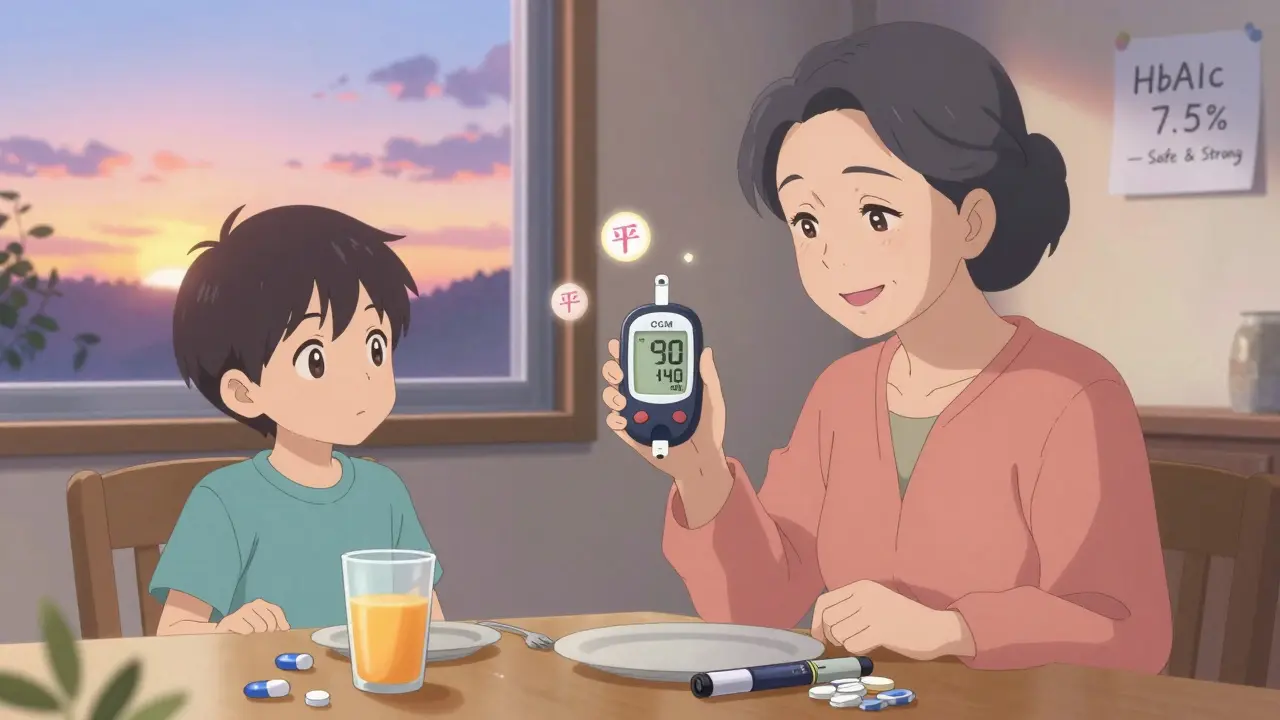
What Good Glycemic Control Looks Like for Seniors
For younger people, doctors often aim for an HbA1c below 7%. For seniors, that’s too aggressive-and dangerous. Current guidelines recommend personalized targets:- Healthy seniors with few other health problems: HbA1c 7.0-7.5%
- Seniors with multiple health issues or moderate frailty: HbA1c 7.5-8.0%
- Frail seniors, those with dementia, or limited life expectancy: HbA1c up to 8.5%
Real Stories, Real Changes
Mary Thompson, 78, had three falls in six months-all from low blood sugar caused by glyburide. After switching to sitagliptin, she went six months without a single episode. "I finally feel safe walking to the mailbox," she says. On Reddit, a caregiver wrote about their 82-year-old father, who kept waking up confused and sweaty at night on glipizide. After switching to linagliptin, his blood sugar stayed steady between 90 and 140. "No more 3 a.m. panic calls," they said. These aren’t rare cases. They’re the norm for seniors on outdated diabetes regimens.Next Steps for Seniors and Families
If you or a loved one has diabetes and is over 65, here’s what to do now:- Ask your doctor: "Am I on a medication that could cause low blood sugar?" If you’re on glyburide, ask about switching.
- Request a full medication review with a pharmacist-include every pill, supplement, and OTC drug.
- Ask about a continuous glucose monitor (CGM). Medicare often covers it if you’ve had a low blood sugar episode.
- Teach family members or caregivers the signs of hypoglycemia and how to respond.
- Keep fast-acting sugar (glucose tablets or juice) in your purse, car, and bedside table.
- Set reminders for blood sugar checks if you’re on insulin or sulfonylureas.
12 Comments
June Richards
January 31, 2026 AT 22:01OMG I can't believe doctors still prescribe glyburide to grandmas 😭 My aunt had a fall last year because of it. She's on sitagliptin now and actually walks to the store without a cane. Stop killing seniors with old-school meds!
Lu Gao
February 1, 2026 AT 10:37Actually, the FDA warning labels on sulfonylureas were added in 2021-not 2020. And while DPP-4 inhibitors are safer, they’re not magic. One study showed 12% of seniors on saxagliptin still had hypoglycemia when combined with insulin. Context matters. 🤷♀️
Ed Di Cristofaro
February 3, 2026 AT 07:04People keep saying 'glyburide is dangerous' like it's some evil drug. It's cheap, it works, and if your grandma can't handle it, maybe she shouldn't be on meds at all. Stop coddling seniors. They need to toughen up.
Naresh L
February 3, 2026 AT 15:49It’s funny how we treat aging like a technical problem to be optimized. We fix blood sugar levels but ignore the loneliness, the forgotten meals, the silence in the house when no one checks in. The real medication isn’t in the pill bottle-it’s in the person who remembers to ask, 'Did you eat today?'
I’ve seen elderly patients on perfect regimens still collapse because no one noticed they hadn’t eaten in 18 hours. We talk about HbA1c targets but forget that a life isn’t measured in numbers. It’s measured in quiet mornings, in the smell of toast, in someone holding your hand when your vision blurs.
Maybe the most dangerous drug isn’t glyburide-it’s our belief that medicine alone can keep people safe.
Jamie Allan Brown
February 4, 2026 AT 01:38I work in geriatric care and this post is spot on. We had a patient last month who was on glyburide for 12 years. Switched him to linagliptin. His daughter cried because he started laughing again-something he hadn’t done in years. He wasn’t depressed. He was just constantly dizzy.
CGMs? Absolute game-changer. One of my patients set up a shared alert with his grandson. Now the kid gets a ping if Grandpa’s sugar drops at 2 a.m. and he calls him. No more ER visits. Just a text: 'You good, Gramps?'
We don’t need more pills. We need more connection.
Nicki Aries
February 5, 2026 AT 01:11I’m so tired of people acting like insulin is the devil. Yes, it can be dangerous if mismanaged-but so is driving a car, crossing the street, or eating sugar-free candy that still has 20g of carbs. The problem isn’t the medication. The problem is the lack of education, the lack of support, and the fact that Medicare won’t pay for a CGM unless you’ve already nearly died.
franklin hillary
February 6, 2026 AT 16:46Let’s be real: if your grandma is on glyburide and you’re not monitoring her with a CGM, you’re playing Russian roulette with her life. I’ve seen too many elderly patients code in their sleep because they didn’t feel the warning signs. And yes, it’s cheaper to keep prescribing the old stuff-but what’s the cost of a hip fracture? A nursing home stay? A funeral?
Metformin isn’t risk-free either. I had a patient on it for 15 years. His creatinine was 1.8. Doctor said, 'It’s fine.' He ended up in the ICU with lactic acidosis. Check kidney function. EVERY YEAR. Seriously. This isn’t rocket science.
Ishmael brown
February 7, 2026 AT 15:31I’m calling BS on this whole 'DPP-4 inhibitors are safe' thing. My uncle took sitagliptin for six months and got pancreatitis. Yeah, it’s rare-but so is getting struck by lightning. And now he’s on insulin. So much for 'safer.' Also, tirzepatide costs $1,000 a month. Who’s paying for that? Not Medicare.
Nidhi Rajpara
February 8, 2026 AT 07:54I am writing this as a nurse who works in a long-term care facility. We have 37 residents with diabetes. 14 are on sulfonylureas. 8 of them have had hypoglycemic events in the last year. We have 2 CGMs. One is broken. The other is locked in the medication cart because the staff don’t know how to use it. This is not a medical issue. It is a systemic failure.
Sami Sahil
February 9, 2026 AT 09:05Hey everyone, don’t stress! Just get a CGM, switch meds, and teach your family the signs. I did it for my dad-he’s 81, now he’s hiking with his grandkids. Life’s too short to be scared of your own blood sugar. You got this!
Nancy Nino
February 11, 2026 AT 02:41Oh, how delightful. Another post telling us how to save our elderly relatives from the horrors of outdated pharmacology. How noble. How… predictable. I’m sure the pharmaceutical reps are just thrilled you’re all reading their brochures now.
Bryan Coleman
February 11, 2026 AT 13:44I’m a retired pharmacist. Used to work at a big chain. Saw glyburide prescribed to 80-year-olds with CrCl of 25 every week. Asked the doc why. Got a shrug and 'It’s what he’s always been on.'
We had a guy come in once-86, on glyburide and lisinopril. His wife said he kept passing out at breakfast. Turned out the ibuprofen he was taking for his knees was boosting the glyburide. We switched him to acetaminophen and sitagliptin. He hasn’t had a fall since.
It’s not complicated. It’s just not prioritized.