
When ALS Progresses, Breathing and Eating Become the Biggest Challenges
People with ALS don’t die from the muscle weakness itself. They die because their body can’t breathe well enough or get enough calories to keep going. That’s why two simple, non-drug interventions - noninvasive ventilation and proper nutrition - make the biggest difference in survival and quality of life. These aren’t experimental treatments. They’re backed by decades of research, used in top ALS clinics worldwide, and recommended by neurologists as standard care. Yet too many patients delay them, often until it’s too late.
Think of ALS like a slow-burning fire. The nerves controlling your muscles keep dying. Your arms weaken, then your legs, then your voice. But the most dangerous part? The diaphragm - the main muscle that pulls air into your lungs - starts to fail. When that happens, you don’t gasp for air like in a movie. You just get tired. Your sleep gets broken. You wake up with headaches. Your oxygen levels drop. And without help, your body slowly shuts down.
Noninvasive Ventilation: How a Mask Can Give You Back Your Nights
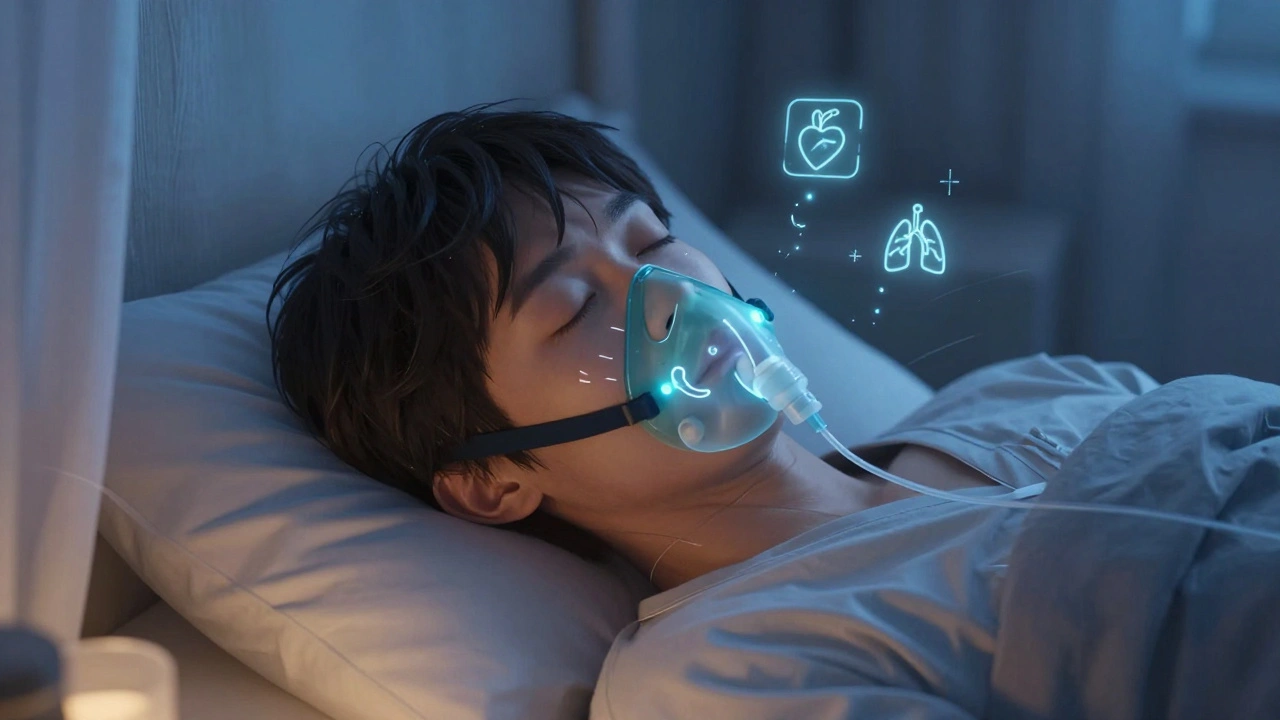
Noninvasive ventilation (NIV) doesn’t mean a breathing tube down your throat. It’s a small machine connected to a mask that fits over your nose, or your nose and mouth. It pushes air into your lungs when you inhale, and helps keep them open when you exhale. It’s called BiPAP or VAPS, depending on the settings. These machines don’t breathe for you - they help your weak muscles do their job.
The evidence is clear. A 2006 study showed that ALS patients using NIV lived an average of 453 days longer than those who didn’t. That’s more than a year. Another study found patients using NIV for at least four hours a night had a 7-month survival advantage over those who didn’t. And it’s not just about living longer - it’s about living better. Eighty-seven percent of users report fewer morning headaches. Seventy-nine percent say their sleep improves. Seventy-two percent feel more energy during the day.
But here’s what most people don’t know: you don’t need to wait until you’re gasping for air. Guidelines from Canada and Europe say to start NIV when your forced vital capacity (FVC) drops below 80% of normal, or when you start having symptoms like daytime sleepiness, morning headaches, or trouble breathing when lying flat. In the U.S., insurance companies often demand worse numbers - FVC under 50%, or pressure readings below -60 cm H₂O - which delays care. That gap costs lives.
Setting up NIV isn’t instant. Most patients need 2-3 visits with a respiratory therapist to get the mask right. Initial adherence is low - some use it only 5 days a month at first. But after 3 months, most are using it over 27 days a month. The key? Support. A good therapist will adjust pressure settings, try different masks (nasal pillows, full face, hybrid), and teach you how to breathe with the machine. It’s not about forcing yourself to tolerate it - it’s about finding the right fit.
There are two main types of machines. Standard BiPAP devices cost $1,200-$2,500 and are meant for nighttime use. For patients with advanced disease, portable ventilators like the Philips Trilogy 100/106 offer more. They work during the day too. They weigh under 12 pounds, have built-in batteries for 8-12 hours of mobility, and include features like automatic oxygen blending and real-time oxygen monitoring. These cost $6,000-$10,000, but for many, they’re worth it - especially when swallowing gets harder and daytime breathing becomes a struggle.
Why Bulbar ALS Doesn’t Mean You Can’t Use NIV
One of the biggest myths is that if you have bulbar ALS - meaning your speech and swallowing muscles are affected - you can’t use NIV. That’s false. A 2013 study followed ALS patients with and without bulbar symptoms. Both groups had the same survival benefit from NIV. The hazard ratio was 0.49 - meaning patients using NIV were more than half as likely to die. The mask doesn’t need to seal perfectly around your mouth. Many use nasal masks. Others use hybrid designs. The goal isn’t perfection. It’s enough pressure to help your lungs work better.
Even if you drool or have trouble clearing secretions, NIV still helps. In fact, better breathing means better coughing. And better coughing means fewer lung infections - one of the leading causes of death in ALS. NIV doesn’t fix everything, but it removes one of the biggest threats.

Nutrition: The Hidden Lifesaver Most People Ignore
Weight loss in ALS isn’t just about losing appetite. It’s about your body burning through calories faster because your muscles are dying. Every movement - even breathing - takes more energy. Without enough fuel, your body starts breaking down muscle tissue, including your heart and diaphragm. That’s why losing even 5% of your body weight is a red flag.
The solution? A feeding tube. Not a last resort. Not something you wait for until you’re starving. The best time to get a percutaneous endoscopic gastrostomy (PEG) tube is before your forced vital capacity drops below 50% or your BMI falls under 18.5. That’s not too early - it’s exactly on time.
A 2006 study showed that patients who got a PEG tube early lost only 0.5% of their weight over six months. Those who didn’t lost 12.6%. That difference isn’t just about feeling better - it’s about survival. The same study found PEG tubes added about 120 days to life expectancy. And when combined with NIV, the benefit jumps to over 12 months.
PEG placement is a simple procedure. It takes less than 30 minutes under mild sedation. A small tube is inserted through the abdomen directly into the stomach. No one sees it. You can still eat and drink normally if you want. The tube just gives you a backup. You can use it to deliver high-calorie shakes, medications, or fluids when swallowing becomes too risky. Many patients say it’s the best decision they made - not because they hated eating, but because they finally stopped worrying about choking or losing weight.
Some worry about infection or discomfort. But with proper care - cleaning the site daily, rotating the tube, using the right formula - complications are rare. Most patients report no pain after the first few days. And the freedom? Priceless. No more counting calories. No more meals that take two hours. No more watching your body shrink.
Why Timing Matters More Than You Think
ALS care isn’t about reacting to crises. It’s about preventing them. Waiting until you’re in respiratory distress or have lost 15% of your weight means you’re already behind. The goal isn’t to wait until you’re desperate - it’s to act before you feel desperate.
Here’s what a good care plan looks like:
- At diagnosis, get a baseline FVC and BMI.
- Every 3 months, repeat those tests - or sooner if you feel more tired, have headaches, or lose weight.
- If FVC drops below 80%, talk to your neurologist about NIV. Don’t wait for symptoms.
- If you lose more than 5% of your weight, or your BMI hits 19, schedule a PEG evaluation.
- Ask for a referral to a multidisciplinary ALS clinic. These teams include neurologists, respiratory therapists, dietitians, and speech therapists - all working together.
Studies show that patients cared for in these clinics live 7.5 months longer on average than those who see only a general neurologist. That’s not magic. It’s coordination.

Real People, Real Results
One woman in Adelaide, diagnosed with ALS in 2023, started NIV when her FVC was at 75%. She used a nasal mask and adjusted the pressure over two weeks. Within a month, her morning headaches were gone. She started sleeping through the night. She began walking her dog again - not far, but enough to feel like herself.
She got her PEG tube when her weight dropped to 18.7 kg/m². She didn’t stop eating. She just added a high-calorie shake at lunch. She didn’t feel like a burden. She felt in control.
Another man waited until his FVC was at 40%. He was on oxygen, couldn’t sleep, and had lost 18% of his body weight. He got NIV and a PEG, but his body was already too weak. He survived six more months. His wife said, “If we’d started sooner, he’d have had more time with his grandkids.”
These aren’t rare stories. They’re the rule - if you act early.
What to Do Next
If you or someone you love has ALS:
- Ask your neurologist for your current FVC and BMI numbers. Write them down.
- Ask: “Should we start NIV now?” and “Should we schedule a PEG evaluation?”
- Request a referral to a multidisciplinary ALS clinic. If your area doesn’t have one, ask for a telehealth consult.
- Don’t wait for symptoms. By then, you’ve already lost ground.
- Connect with ALS associations. They offer equipment loans, nutritional support, and caregiver training.
ALS can’t be cured. But it can be managed - with tools that work, if you use them in time. Noninvasive ventilation and nutrition support aren’t about giving up. They’re about holding on - to sleep, to energy, to time with the people you love.
Can I use NIV if I have trouble swallowing?
Yes. Many people with bulbar symptoms use NIV successfully with nasal masks or hybrid designs. The key is working with a respiratory therapist to find a mask that seals well without needing to close your mouth. NIV doesn’t worsen swallowing problems - it helps you breathe better, which reduces fatigue and improves your ability to clear secretions.
Is a PEG tube painful?
The procedure is done under mild sedation, so you won’t feel it. Afterward, there’s minor soreness for a few days, similar to a small surgery. Most patients say the discomfort is far less than the stress of losing weight or choking on food. The tube is small and hidden under clothing. Daily care is simple - clean the site, rotate the tube, and flush it with water.
How many hours a night do I need to use NIV to see benefits?
Studies show that using NIV for at least 4 hours per night improves survival. Most people start with 6-8 hours during sleep. As the disease progresses, some switch to daytime use too. The machine tracks usage, and your therapist will review the data to make sure you’re getting enough. Consistency matters more than perfection - even 3 hours a night is better than none.
What if my insurance won’t cover a Trilogy ventilator?
Many insurers only cover basic BiPAP machines. But if you need daytime support - because you’re having trouble breathing while sitting or walking - your doctor can write a letter of medical necessity. Mention your FVC, your weight loss, and your need for mobility. Some patients get approved after appealing. ALS associations often help with equipment loans or funding programs.
Can I still eat normally after getting a PEG tube?
Absolutely. A PEG tube doesn’t replace eating - it supports it. You can still enjoy meals with family, taste your favorite foods, and eat small amounts. The tube gives you a safety net: if you’re too tired to eat, or if swallowing becomes risky, you can get calories through the tube. Many patients say it reduces anxiety and lets them enjoy food without fear.
10 Comments
patrick sui
December 2, 2025 AT 14:58Just wanted to say this is one of the clearest breakdowns of NIV and PEG I’ve ever read. The stats on survival gains? Game-changer. I’ve seen so many families delay because they think it’s ‘giving up’-but honestly, it’s the opposite. It’s buying back nights, energy, and dignity. BiPAP isn’t a death sentence; it’s a life extender. And the mask fit? Totally worth the 3 visits with the respiratory therapist. Found a nasal pillow that works like magic after 2 weeks of trial and error. No more headaches. No more 3am gasping. Just peace.
Conor Forde
December 2, 2025 AT 16:57Oh PLEASE. NIV? PEG? You’re telling me the pharmaceutical industry isn’t suppressing this because it’s too damn cheap? 🤡 They want you on $12k/month drugs, not a $2k mask and a tube. Wake up. This is a classic case of ‘convenient medicine’-easy, non-pharma, non-patentable. Of course the ‘experts’ love it. They’re not trying to cure you-they’re trying to keep you alive long enough to keep paying for ‘care.’
Declan O Reilly
December 3, 2025 AT 21:12There’s something deeply human about this whole thing. ALS doesn’t take your mind-it takes your body’s ability to speak, breathe, eat. And what’s beautiful is how two simple tools-air and calories-can hold back the tide. It’s not about fighting death. It’s about holding space for love. For bedtime stories. For your kid’s graduation. For coffee with your wife without feeling like you’re drowning. That’s the real win. Not the numbers. The moments.
James Steele
December 5, 2025 AT 10:25While the data presented is statistically significant, it lacks granularity in terms of longitudinal biomarker correlation. The FVC threshold of 80% is a population-level heuristic, not an individualized prognostic indicator. Moreover, the assumption that PEG insertion prior to BMI <18.5 confers survival benefit is confounded by selection bias-patients with higher baseline neurocognitive reserve are more likely to adhere to protocols. Until we control for epigenetic modifiers and mitochondrial efficiency metrics, this remains an anecdotal paradigm masquerading as evidence-based practice.
Louise Girvan
December 6, 2025 AT 19:11This is a scam. NIV causes aspiration. PEG causes infections. They’re pushing this because they don’t want to admit there’s no cure. You’re being manipulated. Watch your oxygen levels drop. They’ll say it’s ‘normal progression.’ It’s not. It’s negligence.
soorya Raju
December 7, 2025 AT 06:53Y’all in the West think you’ve got some magic tech. In India, we use fans, honey water, and prayers. My uncle had ALS-he lived 7 years without a mask or tube. He ate rice, laughed, danced. You’re overmedicalizing grief. Maybe the real problem is you’re afraid to just be with someone as they fade? Stop trying to hack death. Let it come. With dignity, not machines.
Dennis Jesuyon Balogun
December 7, 2025 AT 08:58Let me tell you something straight: in Nigeria, we don’t have BiPAP machines in 90% of rural clinics. But we have family. We have hands that hold heads up during sleep. We have porridge blended with palm oil, fed by spoon, hour after hour. The West thinks tech = care. But care is presence. NIV? Great if you’ve got it. But don’t act like the only way to live with ALS is to be plugged in. My cousin died at 32. We sang to him. We didn’t need a machine to love him. The real failure? When medicine forgets that humanity is the first treatment.
Grant Hurley
December 8, 2025 AT 08:45Just had my first night on BiPAP. Took me 3 tries to get the mask on right. Felt like a robot at first. But then I slept for 7 hours straight. No headache. No panic. I cried. Not because I’m sad. Because I remembered what it felt like to wake up rested. This isn’t about living longer-it’s about living like a human again. Thanks for the post. I needed this.
Lucinda Bresnehan
December 9, 2025 AT 06:08For anyone considering PEG: my mom got hers at FVC 62%. She was terrified. The nurse showed her how to flush it with warm water, rotate the tube daily, and use a high-calorie formula with MCT oil. She still eats ice cream and pizza. The tube just means she doesn’t have to choose between choking and starving. She says it’s the best thing she ever did. Don’t wait until you’re down to 100 lbs. Do it before you’re scared. And if your doc says ‘wait,’ get a second opinion. This isn’t optional. It’s essential.
Shannon Gabrielle
December 10, 2025 AT 03:13So let me get this straight-you’re praising a $10k machine and a stomach tube as ‘empowering’? Meanwhile, the same people who push this won’t pay for home care aides or physical therapy. This isn’t care. It’s corporate triage. You’re not saving lives-you’re extending billing cycles. Wake up. This system doesn’t want you to live. It wants you to pay for the privilege of trying.