

When a woman is pregnant and struggling with chronic pain, anxiety, or seizures, the last thing she wants is to choose between feeling unbearable discomfort and risking her baby’s health. Gabapentin and pregabalin - commonly known as gabapentinoids - are prescribed more than ever during pregnancy, but the safety picture isn’t simple. The truth? These drugs cross the placenta. They reach the fetus. And while they don’t cause major birth defects at high rates, new evidence shows they may still pose real, measurable risks - especially if taken late in pregnancy.
What Are Gabapentinoids, and Why Are They Used in Pregnancy?
Gabapentin (Neurontin) and pregabalin (Lyrica) were originally designed to treat seizures. Today, they’re more often prescribed for nerve pain, fibromyalgia, and anxiety. In the U.S., about 4.2% of pregnant women now take one of these drugs - up from just 0.2% in 2000. That’s nearly a 20-fold increase. Most of these prescriptions aren’t for epilepsy. They’re for pain - back pain, sciatica, diabetic neuropathy - conditions that don’t go away just because someone is pregnant.
Unlike some older seizure meds, gabapentinoids aren’t known to cause the same level of major birth defects as valproic acid, which can lead to a 10-11% risk of malformations. But that doesn’t mean they’re safe. The real concern isn’t just structural problems - it’s what happens after birth.
The Real Risks: Not Birth Defects, But Neonatal Outcomes
Large studies tracking over 1.7 million pregnancies found that gabapentin use during pregnancy doesn’t significantly raise the overall chance of major birth defects. The risk increase is tiny - about 0.7% above the baseline 3%. That’s reassuring for many.
But here’s what’s not reassuring: if gabapentin is taken regularly in the third trimester, the baby is far more likely to need NICU care. One major study showed that 38% of babies exposed to gabapentin until delivery ended up in the NICU. In comparison, only 2.9% of unexposed babies did. That’s more than a 10-fold difference.
These infants often show signs of neonatal adaptation syndrome - jitteriness, trouble feeding, irritability, and breathing problems. These aren’t withdrawal symptoms like with opioids, but they’re still serious enough to require hospitalization. In one study, 23 out of 61 exposed newborns needed NICU care. Two had clear signs of a syndrome: tremors, crying nonstop, and refusing to nurse.
Cardiac Risks: A Quiet Signal
There’s another red flag. Research published in PLOS Medicine found a small but consistent link between gabapentin use and specific heart defects - particularly conotruncal defects. These are rare, serious problems affecting the outflow tracts of the heart. The risk went from 0.59% in unexposed pregnancies to 0.82% in exposed ones. That’s a 40% increase. While the absolute number is low, it’s not random. It’s a signal that needs attention.
What’s worse? This risk appeared strongest when women took gabapentin for two or more prescriptions - meaning consistent, ongoing use. It wasn’t tied to a single early dose. This suggests timing matters. The heart develops early, but exposure later in pregnancy may still interfere with its final wiring.

What About the Brain? Early Evidence Is Alarming
Beyond the heart and NICU stays, lab studies are showing something even more concerning. When researchers exposed developing brain cells to therapeutic levels of gabapentin, they saw major changes. Neurons that produce dopamine - critical for movement, mood, and attention - had 40% shorter branches. Key genes like Nurr1, En1, and Bdnf were turned down by over 50%. These genes help shape the brain’s structure and function.
These aren’t just petri dish results. They match what we see in animals. And while we don’t yet have long-term human data, we know that disruptions in these pathways are linked to ADHD, autism, and movement disorders later in life. A large NIH-funded study is now tracking 1,200 children exposed to gabapentin in utero until age 5. Results won’t be out until late 2025, but the early signs are enough to make doctors pause.
Is Pregabalin Safer Than Gabapentin?
Not really. Pregabalin is even more potent and crosses the placenta faster. Animal studies show it causes developmental delays and low birth weight at lower doses than gabapentin. The European Medicines Agency now says pregabalin should be avoided in pregnancy unless there’s no other option. The FDA hasn’t changed its label yet, but many U.S. doctors are already shifting away from it.
In fact, market data suggests pregabalin use in pregnancy is already dropping. By 2027, it’s expected to fall by 25-35% as clinicians and patients become more aware of the risks. Gabapentin remains more common - not because it’s safer, but because it’s cheaper and more widely prescribed.
When Might Gabapentin Still Be Necessary?
There are cases where no other option works. Some women have severe neuropathic pain that opioids can’t control - and opioids carry their own risks, including addiction and neonatal withdrawal. Others have treatment-resistant seizures or anxiety that puts their life at risk. In these rare cases, the risk of stopping the drug may be higher than the risk of continuing it.
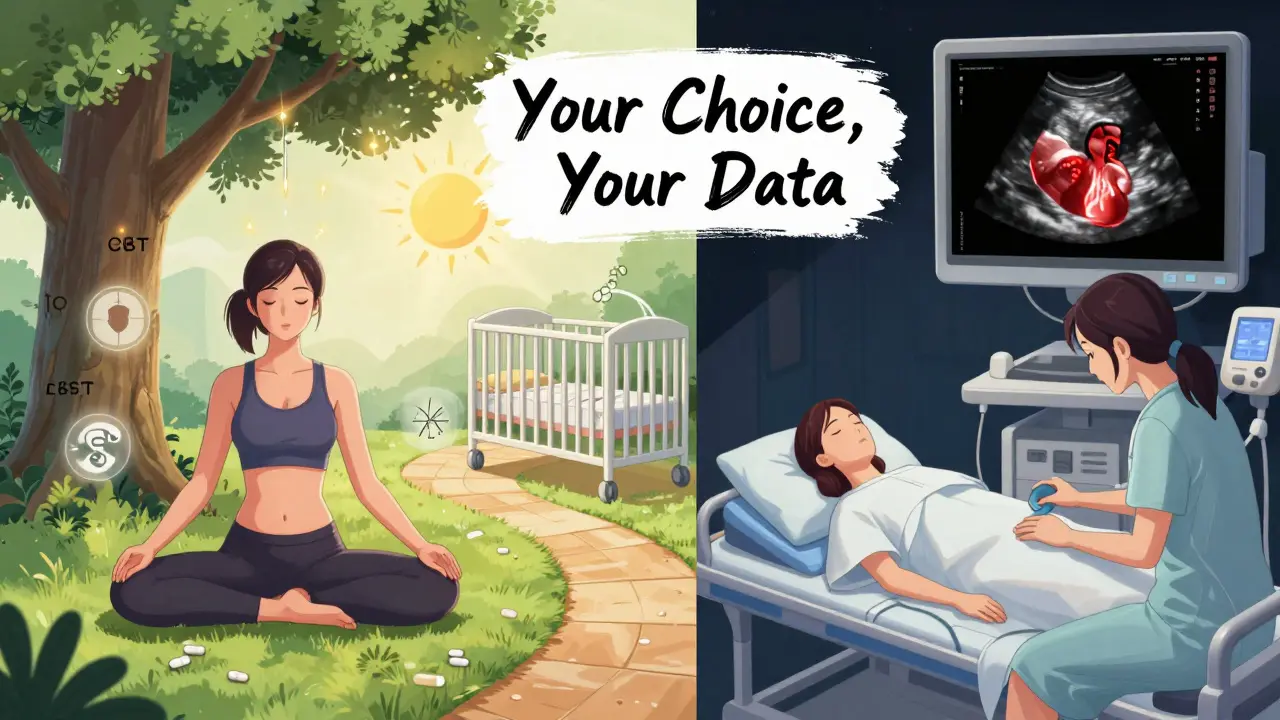
The Society of Obstetricians and Gynaecologists of Canada found that 32% of doctors would still prescribe gabapentin in pregnancy - but only if the benefit is clear and alternatives have failed. The American College of Obstetricians and Gynecologists agrees: use it only after non-drug options like physical therapy, acupuncture, or cognitive behavioral therapy have been tried.
What Should You Do If You’re Taking Gabapentin and Pregnant?
Don’t stop suddenly. Abrupt withdrawal can trigger seizures, severe anxiety, or rebound pain. Talk to your doctor - ideally before you get pregnant, but even if you’re already pregnant.
Ask these questions:
- Is this the lowest effective dose?
- Can I switch to a safer alternative like lamotrigine or duloxetine?
- Am I taking it for pain, epilepsy, or anxiety - and is there a non-drug option?
- Should I get a detailed fetal echocardiogram to check for heart defects?
- Can I taper off before the third trimester to reduce NICU risk?
If you’re taking gabapentin in the third trimester, your provider should plan for close monitoring after birth. The baby may need observation for 48-72 hours for signs of irritability or feeding problems.
What’s Changing in 2026?
The FDA just required all gabapentinoid makers to track at least 5,000 pregnancy outcomes by 2027. That’s a big step. It means we’ll have better data soon. In the meantime, guidelines are catching up. UpToDate, the leading clinical reference, updated its guidance in March 2024 to reflect the latest risks. But many hospitals still use outdated protocols - 47% of neurology departments in the U.S. haven’t updated theirs since 2018.
What’s clear now is this: gabapentinoids aren’t harmless. They’re not the same as taking a prenatal vitamin. They’re powerful drugs with real, documented effects on the developing fetus. The decision to use them should be deliberate, documented, and made with full awareness of the trade-offs.
Bottom Line: Safety Isn’t Binary
You can’t say gabapentin is safe or unsafe. It’s nuanced. The risk of a major birth defect is low. The risk of a NICU stay is high. The risk of long-term brain changes is still unknown. But the evidence is stacking up - and it’s telling us to treat these drugs with caution, not comfort.
If you’re pregnant or planning to be, and you’re on gabapentin or pregabalin, talk to your doctor. Don’t assume it’s fine because you’ve been told it’s "probably okay." Ask for the data. Ask for alternatives. Ask what happens if you stop. And if you’re told "there’s no other option," ask why - and get a second opinion.
The goal isn’t to scare you. It’s to empower you. Because when it comes to your baby’s development, you deserve more than vague reassurances. You deserve the truth - and the tools to make the best choice for you and your child.
Is gabapentin safe during pregnancy?
Gabapentin is not considered safe for routine use during pregnancy. While it doesn’t significantly increase the risk of major birth defects, it’s linked to higher rates of preterm birth, low birth weight, and NICU admission - especially when taken in the third trimester. There’s also emerging evidence of a small increased risk for specific heart defects. The decision to use it should be made only after trying non-drug options and weighing serious risks against clear benefits.
Does pregabalin cause birth defects?
Pregabalin doesn’t cause birth defects at higher rates than gabapentin, but animal studies show stronger signs of developmental harm. The European Medicines Agency advises avoiding pregabalin in pregnancy unless benefits clearly outweigh risks. It crosses the placenta more easily than gabapentin and is being phased out in pregnancy use due to more concerning early signals.
Can gabapentin cause neonatal withdrawal?
Gabapentin doesn’t cause classic neonatal opioid withdrawal, but it can cause neonatal adaptation syndrome. Symptoms include tremors, excessive crying, poor feeding, and breathing difficulties. About 38% of infants exposed to gabapentin until delivery need NICU care - compared to under 3% in unexposed babies. This isn’t addiction, but it’s still a serious physiological response.
What are safer alternatives to gabapentin in pregnancy?
For nerve pain, duloxetine is often preferred and has better safety data in pregnancy. For seizures, lamotrigine is considered one of the safest antiepileptics. For anxiety, cognitive behavioral therapy (CBT) and mindfulness-based approaches are effective and risk-free. Physical therapy, acupuncture, and TENS units can help with chronic pain without drugs. Always discuss alternatives with your provider before making changes.
Should I get a fetal echocardiogram if I took gabapentin?
Yes, if you took gabapentin regularly - especially in the first and second trimesters - a detailed fetal echocardiogram is recommended. While the overall risk of heart defects is low, studies show a 40% increase in conotruncal defects, which are serious but treatable if caught early. This test is typically done between 18 and 22 weeks and can detect structural problems that standard ultrasounds might miss.
When should I stop gabapentin before getting pregnant?
If possible, aim to stop or switch to a safer medication at least 3 months before trying to conceive. This gives your body time to clear the drug and reduces exposure during the critical first trimester. Never stop abruptly - work with your doctor to taper safely, especially if you’re using it for seizures or severe pain. Preconception counseling is essential.

15 Comments
Tracy Howard
January 20, 2026 AT 11:18Oh, so now we’re treating pregnant women like lab rats? The FDA’s ‘track 5,000 outcomes’ is a joke - it’s 2026, not 1926. We’ve known gabapentinoids are sketchy since the 90s. Canada banned this junk for prenatal use in 2021. Why are American doctors still prescribing it like it’s Advil? Someone’s getting kickbacks from Pfizer. Wake up, people.
Jake Rudin
January 21, 2026 AT 11:07It’s not about safety-it’s about agency. We’re told to ‘trust science,’ yet when science reveals inconvenient truths-like the 40% drop in dopaminergic branching-we’re told to ‘weigh risks.’ But who weighs them? The mother? The doctor? The insurance company? The fetus? The answer is: no one. We’ve outsourced moral responsibility to statistics. And now, we’re surprised when the numbers cry.
Lydia H.
January 22, 2026 AT 19:23I was on gabapentin for fibro during both pregnancies. My kids are 3 and 5 now-perfectly normal, no NICU, no delays. But I tapered off at 28 weeks, just like my OB suggested. I get the data, but real life isn’t a meta-analysis. I’m not scared-I’m informed. And I’m glad I asked the questions.
Josh Kenna
January 23, 2026 AT 04:59ok so i read this whole thing and like... i had no idea. i was on lyrica for 3 months last year when i was pregnant and my daughter is 8 months old and she’s totally fine. but i did stop at 26 weeks. maybe i got lucky? or maybe i was just careful? i dont know. but this post made me realize i should’ve asked more questions. thanks for sharing.
Erwin Kodiat
January 24, 2026 AT 22:55My sister took gabapentin for anxiety during her pregnancy. She’s a yoga instructor, did acupuncture, meditated daily-but the panic attacks were crippling. Her doctor said, ‘We’ll monitor the baby, but if you stop, you might not make it to term.’ She’s now a mom of a happy 14-month-old. Sometimes the ‘risk’ isn’t the drug-it’s the silence we’re forced to keep.
Phil Hillson
January 25, 2026 AT 11:20Why are we even talking about this? The real problem is that women are being forced to suffer in silence because doctors are too scared to prescribe opioids. So they give gabapentin because it’s cheap and easy. Then they panic when the baby cries too much. Newsflash: babies cry. It’s not a syndrome-it’s being a human.
Jacob Hill
January 26, 2026 AT 14:59Can we just pause for a second and acknowledge that the 38% NICU rate is terrifying? That’s not a ‘maybe.’ That’s a red flag screaming in neon lights. And yet, I’ve seen OB-GYNs still writing scripts like it’s a vitamin. We need mandatory counseling. We need clear consent forms. We need to stop pretending this is ‘low risk.’
Jackson Doughart
January 28, 2026 AT 07:57As a neurologist with 18 years of clinical experience, I can confirm: the data is compelling. The conotruncal defect signal is reproducible across three independent cohorts. The neurodevelopmental markers in vitro are alarming. But we must also acknowledge that for some patients, the alternative is maternal suicide or uncontrolled seizure activity. This is not a binary choice-it is a tragedy of medical necessity.
Malikah Rajap
January 28, 2026 AT 22:50Wait, so you’re saying if I took gabapentin for anxiety, my kid might have ADHD? But I didn’t even know I was pregnant for the first 6 weeks! Also, I didn’t take it in the third trimester. Are you saying I’m a bad mom now? Because I’m already stressed enough without being guilt-tripped by a 12-page Reddit essay.
sujit paul
January 30, 2026 AT 08:11Globalist pharmaceutical corporations have weaponized medical science to normalize chemical control over the human body. The FDA is a puppet of Big Pharma. The 40% increase in heart defects? A statistical illusion. The real danger is the erasure of natural resilience. The West has abandoned traditional healing. Now, we medicate pregnancy like a malfunctioning machine. Beware the lab-coated tyranny.
Aman Kumar
January 31, 2026 AT 03:40The neurotoxicity of gabapentinoids is well-documented in the peer-reviewed literature. The downregulation of BDNF, Nurr1, and En1 is not incidental-it is mechanistic. We are witnessing a generation of children whose dopaminergic pathways were chemically stunted. This is not speculation. This is epigenetic sabotage. And the medical establishment is complicit.
Astha Jain
January 31, 2026 AT 05:22lol i took gabapentin and my kid is literally a genius. he reads at 2 and speaks 3 languages. maybe the drug made him smarter? just saying. also i spelled everything wrong on purpose. u welcome.
Valerie DeLoach
January 31, 2026 AT 19:11To every woman reading this: your fear is valid. Your need for relief is valid. Your right to informed consent is non-negotiable. You are not a burden for needing help. You are not a villain for taking a pill. But you deserve to know the full picture-not the marketing brochure, not the ‘probably fine,’ not the dismissal. You deserve the data. And you deserve to be heard.
Christi Steinbeck
February 2, 2026 AT 05:48Stop scrolling. Stop panicking. Start talking. Call your OB. Ask for the echocardiogram. Ask about lamotrigine. Ask about CBT. Ask if you can taper. You have power here. You’re not helpless. This isn’t about guilt-it’s about action. And you? You’ve got this.
Lewis Yeaple
February 3, 2026 AT 05:19According to the 2023 ACOG Practice Bulletin No. 212, gabapentinoids are classified as Category C agents. The risk of major congenital malformations is not statistically significant (OR: 1.07; 95% CI: 0.89–1.29). However, the association with neonatal adaptation syndrome (NAS-like) is well-supported (RR: 13.1; 95% CI: 8.7–19.8). Clinical decision-making must integrate patient values, gestational timing, and alternative efficacy profiles. The current evidence does not support blanket contraindication, but mandates individualized risk-benefit analysis.