
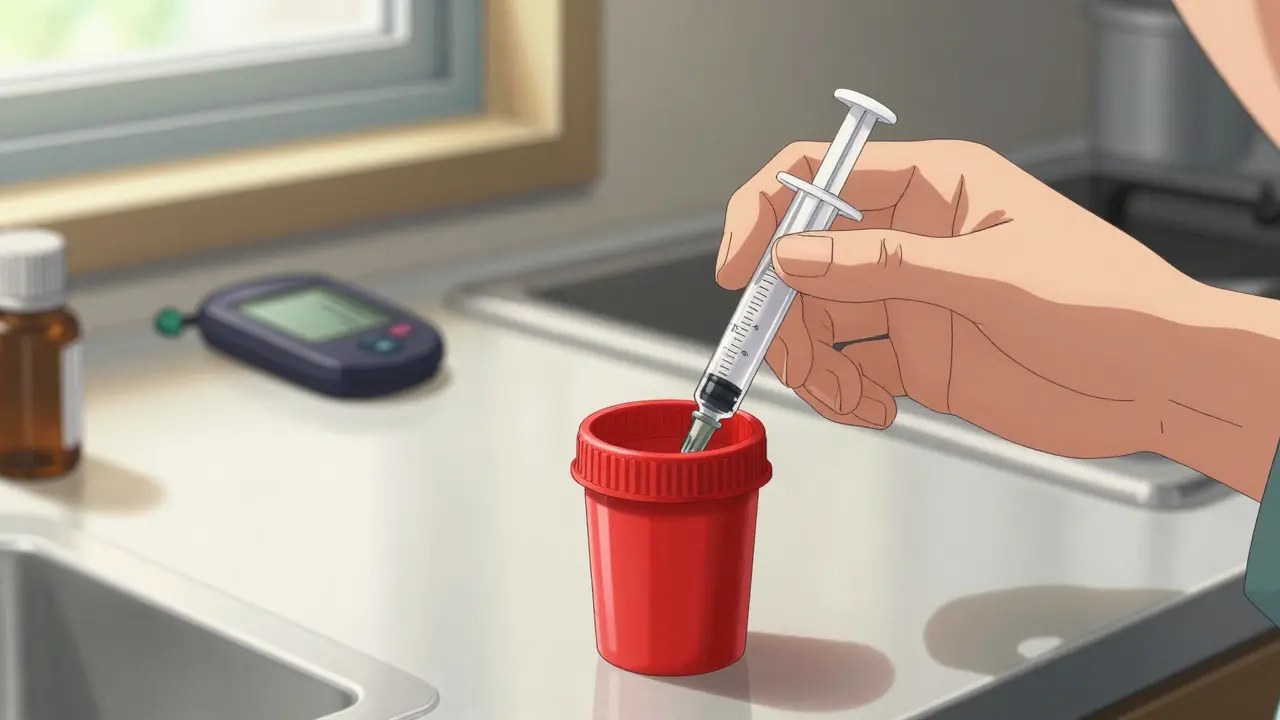
Every year, millions of people in Australia and around the world use injectable medications - insulin, blood thinners, allergy treatments, and more. But after the injection, what do you do with the needle? Throwing it in the trash? Tucking it into a soda bottle? That’s not just careless - it’s dangerous. A single misplaced needle can injure a child, a环卫 worker, or a family member cleaning up the kitchen. And if that needle carries blood, it could spread HIV, hepatitis B, or hepatitis C. The good news? Safe disposal is simple, legal, and widely available - if you know how.
What Counts as a Sharp?
A sharp isn’t just a needle. It includes any device that can puncture or cut skin after being used in medical treatment. That means:
- Needles (for injections or drawing blood)
- Syringes (with or without needles attached)
- Lancets (used for finger pricks, like with glucose monitors)
- Auto-injectors (like EpiPens after use)
- IV catheters and scalpels (if used at home)
- Insulin pens with attached needles
Once used, these items are considered regulated medical waste. They’re not regular trash. They’re biohazardous. Even if you don’t see blood, tiny amounts can remain - enough to carry infection. Never assume a used needle is safe to handle.
Why You Can’t Just Toss Them in the Bin
Some people think, “I’ll just put it in a plastic bottle and throw it out.” That’s a common mistake - and a serious one. In Australia, improper sharps disposal is illegal under state health regulations. More importantly, it puts lives at risk.
According to the CDC, over 385,000 needlestick injuries happen each year in healthcare settings alone. At home, the risk is just as real. A 2023 FDA report found that 68% of sharps injuries in households happened because people used non-approved containers - like juice bottles, coffee cans, or empty pill bottles. These containers crack, leak, or get punctured during collection or transport. Waste workers, janitors, and even pets can get hurt.
And the cost? A single needlestick injury can lead to thousands in testing, treatment, and lost work time. Post-exposure prophylaxis for HIV can cost over $3,000. Hepatitis B vaccination and monitoring adds hundreds more. Proper disposal costs pennies. Improper disposal costs lives - and dollars.
What’s a Sharps Container? And Why Do You Need One?
You need a container specifically designed for sharps. These aren’t just plastic boxes. They’re engineered for safety:
- Thick, puncture-resistant plastic (at least 1mm thick)
- Secure, child-resistant lid that won’t pop open
- Clear fill line - never go past 3/4 full
- Leak-proof design
- Standard biohazard symbol (red or orange with black symbol)
Look for containers labeled as “FDA-cleared” or “TGA-approved” (Therapeutic Goods Administration, Australia’s regulatory body). Brands like BD Redi-Sharp, Sharps Compliance, and Stericycle meet these standards. You can buy them at pharmacies, medical supply stores, or online.
Don’t use glass jars, milk cartons, or old detergent bottles. Even if they seem sturdy, they’re not tested for safety. A 2022 study showed healthcare facilities using proper containers had 78% fewer needlestick injuries than those using homemade ones.
How to Use a Sharps Container Correctly
Using the container right matters just as much as having one. Follow these steps every time:
- Dispose immediately - Don’t leave needles on counters, in pockets, or under pillows. Put them in the container right after use.
- Never recap - Recapping needles is one of the top causes of injury. If you must, use a one-handed technique or a device designed for it - but avoid it entirely if possible.
- Keep it upright - Place the container on a stable surface. Don’t lay it on its side.
- Fill only to the line - Most containers have a fill line. Stop when you reach it. Overfilling increases the risk of punctures and spills.
- Close the lid tightly - Once full, lock or seal the lid as instructed. Don’t force it if it doesn’t close - replace the container.
- Label it - If you’re not using a pre-labeled container, write “Used Sharps - Do Not Recycle” on the outside.
Keep the container out of reach of children and pets. A locked cabinet, high shelf, or locked closet works best.
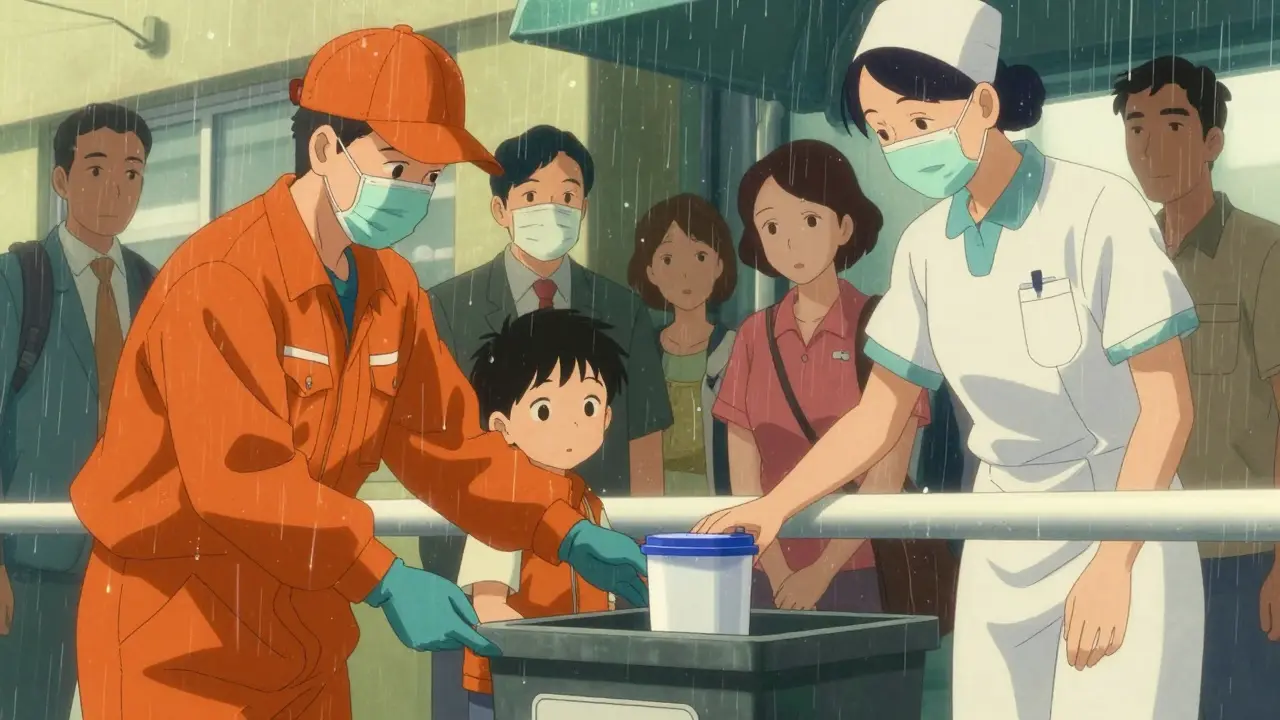
Where to Drop Off Your Full Sharps Container
Once your container is full, you can’t throw it in the regular bin. You need a proper drop-off point. Here’s how to find one in Australia:
- Pharmacies - Most major chains like Chemist Warehouse, Priceline, and TerryWhite Chemmart offer free sharps disposal bins. Just drop off your sealed container - no appointment needed.
- Hospital or clinic drop-off - Many public hospitals have sharps collection points in their pharmacies or emergency departments. Call ahead to check hours.
- Local council collection events - Most city councils run periodic medical waste collection days. Check your council website under “waste and recycling” or “household hazardous waste.”
- Mail-back programs - Companies like Sharps Compliance offer prepaid mailers. You seal your container, stick on the label, and drop it in the post. This is great for rural areas with no nearby drop-off.
- Home healthcare services - If you receive home nursing care, your provider should supply and collect sharps containers as part of your service.
Don’t rely on public bins unless they’re clearly marked for sharps. A regular recycling bin is not safe. A public trash can is not acceptable.
What If You Can’t Afford a Container?
Cost shouldn’t be a barrier. Many programs offer free or low-cost containers:
- Pharmacies often give out free sharps containers when you pick up prescriptions like insulin.
- Diabetes support groups and clinics may provide them at no cost.
- Some state health departments run free disposal programs for low-income residents.
- Ask your doctor or pharmacist - they’re required to give you disposal information under Australian health guidelines.
If you’re on the NDIS or have a chronic condition, your care plan may include funding for sharps disposal supplies. Check with your provider.
What Happens After You Drop It Off?
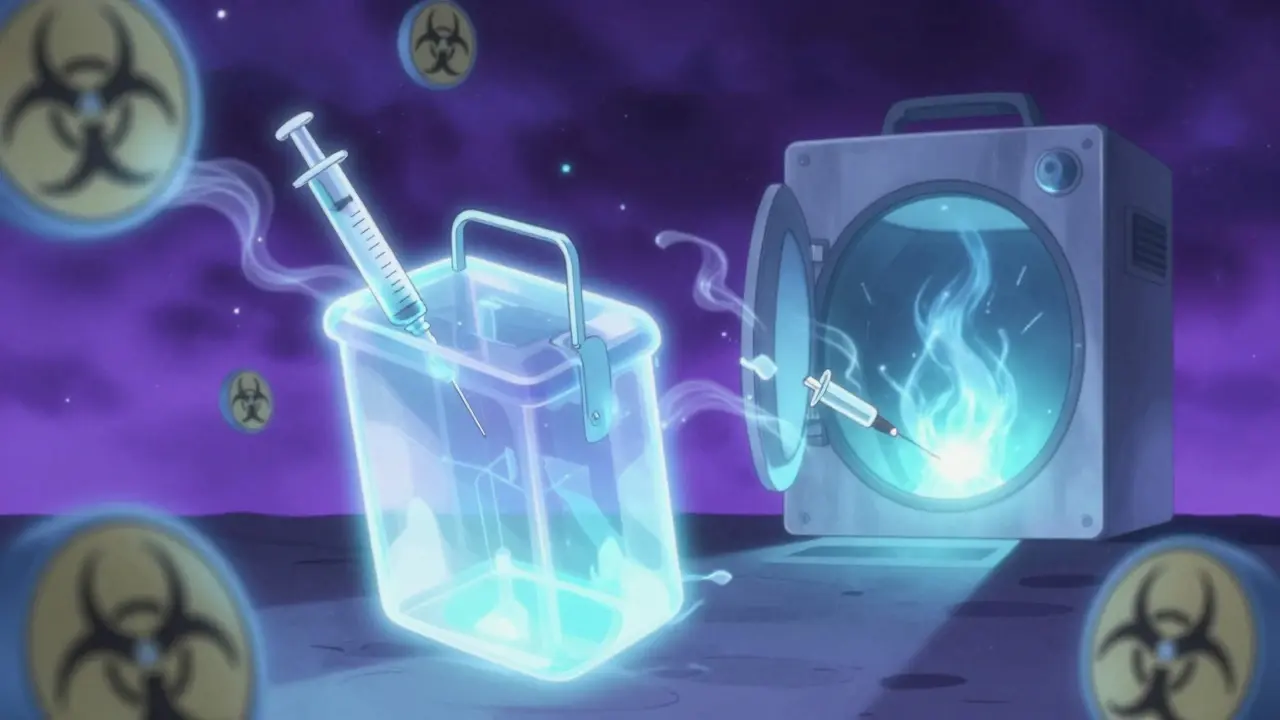
Once collected, sharps containers are taken to licensed medical waste facilities. There, they’re either:
- Autoclaved (sterilized with high-pressure steam), then shredded and sent to landfill
- Incinerated at high temperatures (for certain high-risk waste)
The process is tightly regulated. Containers are tracked from your home to final disposal. You don’t need to know the details - just know that your container won’t end up in a landfill with your regular trash. It’s handled safely.
Common Mistakes (And How to Avoid Them)
Even people who mean well make these errors:
- Trying to bend or break needles - This doesn’t make them safer. It increases injury risk and can damage the container.
- Leaving containers open or loose - Always keep the lid closed. Even a slightly open lid can let a needle pop out.
- Waiting too long to dispose - Don’t let containers sit for weeks. Fill them as you go. A full container sitting on the counter is a hazard.
- Not telling family members - Make sure everyone in your home knows where the container is and why it’s off-limits.
- Using the same container too long - Even if it’s not full, if it’s been sitting for months, it may be damaged. Replace it.
If you’ve made a mistake - like accidentally putting a needle in the trash - don’t panic. Clean the area, wear gloves, and dispose of the trash carefully. But next time, use the right container.
What’s Changing in 2026?
Regulations are tightening. In 2026, Australia is moving toward standardized sharps disposal labeling across all states. That means clearer symbols and more consistent rules. Some states are also expanding pharmacy drop-off hours and adding more rural collection points.
There’s also growing support for mail-back programs. If you live in a remote area like the Outback or a small coastal town, these services are becoming more reliable and affordable. Some insurers now cover the cost of mailers for chronic condition patients.
The goal? No one should ever get stuck by a used needle - not a child, not a worker, not a loved one.
Final Thought: It’s Not Just Rules - It’s Respect
Proper sharps disposal isn’t about following rules. It’s about protecting people. You’re not just disposing of plastic and metal. You’re protecting the person who empties your bin, the child who plays in the park, the nurse who comes to your home. It’s a small act with big consequences.
Take five seconds after each injection. Put the needle in the right container. Seal it. Drop it off. It’s simple. It’s safe. And it’s the only responsible choice.
Can I reuse a sharps container?
No. Sharps containers are designed for single use. Even if they look clean, they can have microscopic cracks or weakened plastic that could fail under pressure. Reusing them increases the risk of punctures and exposure. Always use a new, FDA- or TGA-approved container for each batch of sharps.
Can I dispose of sharps in my regular recycling bin?
Never. Recycling facilities are not equipped to handle medical waste. Sharps can injure workers and contaminate recyclable materials. Putting sharps in recycling bins is illegal in Australia and can result in fines. Always use a designated sharps disposal program.
What if I’m traveling and need to dispose of a needle?
Carry a small, portable sharps container in your travel bag. Pharmacies at airports, hospitals, or major clinics often have disposal bins. If you’re unsure, ask at the front desk or pharmacy counter. Never leave needles in hotel rooms or public restrooms.
Do I need to remove the needle from the syringe before disposal?
No. Always dispose of the needle and syringe together. Removing the needle increases the chance of a needlestick injury. Place the entire syringe - needle and all - into the sharps container. Most containers are designed to hold them together safely.
Are there any free disposal options in South Australia?
Yes. Many pharmacies in Adelaide and surrounding areas offer free sharps disposal. Check with Chemist Warehouse, Priceline, or your local community health centre. The South Australian Department of Health also runs free drop-off programs at council waste facilities. Visit sahealth.sa.gov.au for locations and hours.
11 Comments
josh plum
January 5, 2026 AT 04:35So you're telling me I can't just toss my insulin needles in the trash like everyone else? What's next, mandatory fingerprint scans before I pee? This is government overreach wrapped in a safety blanket. Next they'll be charging me for breathing too hard.
John Ross
January 6, 2026 AT 23:04From a biomedical waste management perspective, the regulatory classification of used sharps as Category B infectious material under WHO guidelines necessitates engineered containment systems with puncture resistance exceeding ASTM F2173 standards. DIY containers like soda bottles exhibit <10% structural integrity under ASTM D575 compression tests - a documented vector for percutaneous exposure incidents. TGA-certified containers reduce risk by 78% per CDC 2022 meta-analysis.
Ashley Viñas
January 8, 2026 AT 22:15Ugh, people still don't get it? I can't believe you'd risk your kid's life because you're too lazy to walk to the pharmacy. It's not hard. It's not expensive. It's literally free at most chemists. If you're using insulin and still throwing needles in the garbage, you're not just irresponsible - you're a danger to society. I'm not being dramatic. I'm being real.
Brendan F. Cochran
January 9, 2026 AT 21:13They say 'safe disposal' but what they really mean is 'pay more for the government's pet project.' I've been doing this for 12 years - I put my needles in an old laundry bottle, cap it tight, toss it in the bin. Nothing's happened. And now they want me to buy a $15 plastic box? That's a scam. Who's making money off this? Not me.
Connor Hale
January 11, 2026 AT 12:04It's interesting how we frame safety as a personal obligation when the real systemic failures lie in accessibility, cost, and infrastructure. If disposal were as easy as filling a container and dropping it off, why do rural communities still struggle? Why do people have to beg pharmacies for free boxes? The moral weight we place on individuals ignores the policy gaps that make this burden feel so heavy in the first place.
Roshan Aryal
January 11, 2026 AT 20:36Oh wow, Australia’s got it all figured out? Meanwhile in India, diabetics reuse needles because they can’t afford even one proper container. You people act like this is some noble ritual when for billions, it’s a luxury. Your ‘TGA-approved’ plastic box is a privilege. Your moral high ground? Built on the backs of people who can’t afford to be responsible.
Catherine HARDY
January 12, 2026 AT 10:09Have you ever wondered who’s really behind these ‘free’ sharps containers? I’ve seen the brochures - same logos as the pharmaceutical companies that make the insulin. They profit from your fear. They want you dependent on their containers, their programs, their narrative. The real danger isn’t the needle - it’s the system that makes you feel guilty for not buying their solution.
bob bob
January 13, 2026 AT 16:44Just wanted to say - if you're reading this and you're scared or overwhelmed, you're not alone. I used to toss mine in the trash too. Then my niece found one in the recycling. That changed everything. You don't have to be perfect. Just start. One container at a time. You're doing better than you think.
Vicki Yuan
January 13, 2026 AT 22:54For clarity: The CDC recommends immediate disposal to minimize exposure risk, and the FDA explicitly prohibits recapping needles unless using a mechanical device. Overfilling containers beyond the 3/4 mark increases puncture risk by 300% according to a 2021 Journal of Occupational Health study. Always use FDA- or TGA-cleared containers - non-certified alternatives are not compliant with OSHA 1910.1030.
en Max
January 14, 2026 AT 19:09It is, however, critically important to acknowledge that the psychological burden associated with the ritualized disposal of sharps - particularly among chronically ill populations - may be underestimated in public health messaging. The act of containment, while physically protective, may inadvertently reinforce stigmatizing associations between medical necessity and hazardousness. A more holistic approach, integrating behavioral support with logistical accessibility, is warranted.
Angie Rehe
January 15, 2026 AT 17:23Wait - so you're saying I can't just put my EpiPen in a yogurt tub? That's ridiculous. I'm not some careless idiot. I'm a mother. I know what I'm doing. But now you want me to buy a $20 box, mail it back, wait for a pickup? What if I'm in the middle of a panic attack? Who's gonna come help me? This isn't safety - it's bureaucracy dressed up as compassion.