
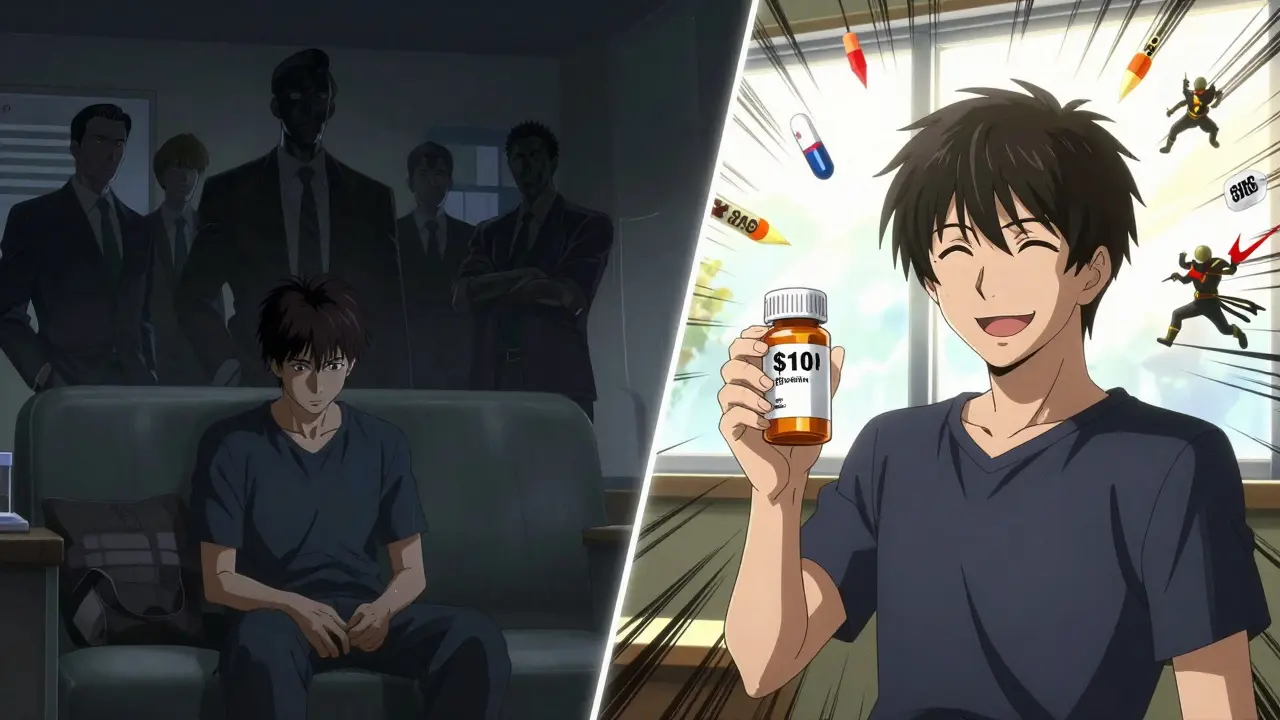
When a drug’s patent runs out, something dramatic happens: prices don’t just dip-they plummet. For patients, this isn’t just a numbers game. It’s the difference between paying $850 a month for a brand-name pill and $10 for the same medicine in generic form. This shift doesn’t happen by accident. It’s the direct result of a well-designed but often manipulated system that lets competition take over once the legal monopoly ends.
How Patent Expiration Triggers Price Collapses
Patents give drugmakers exclusive rights to sell a medicine for about 20 years. But in reality, much of that time is eaten up by clinical trials. By the time a drug hits the market, companies often have only 7-12 years left to recoup billions in R&D costs. That’s why they squeeze out every possible dollar before the clock runs out. The moment that patent expires, generic manufacturers can legally produce the same drug. They don’t need to repeat expensive clinical trials. They just need to prove their version works the same way. That cuts their costs dramatically. The first generic to enter the market usually drops the price by 15-20%. But the real fireworks start when the second, third, and tenth generics arrive. Data from a 2023 study in JAMA Health Forum tracking 505 drugs across eight countries shows that after eight years, prices in the U.S. fell by 82%. In Australia, they dropped 64%. Even in Switzerland, where prices barely budged, they still fell 18%. The pattern is clear: more competitors = deeper cuts. By year three, if ten or more companies are selling the same drug, prices can drop 80% or more.Why Some Drugs Don’t Get Cheaper-Even After Patents Expire
Not all drugs follow the same script. Biologics-complex drugs made from living cells, like Humira or Eliquis-are harder to copy. That’s why they’re protected by a different kind of patent system. Companies don’t just rely on one patent. They file dozens-sometimes over a hundred-on tiny changes: a new capsule, a slightly different dosage, a new way to deliver it. This is called a "patent thicket." Take Humira. Its original patent expired in 2016. But AbbVie filed 130+ secondary patents. It wasn’t until January 2023-seven years later-that the first biosimilar, Amjevita, actually hit the market. Even then, prices didn’t crash right away. Why? Because AbbVie struck deals with insurers that made the biosimilars less attractive to use. Patients still got the same drug, but insurers were paid not to switch. The same thing happened with Eliquis (apixaban). Its patent expired in 2020, and generics flooded in. Prices dropped 99% in the U.S. But for semaglutide (Ozempic, Wegovy), which has over 140 patents, the base compound patent expires in 2026. Experts expect manufacturers to stretch protection until 2036 through reformulations and new uses. The system was meant to balance innovation and access. Today, it often just delays access.Global Differences: Why Prices Drop Faster in Some Countries
The U.S. doesn’t lead in price drops because it’s the most competitive-it leads because it’s the least regulated. In Europe, governments set price limits. In Canada and Australia, they negotiate bulk deals. In Japan, they cap profits. In the U.S., there’s no national price control. Insurers and pharmacy benefit managers (PBMs) negotiate rebates behind closed doors. That means a drug can be cheaper at the pharmacy counter but still cost insurers more because of hidden kickbacks. The FDA says generics enter the U.S. market an average of 30 months after patent expiry. In Europe, it’s 12-18 months. That two-year delay costs American patients billions. A 2024 analysis from TCU Harris College found that if the U.S. matched European timelines, patients would save $40 billion annually. Australia’s system is particularly effective. The government sets a maximum price for every drug, and generics must match it. Once the first generic arrives, the price is locked in. That’s why, after eight years, prices there dropped 64%-not as steep as the U.S., but more predictable and fair.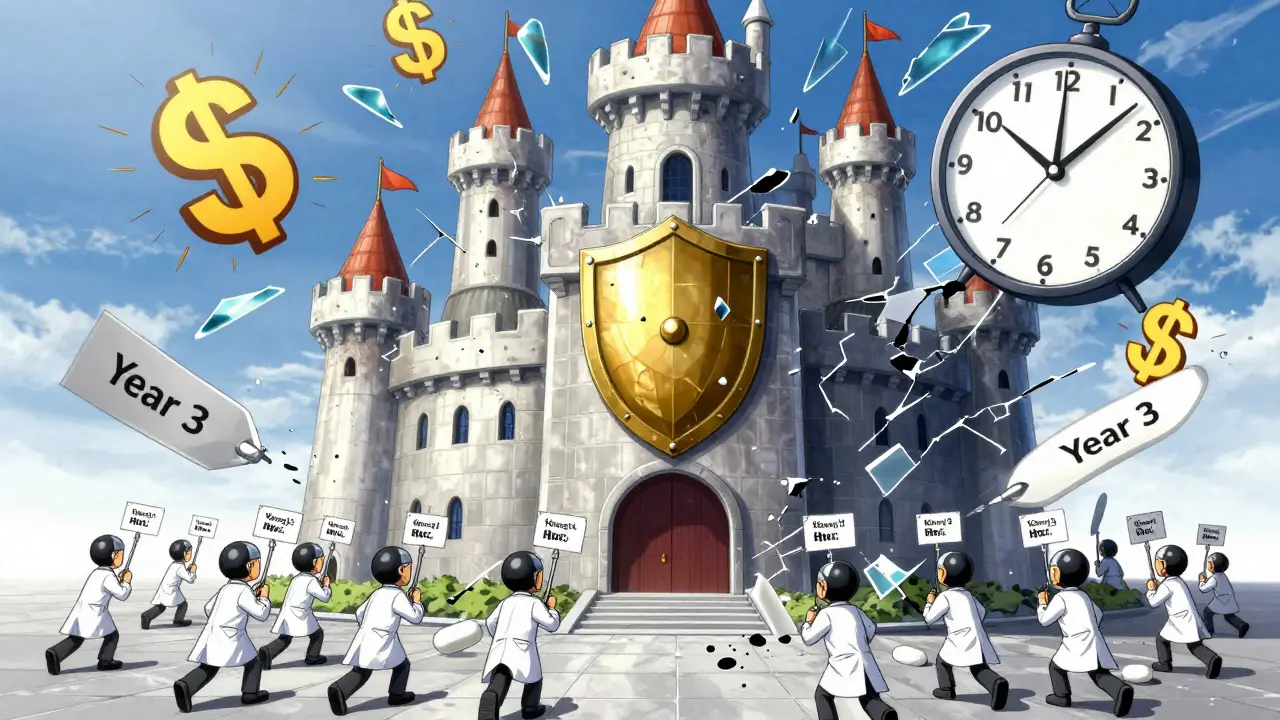
Who Benefits-and Who Gets Left Behind
Patients who pay out-of-pocket win big. A Reddit user in February 2024 shared that their Eliquis cost $850/month before generics. After, it was $10. That’s not a savings-it’s a lifeline. A Kaiser Family Foundation survey found 68% of insured adults saw lower costs when generics arrived. But not everyone benefits equally. People on Medicare Part D, or those with high-deductible plans, often get stuck with expensive brand-name drugs longer. Why? Because PBMs and insurers prioritize drugs that give them the biggest rebate, not the lowest price. A biosimilar might cost $50, but if the brand-name drug gives the PBM a $30 rebate, they’ll keep pushing the $80 version. Patients don’t see the rebate-they just see a high copay. Pharmacists are caught in the middle. In 49 U.S. states, they can substitute generics automatically. But if a doctor writes "dispense as written," they can’t. And with biologics, substitution rules vary by state. Some states allow it. Others don’t. Patients get confused. Doctors don’t always know which versions are interchangeable. And insurers? They rarely explain the changes.The Bigger Picture: What This Means for the Future
The global generic drug market was worth $407 billion in 2023. It’s projected to hit $700 billion by 2030. That’s because over $220 billion in annual drug sales will lose patent protection between 2020 and 2025. This isn’t a blip-it’s a tidal wave. Regulators are starting to push back. The FDA approved 870 generic drugs in 2023, up 12% from the year before. The U.S. Patent Office is cracking down on patent thickets. The European Commission is limiting how long companies can extend protection. The Inflation Reduction Act lets Medicare negotiate prices, which forces manufacturers to think twice before delaying generics. But the biggest obstacle isn’t science-it’s strategy. Companies aren’t fighting to make better drugs. They’re fighting to delay cheaper ones. The average blockbuster drug now earns 70% of its lifetime revenue after its patent expires, thanks to secondary patents and clever marketing. That’s not innovation. That’s extraction.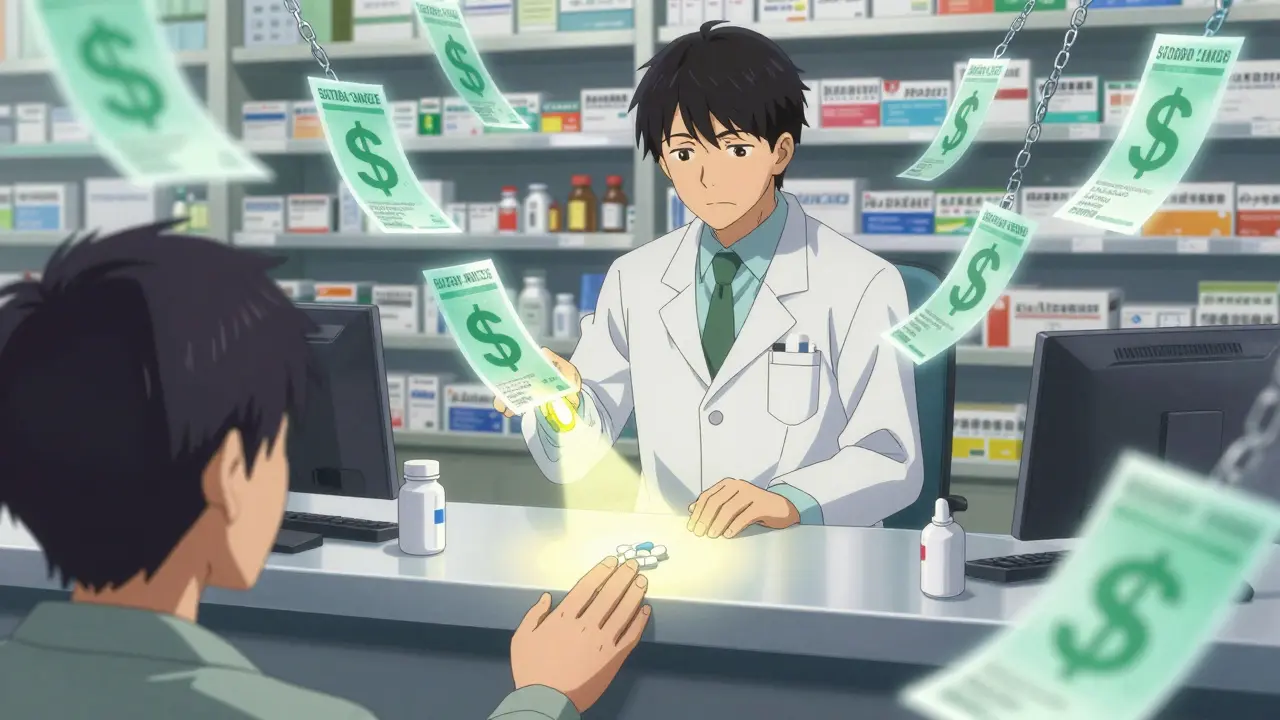
What Patients Can Do
If you’re on a drug that just lost its patent:- Ask your doctor if a generic is available-and if it’s right for you.
- Call your pharmacy. Ask if they have the generic in stock. Sometimes, it’s cheaper to pay cash than use insurance.
- Check your insurance formulary. If your plan still lists the brand as preferred, call them. Ask why.
- Use tools like GoodRx or SingleCare. They show real-time prices across pharmacies.
- If you’re on Medicare, review your plan during open enrollment. Not all plans cover generics equally.
Final Thought
Patent expiration isn’t magic. It’s economics. When one company holds a monopoly, prices stay high. When ten companies compete, prices collapse. The system works-when it’s allowed to. Too often, legal loopholes, rebate schemes, and patent games block the savings from reaching the people who need them most. The next time you hear about a drug’s patent expiring, don’t just think about the date. Think about who’s trying to keep the price high-and how you can fight back.How long does it take for drug prices to drop after a patent expires?
The first generic usually arrives within 6-12 months after patent expiry, and prices begin to drop immediately. The steepest declines happen between years 2 and 4, as more companies enter the market. In the U.S., prices can fall 32% in the first year and up to 82% within eight years. In countries with stronger price controls, like Australia or Canada, drops are slower but more stable.
Why do some drugs stay expensive even after generics are available?
Insurers and pharmacy benefit managers (PBMs) often favor brand-name drugs if they receive large rebates from manufacturers. Even if a generic costs $10 and the brand costs $80, the PBM might get a $30 rebate on the brand, making it more profitable to keep patients on the expensive version. This is called a "rebate trap." Patients don’t see the rebate-they just pay a high copay. In some cases, manufacturers also lock in exclusive contracts with insurers, blocking generics from formularies.
Are generic drugs as safe and effective as brand-name drugs?
Yes. The FDA requires generics to have the same active ingredient, strength, dosage form, and route of administration as the brand-name drug. They must also prove they’re bioequivalent-meaning they work the same way in the body. Studies show generics are just as effective and safe. The only differences are inactive ingredients (like fillers or dyes), which rarely affect performance. The FDA approves over 800 generic drugs every year.
What’s the difference between a generic and a biosimilar?
Generics are exact copies of small-molecule drugs made from chemicals. Biosimilars are highly similar versions of complex biologic drugs made from living cells-like Humira or insulin. They’re not identical because biological products can’t be perfectly replicated. But they must show no meaningful clinical difference in safety or effectiveness. Biosimilars take longer and cost more to develop, which is why they enter the market slower. As of 2024, only 45% of biologic markets have biosimilar competition, compared to over 90% for small-molecule drugs.
Can I ask my doctor to switch me to a generic?
Absolutely. In fact, it’s one of the best ways to lower your costs. Most doctors support switching unless there’s a specific medical reason not to. If your prescription says "dispense as written," ask your doctor to change it to "generic allowed." In 49 U.S. states, pharmacists can substitute generics automatically unless the doctor specifically blocks it. Don’t assume your doctor knows what’s available-ask them.
What’s being done to stop companies from delaying generic entry?
Regulators are taking action. The U.S. Patent Office is now reviewing and rejecting secondary patents that don’t add real innovation. The European Commission proposed limits on supplementary protection certificates in 2024. The FDA is fast-tracking approvals for complex generics. And the Inflation Reduction Act lets Medicare negotiate prices, which pressures manufacturers to let generics in sooner. Still, the average drug delays meaningful competition by 4.2 years due to patent thickets. Reform is happening-but slowly.

9 Comments
Brad Ralph
February 12, 2026 AT 05:37Patent expiry = free money for generics. Patients win. Pharma loses. It’s not magic, it’s capitalism. 🤷♂️
christian jon
February 12, 2026 AT 20:40OH MY GOD. THIS IS A NATIONAL EMERGENCY. 🚨 The drug companies are OUTRIGHT STEALING FROM OUR GRANDMOTHERS! They’re filing HUNDREDS of patents on NOTHING-like changing the color of the pill or putting a smiley face on the bottle! And PBMs? They’re getting PAID to keep people on $850 drugs?! This isn’t healthcare-it’s a PAYTOILET for the rich! I’ve seen people cry because they can’t afford their insulin. This is AMERICA, not a dystopian corporate theme park! 💥
Autumn Frankart
February 14, 2026 AT 08:24You think this is about drugs? Nah. This is a deep-state move. The FDA, WHO, and Big Pharma are all connected. They let generics in only when they want to control the supply chain. That’s why prices drop ‘suddenly’-it’s all planned. And those ‘bio-similars’? They’re not even real drugs. They’re lab-grown imposters. You think your body can tell the difference? You’re being experimented on. Wake up. 🕵️♀️
Sophia Nelson
February 16, 2026 AT 02:39I just asked my pharmacist for the generic and he said ‘it’s not in stock.’ I called three pharmacies. None had it. My doctor didn’t even know it existed. So now I’m paying $200 for a pill that costs $10 elsewhere. Who do I sue? Nobody. Because the system is rigged. And I’m tired.
athmaja biju
February 17, 2026 AT 20:52In India, generics are cheaper than chai. We have over 200 manufacturers of metformin. A patient pays 5 rupees ($0.06) for a month’s supply. Why does America turn life-saving medicine into a luxury item? This is not innovation. This is exploitation dressed in suits.
Robert Petersen
February 18, 2026 AT 22:15Hey, if you’re struggling with drug costs, don’t give up! Talk to your pharmacist-they know all the tricks. Use GoodRx. Ask your doctor to switch. Call your insurer and demand answers. You’re not alone. I helped my mom switch to generics and saved $700/month. It’s possible. Small steps add up. 💪
Ernie Simsek
February 19, 2026 AT 19:13So let me get this straight. A drug costs $850 because one company owns the patent. Then ten companies make it for $10. So the original company made $840 profit per pill? That’s not capitalism. That’s a pyramid scheme with a lab coat. 🤑 And the rebates? Pure greed. PBMs are the real villains. They don’t care about you. They care about their quarterly bonus.
Joanne Tan
February 21, 2026 AT 14:14OMG I JUST REALIZED MY DOCTOR NEVER TOLD ME ABOUT THE GENERIC VERSION OF MY MED. I’VE BEEN PAYING $800 A MONTH FOR 2 YEARS. I’M SO MAD RN. JUST WENT TO THE PHARMACY AND THEY HAD IT FOR $12. I FEEL SO STUPID. BUT ALSO LIKE I CAN DO THIS. I’M CALLING MY INSURANCE TOMORROW. Y’ALL GOT THIS 💪❤️
Reggie McIntyre
February 21, 2026 AT 19:48This whole system was built on a lie: that innovation needs monopoly. But look at the data-most breakthroughs happen before patents even expire. The real innovation is in the marketing department. The science? Mostly done. The rest is just delaying the inevitable. We’re not fighting bad science. We’re fighting bad incentives. And if we fix that? Prices drop. Access expands. Lives improve. It’s not rocket science. It’s just… common sense.